It All Begins HereWe bring creativity and expertise to everything we do.
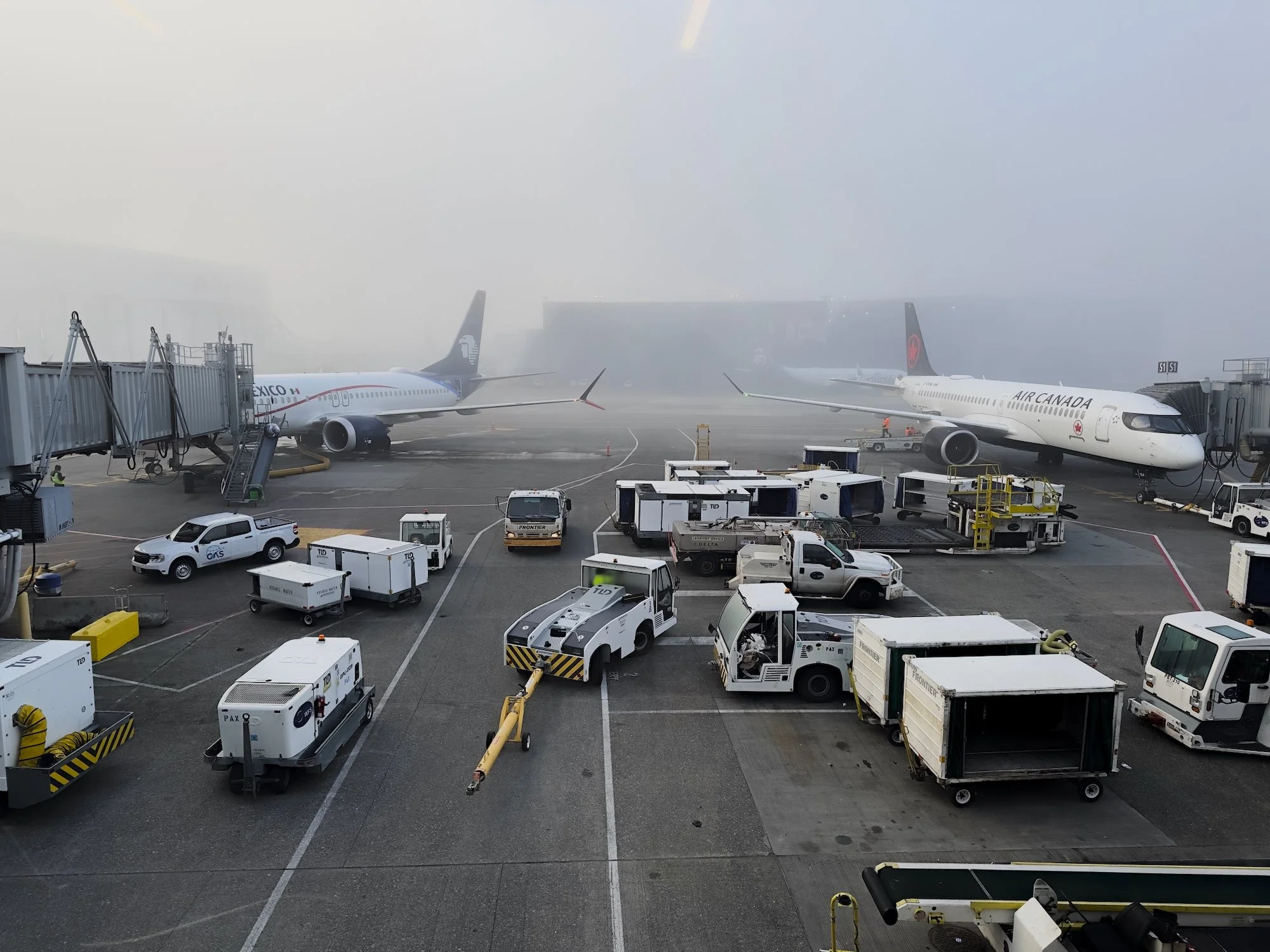
It was a super foggy morning at SeaTac as we waited to take off.
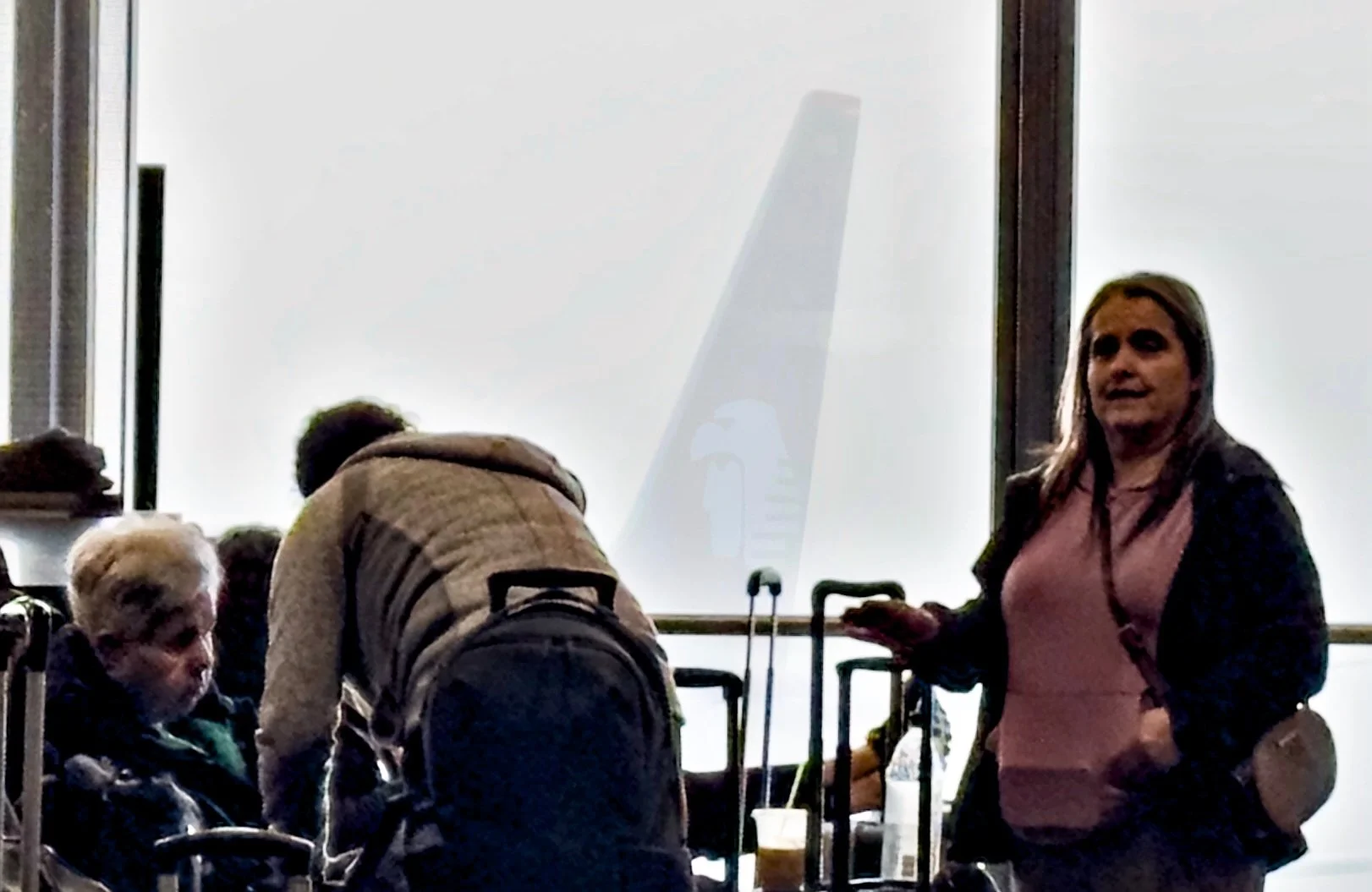
Foggy morning at SEA
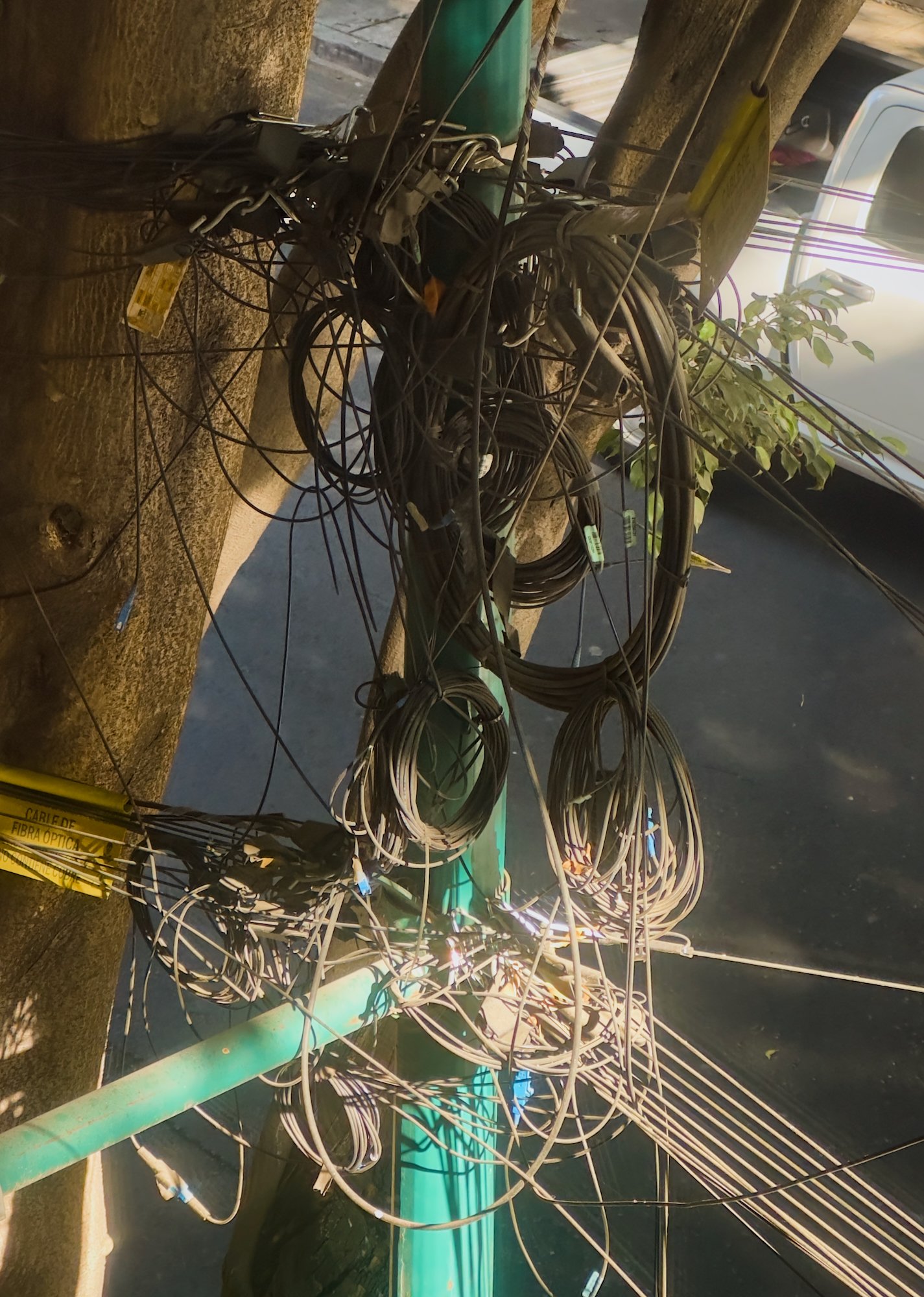
Of course the first photo I took was the tangle of wires outside our hotel window - which was the Casa Prim Hotel in the Juárez neighborhood of Mexico City.
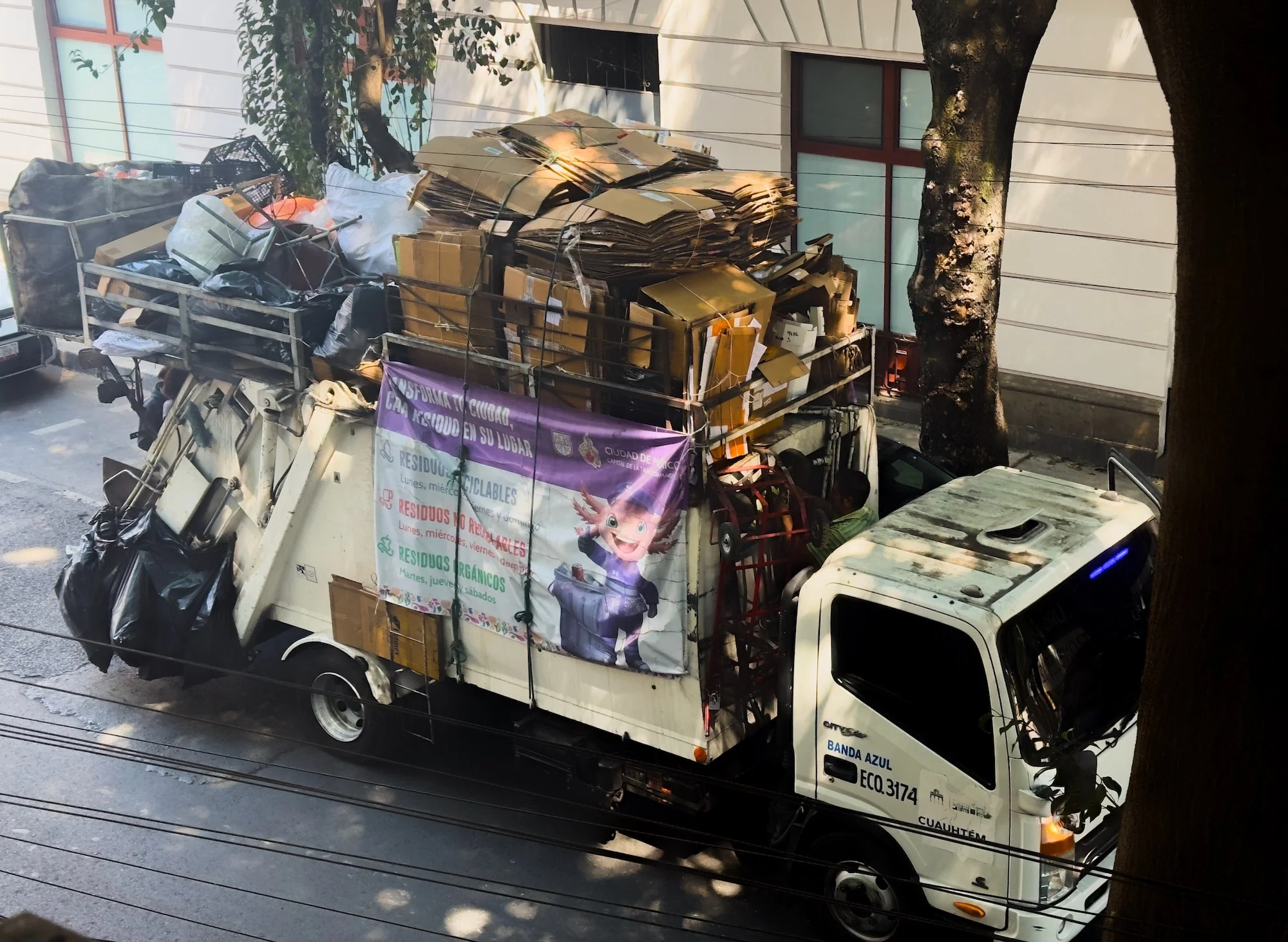
The view from our hotel room the first morning. This is how trash and recycling is taken care of.
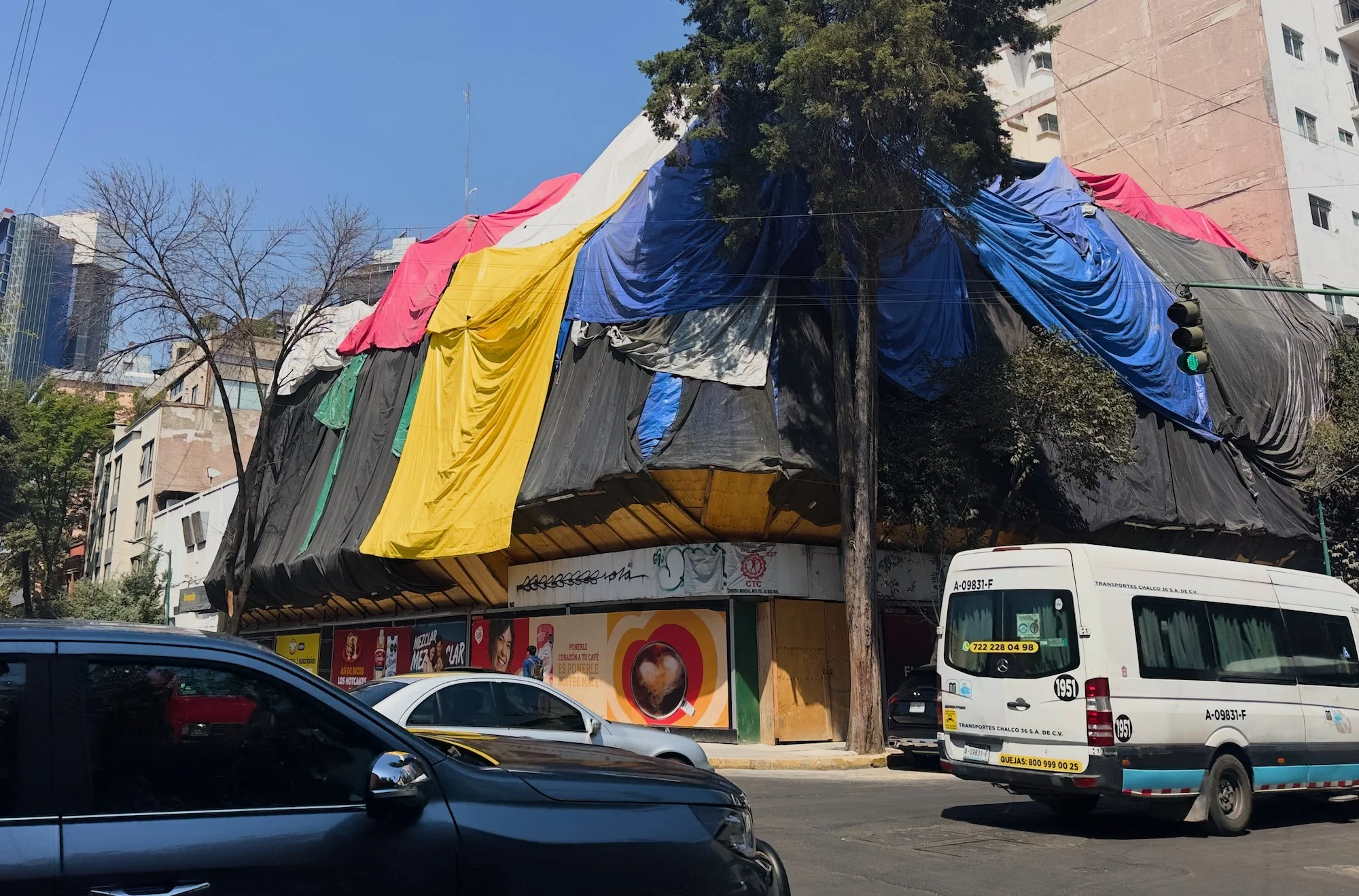
Funny how the tarps are layered over a building having some work done.
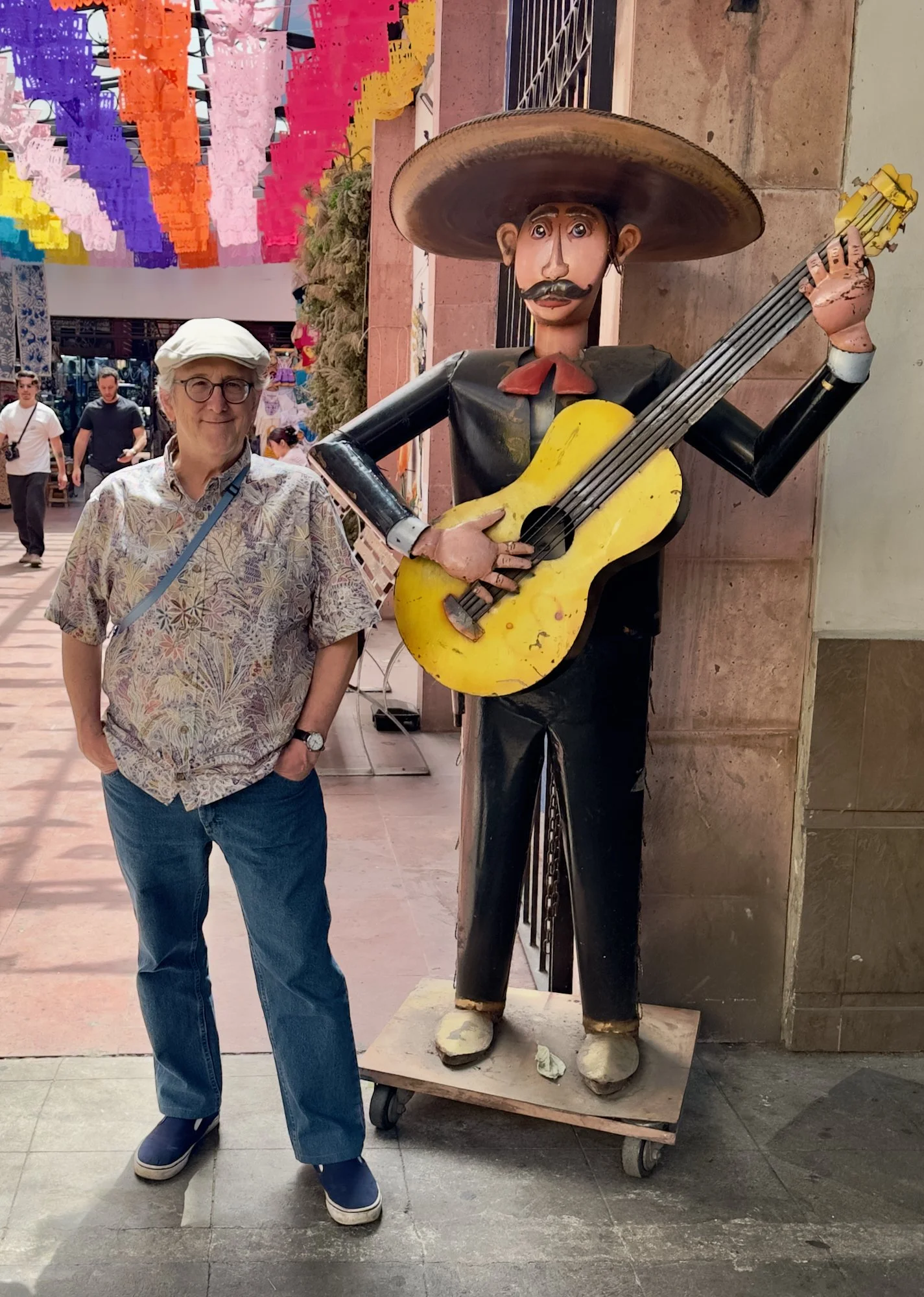
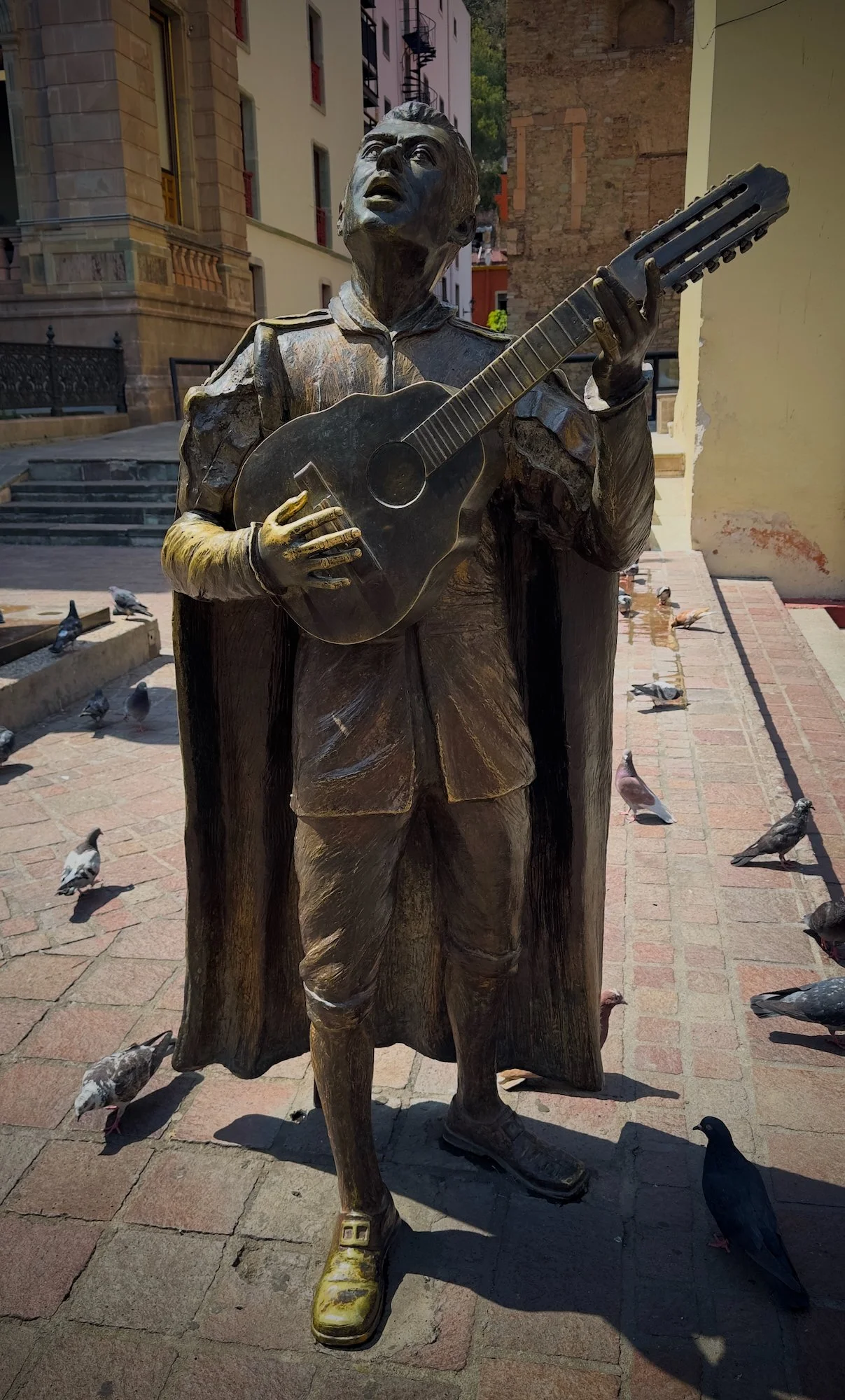
Yours truly standing by a guy with a guitar.
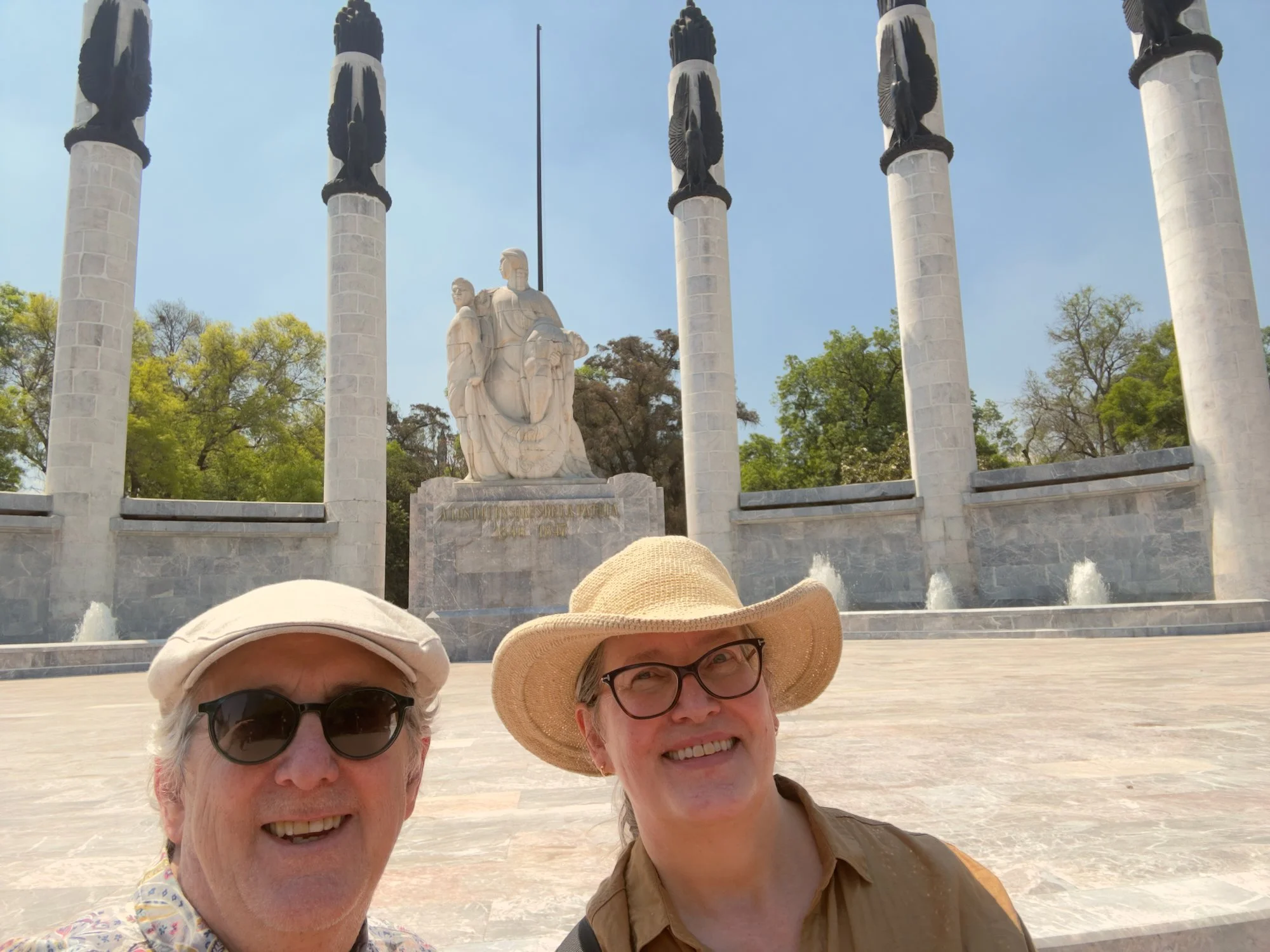
Beth and I standing in front of the Monumento a los Niños Héroes. Also called "Altar to the Homeland". It commemorates the Niños Héroes, six mostly teenage military cadets who were killed defending Mexico City from the United States during the Battle of Chapultepec, one of the last major battles of the Mexican–American War, on 13 September 1847.
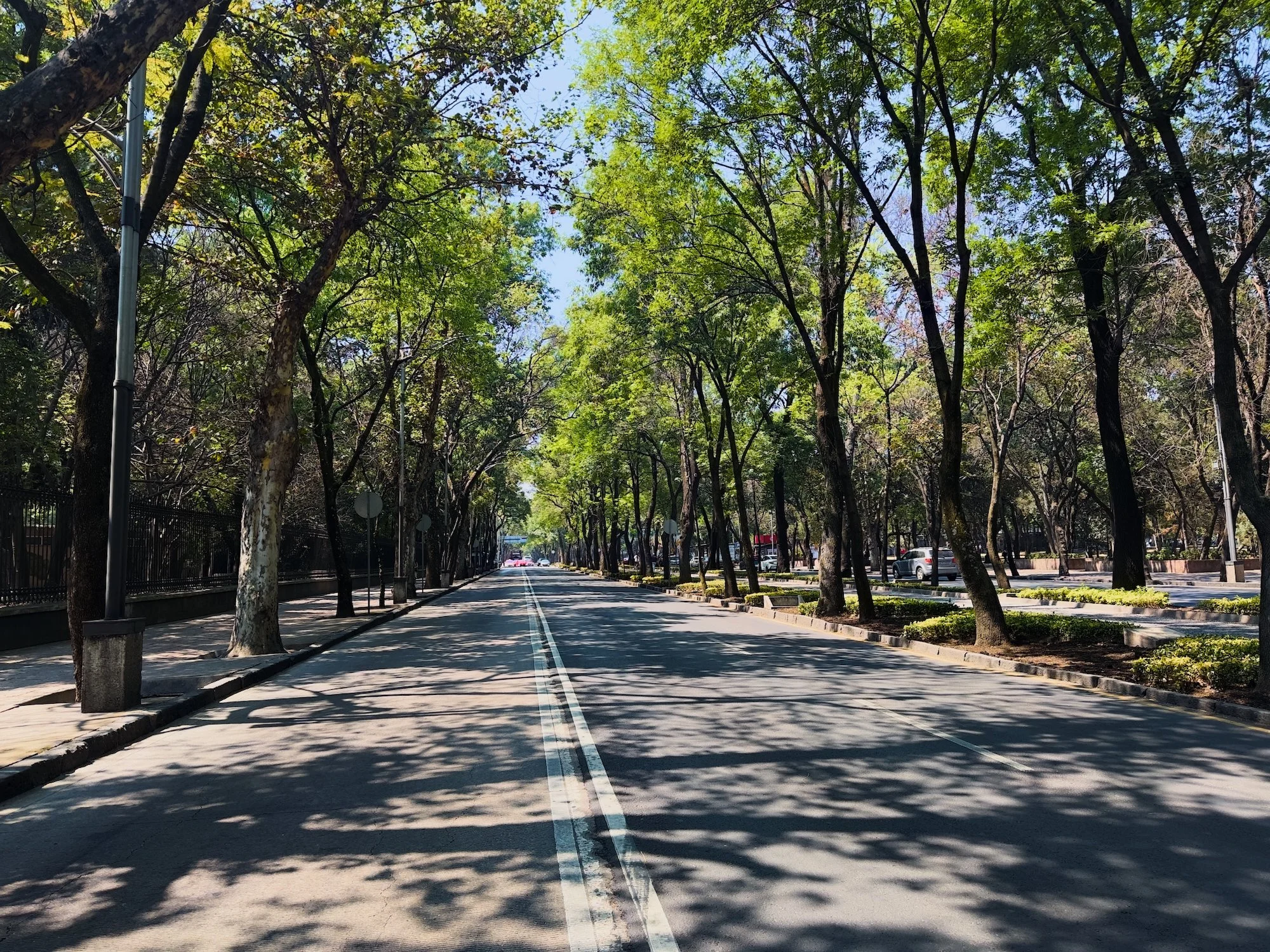
A boulevard inside the Chapultepec Park on the way to the National Museum of Anthropology. Normally there is a lot of traffic, but I caught it at a rare moment of quiet.
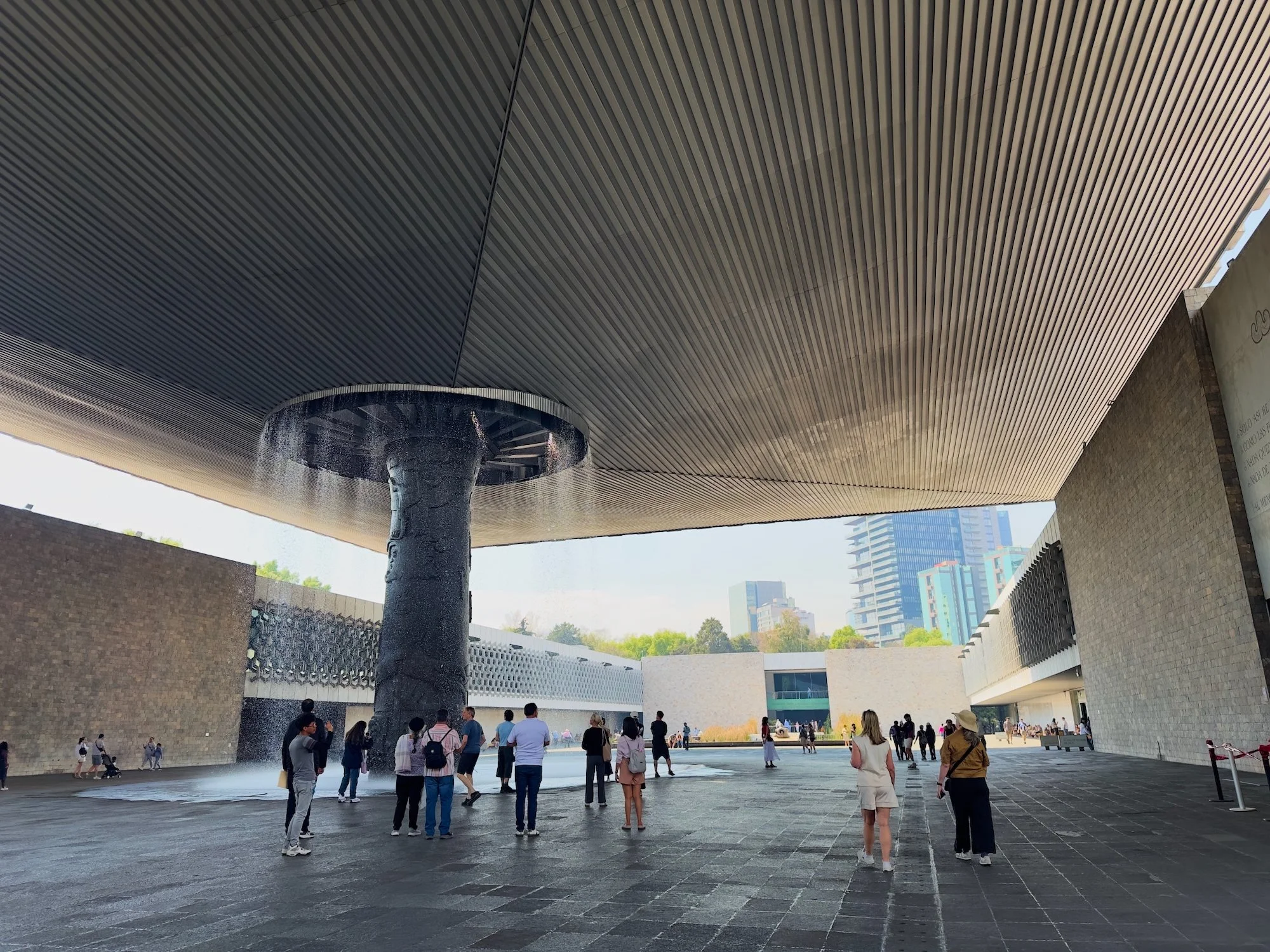
National Museum of Anthropology: An amazing roof over the courtyard. The whole roof is supported by the central column, which is also a waterfall.
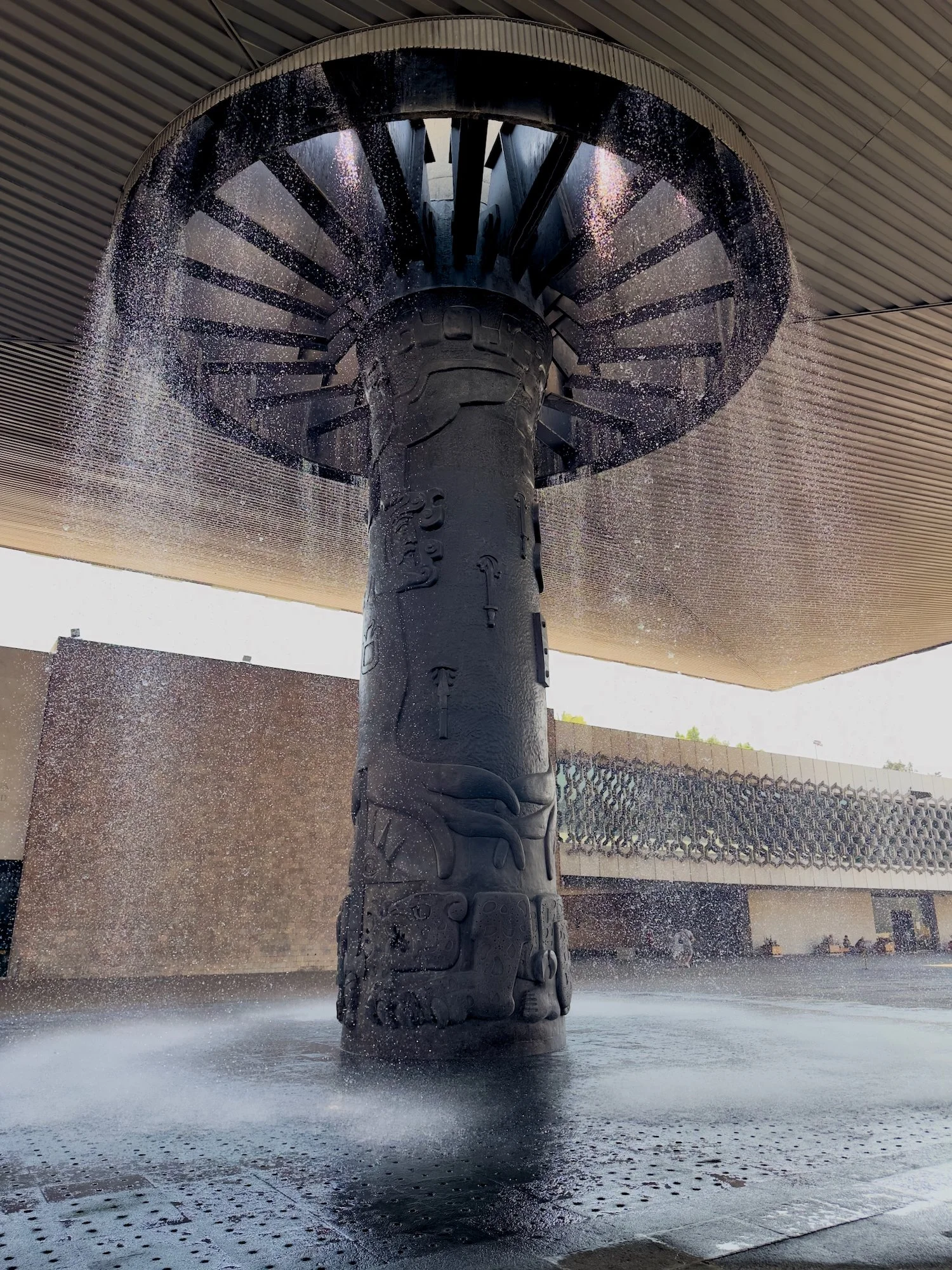
National Museum of Anthropology
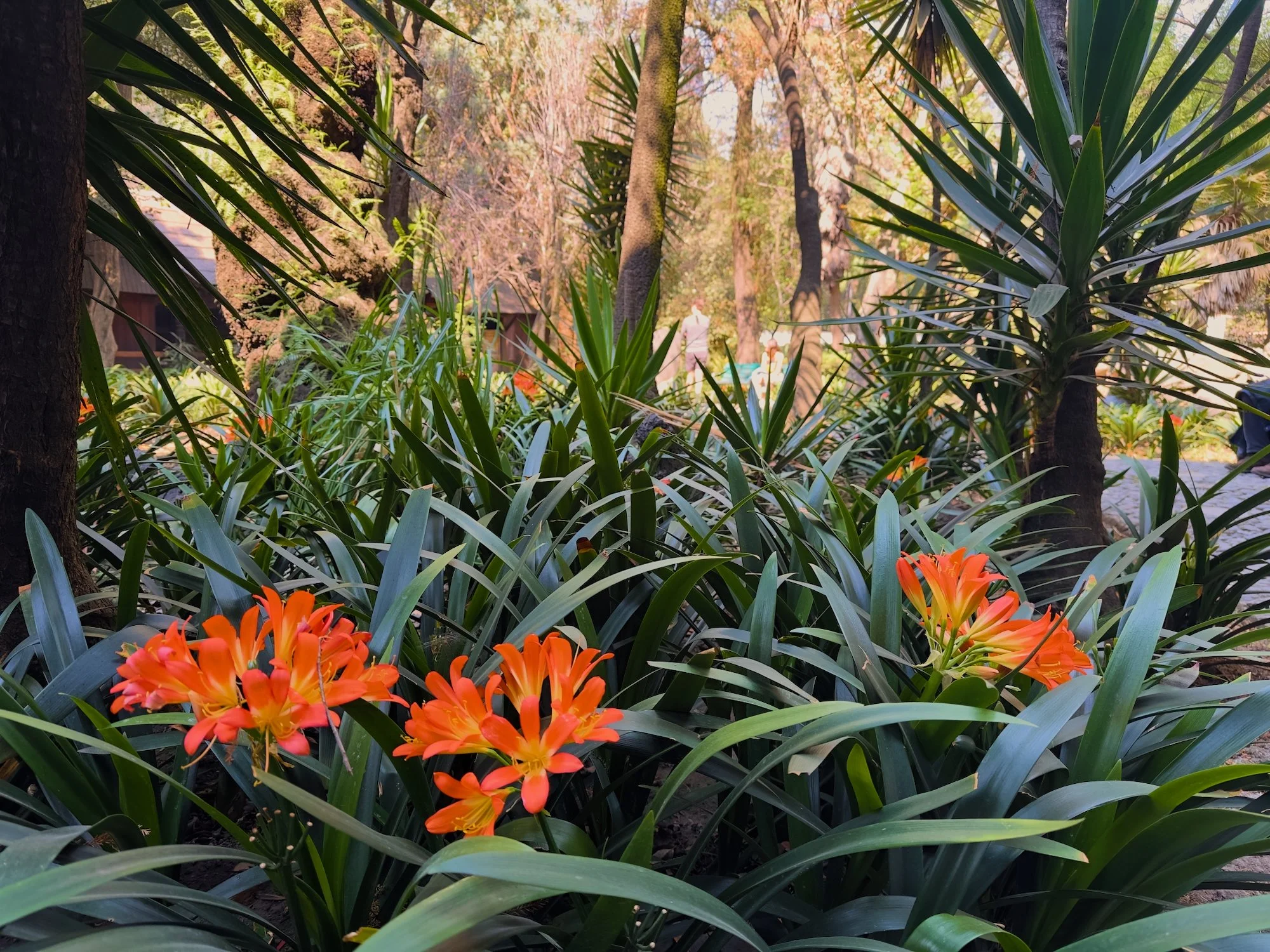
National Museum of Anthropology: The grounds around the museum are wonderful.
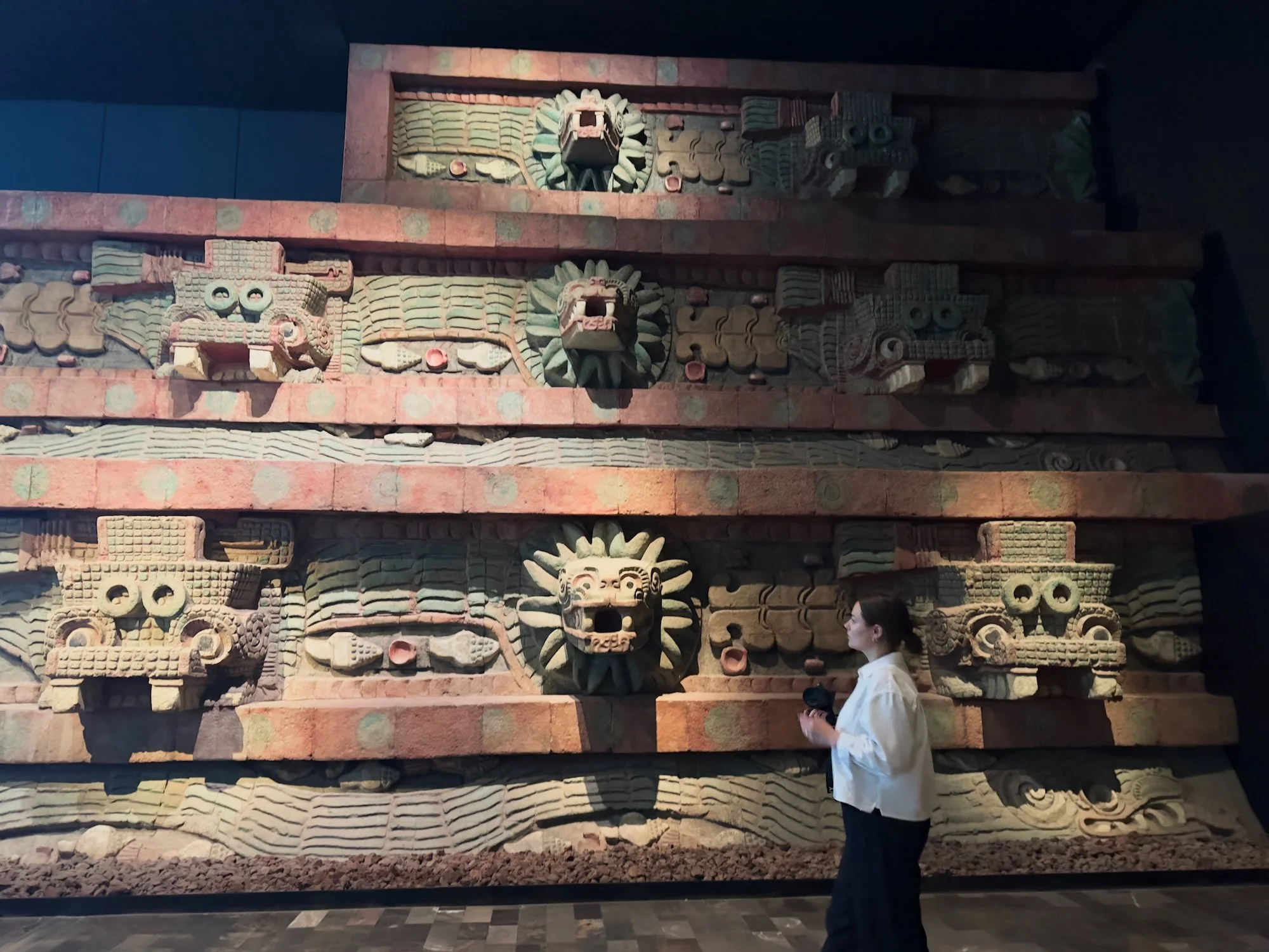
National Museum of Anthropology
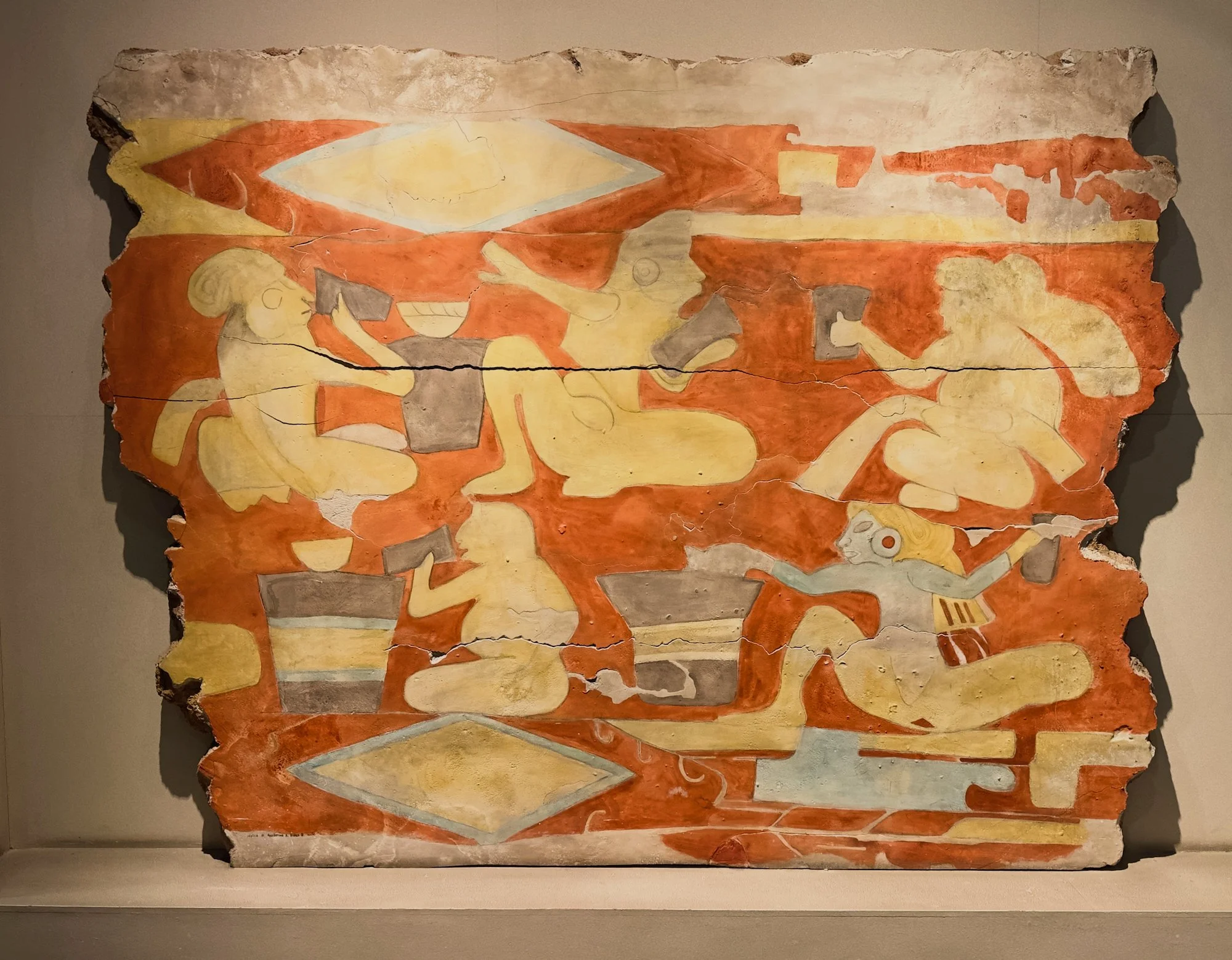
National Museum of Anthropology
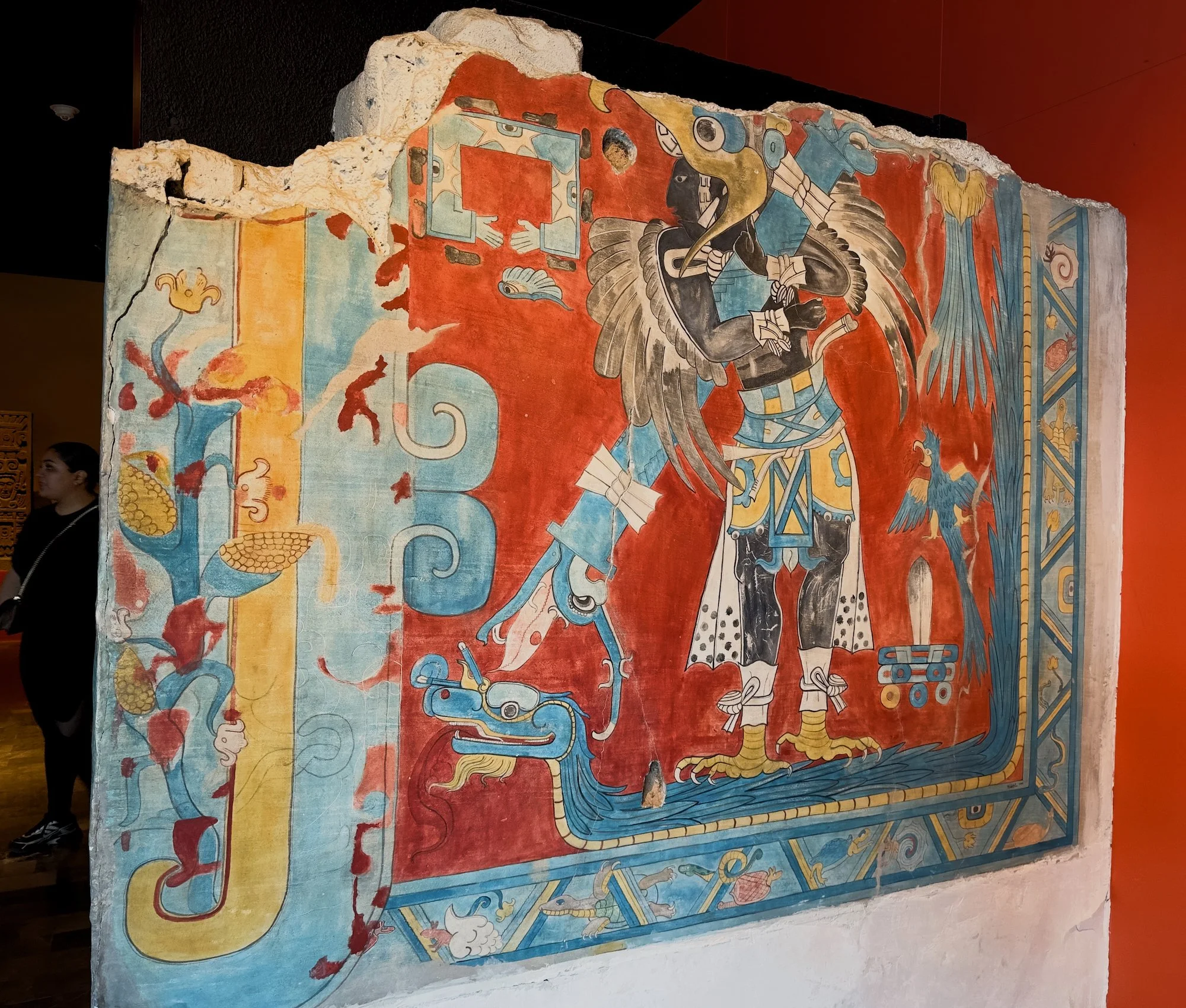
National Museum of Anthropology
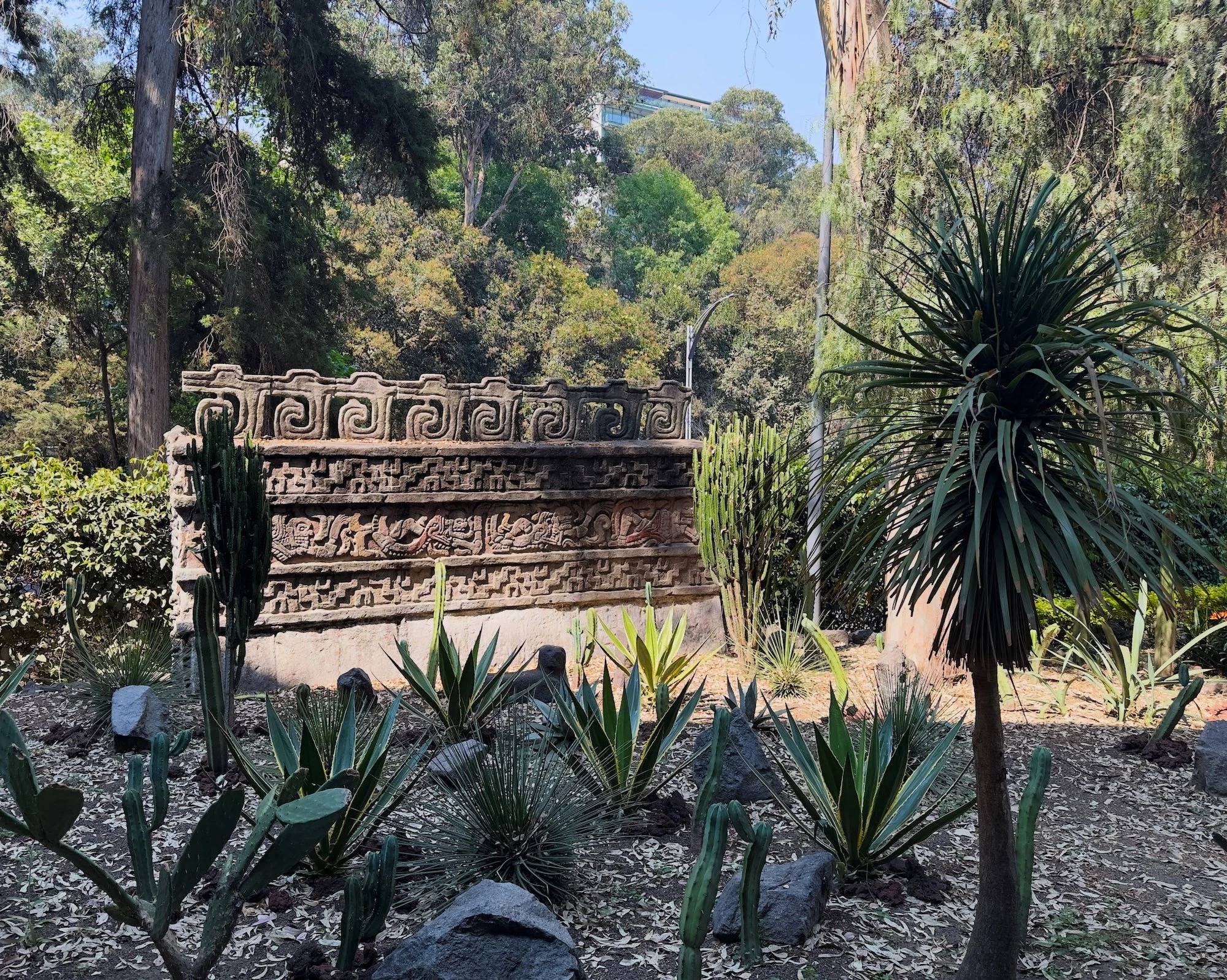
National Museum of Anthropology: The outdoor spaces also contain artifacts.
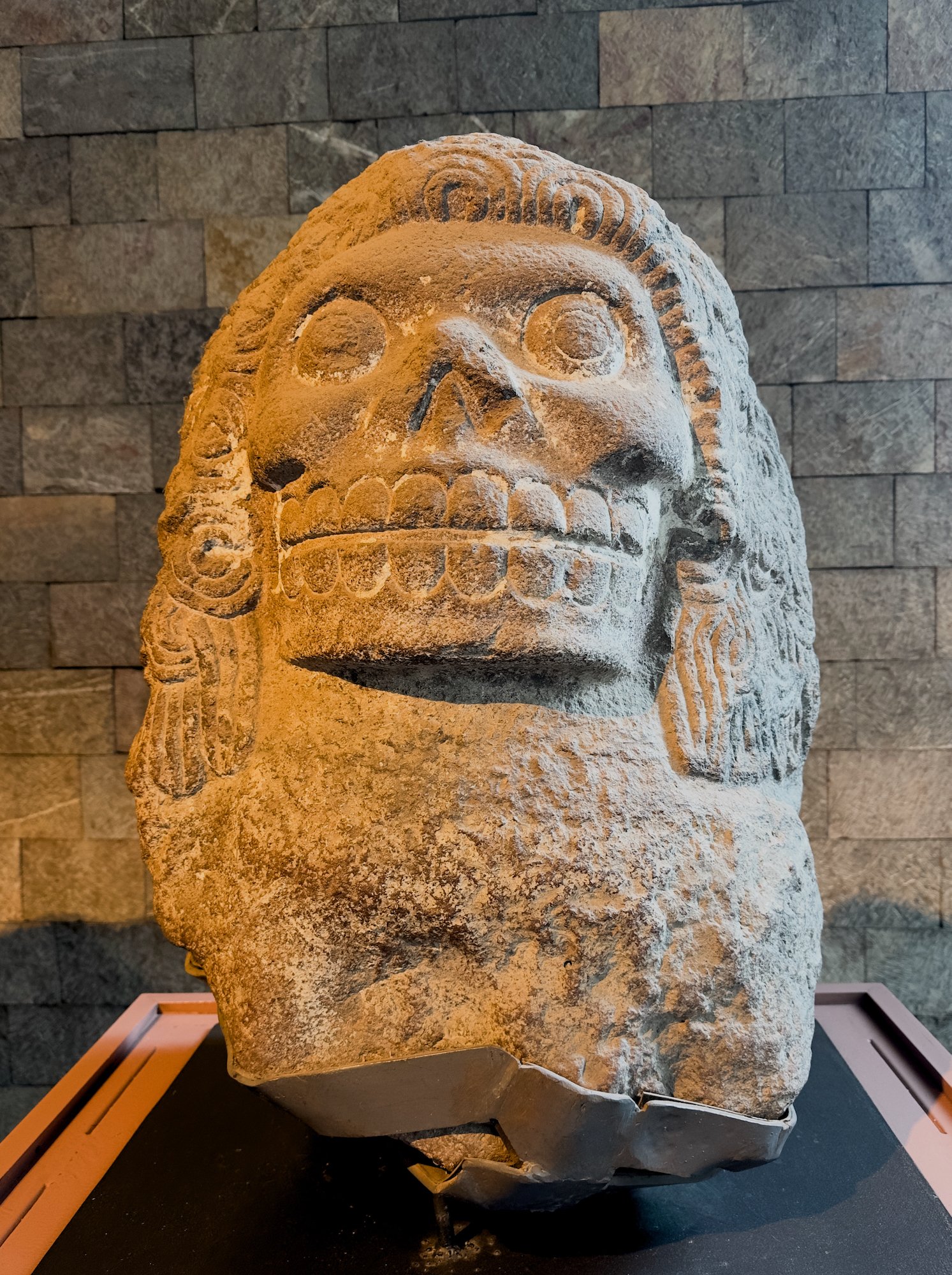
National Museum of Anthropology: It’s amazing to realize that the “Day of the Dead” aesthetic goes back to ancient times.
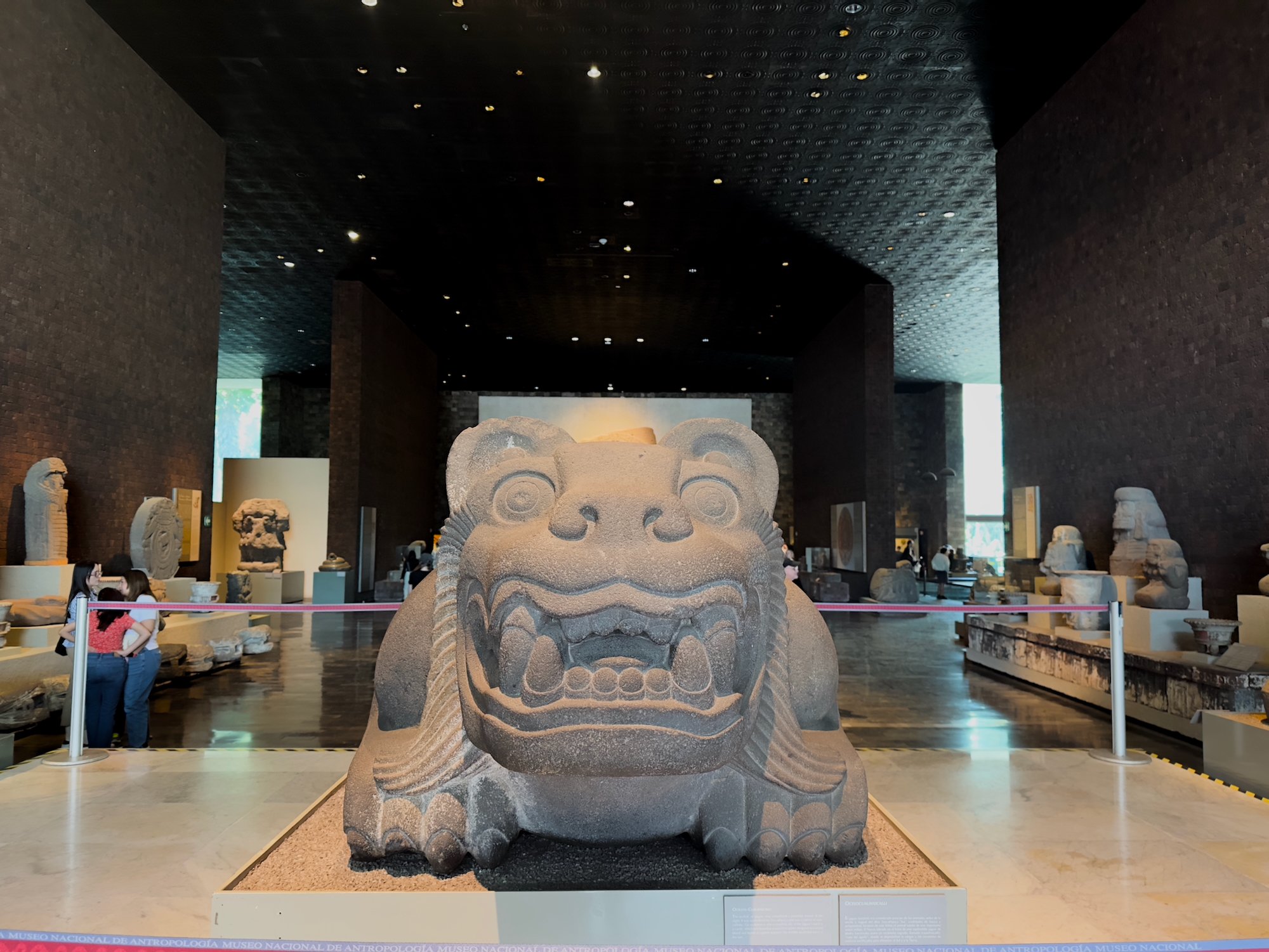
National Museum of Anthropology
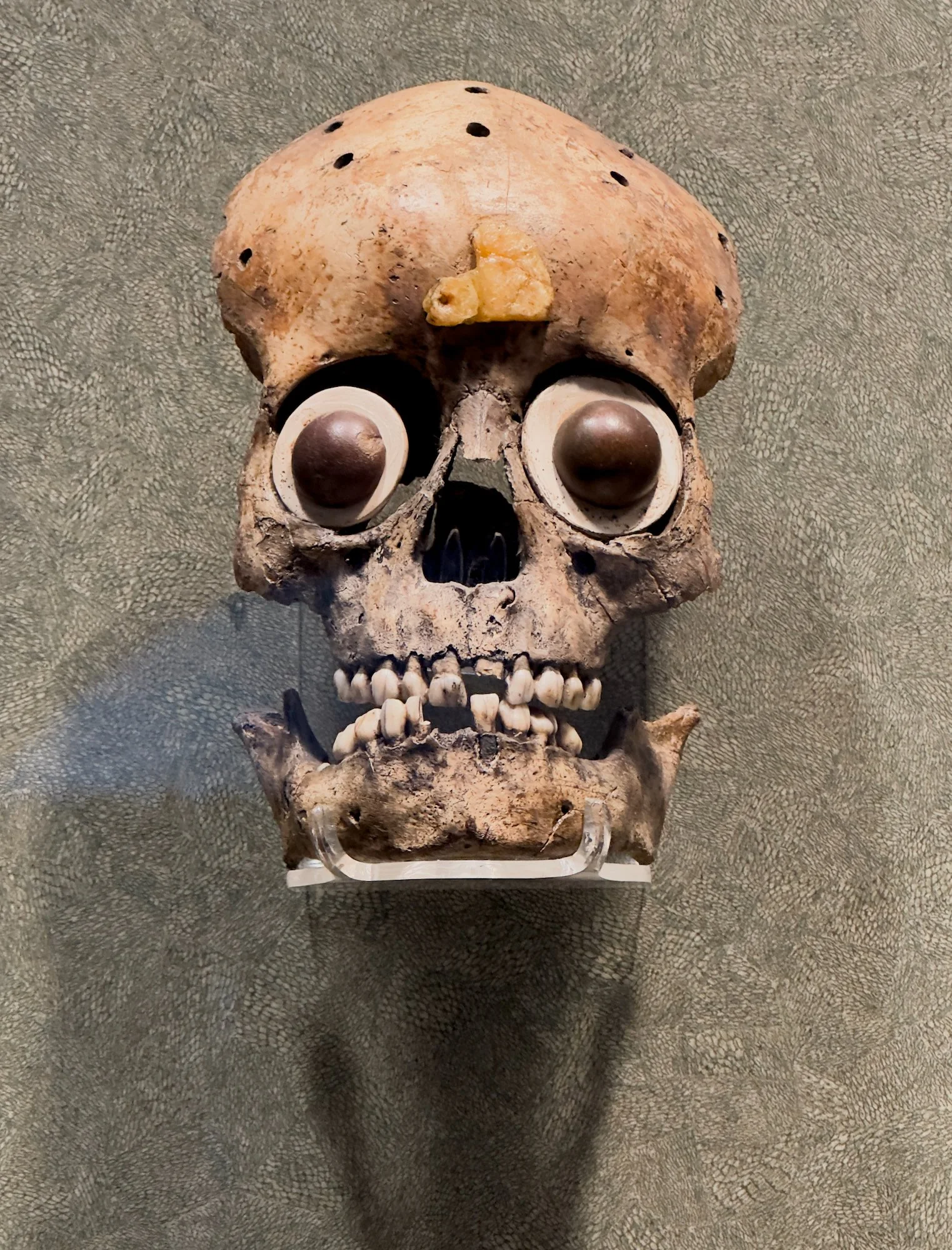
National Museum of Anthropology
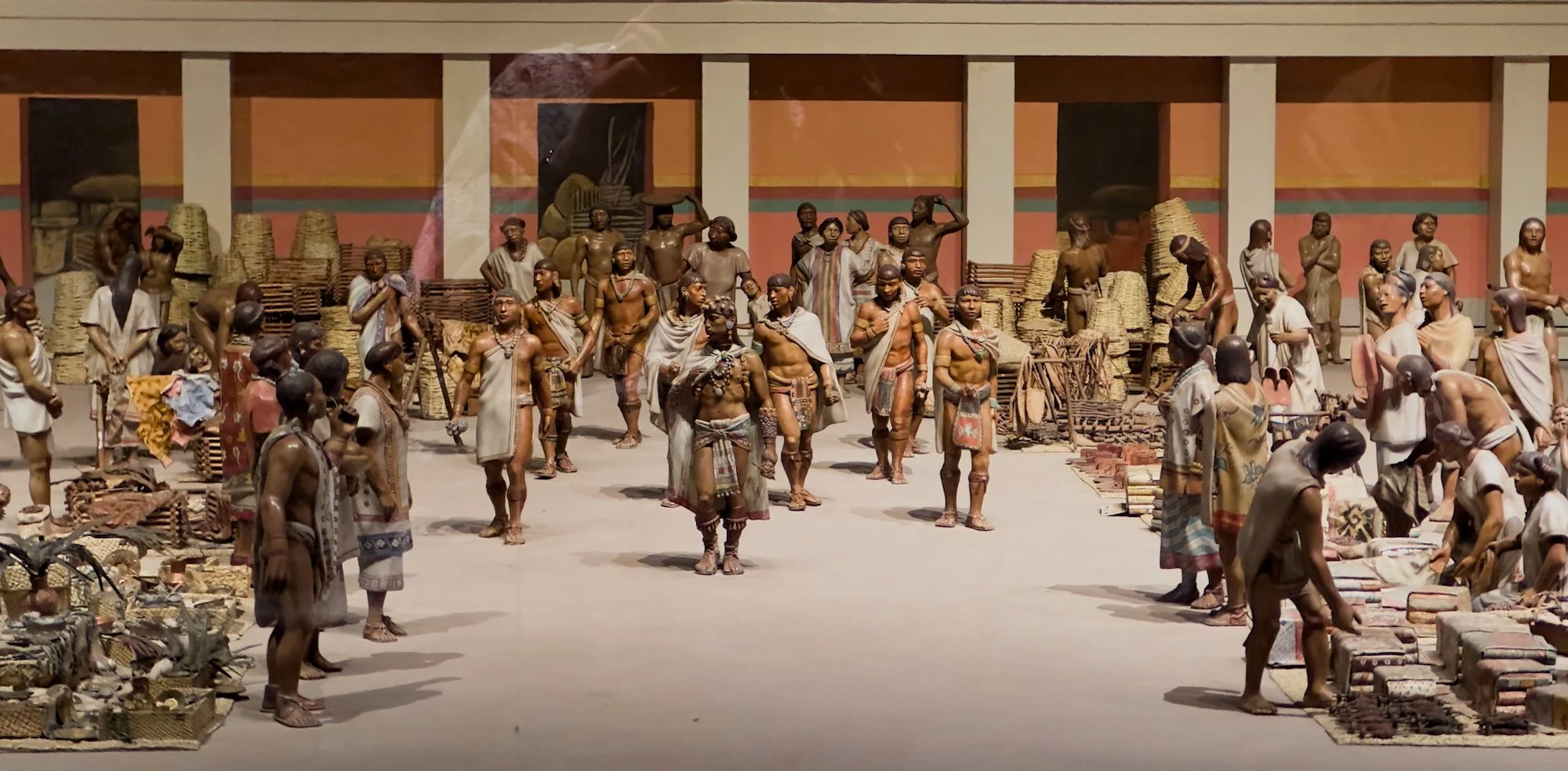
National Museum of Anthropology: This is just a small part of a large diorama depicting an Aztec market.
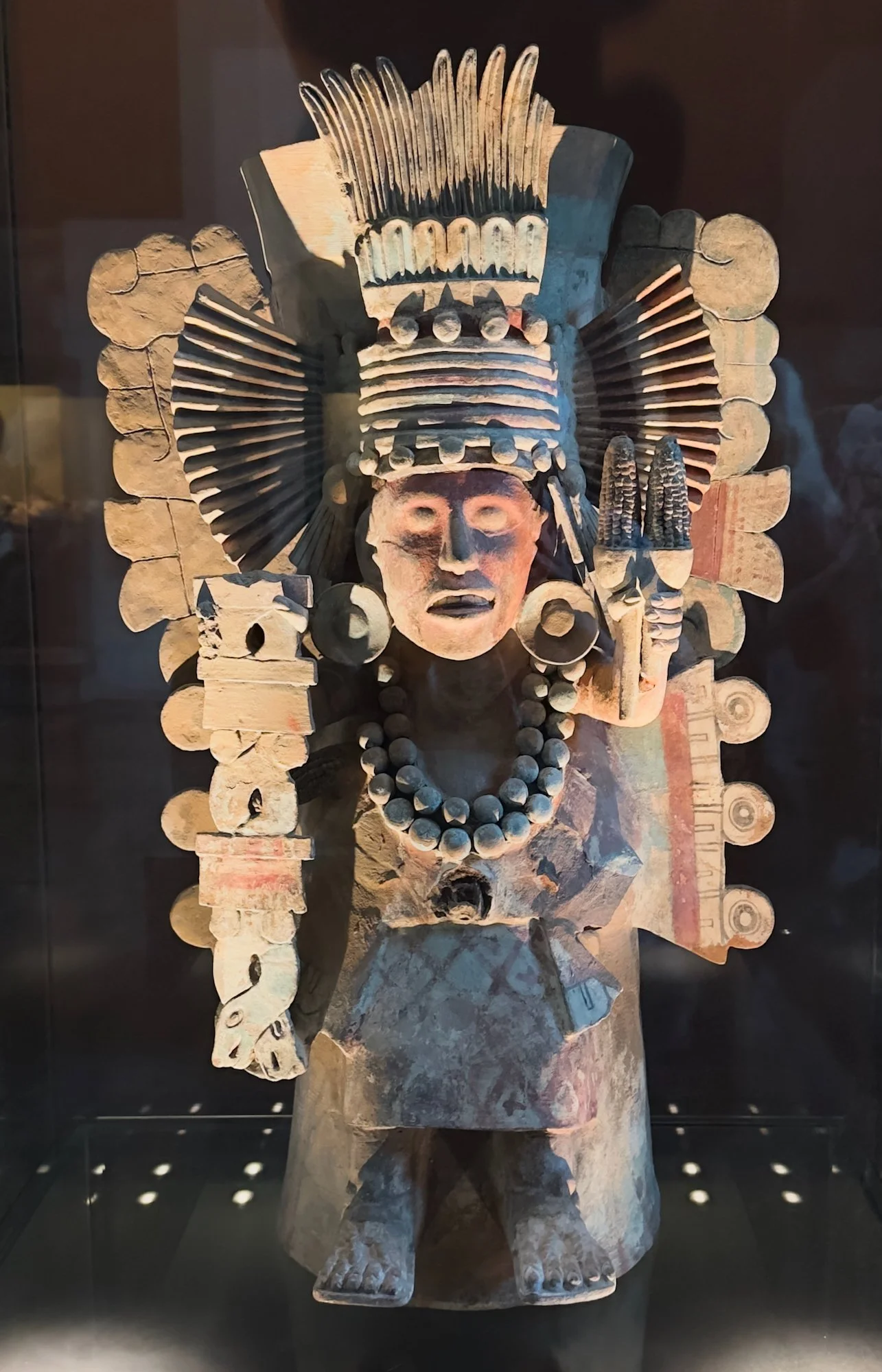
National Museum of Anthropology
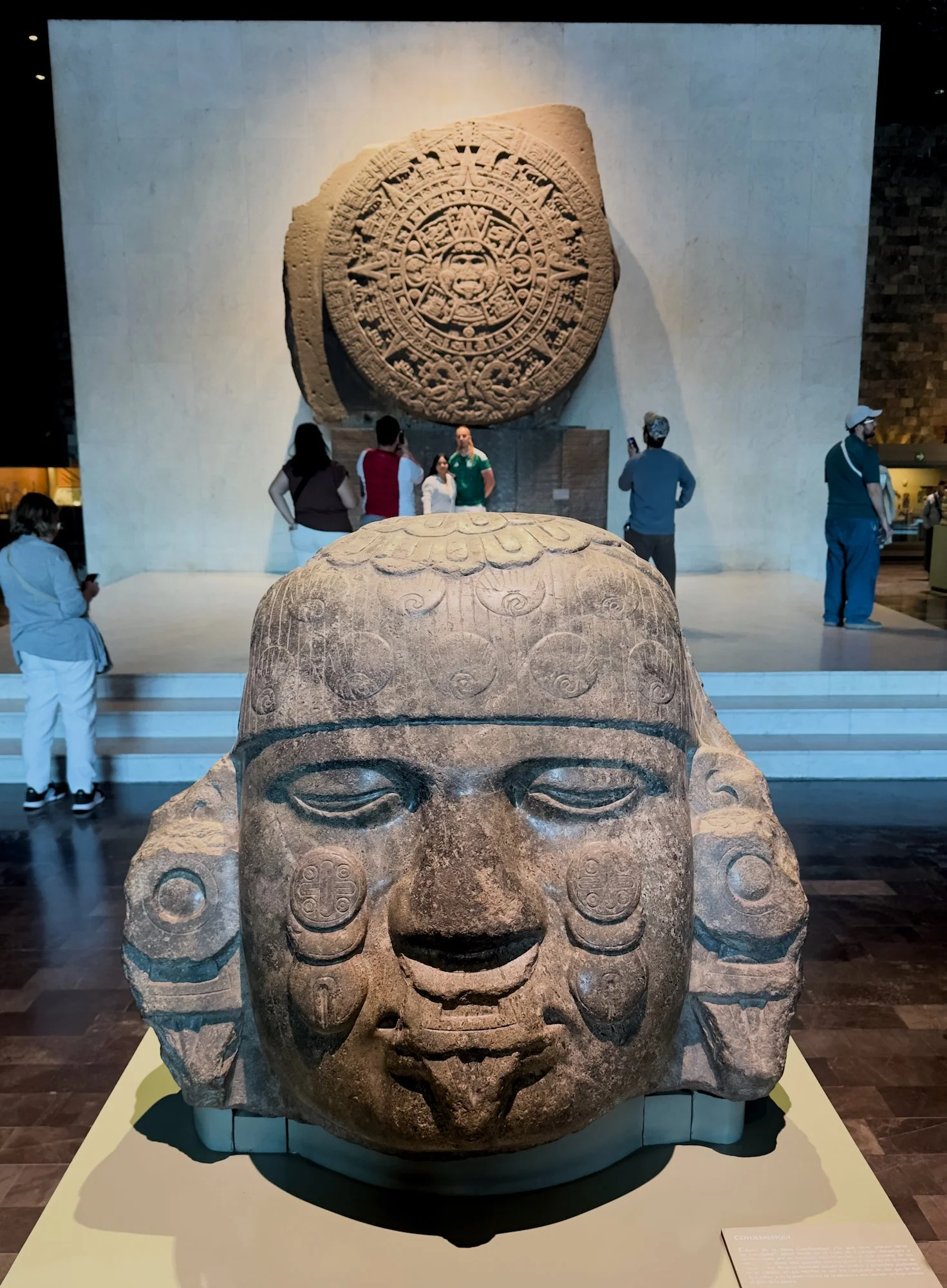
National Museum of Anthropology
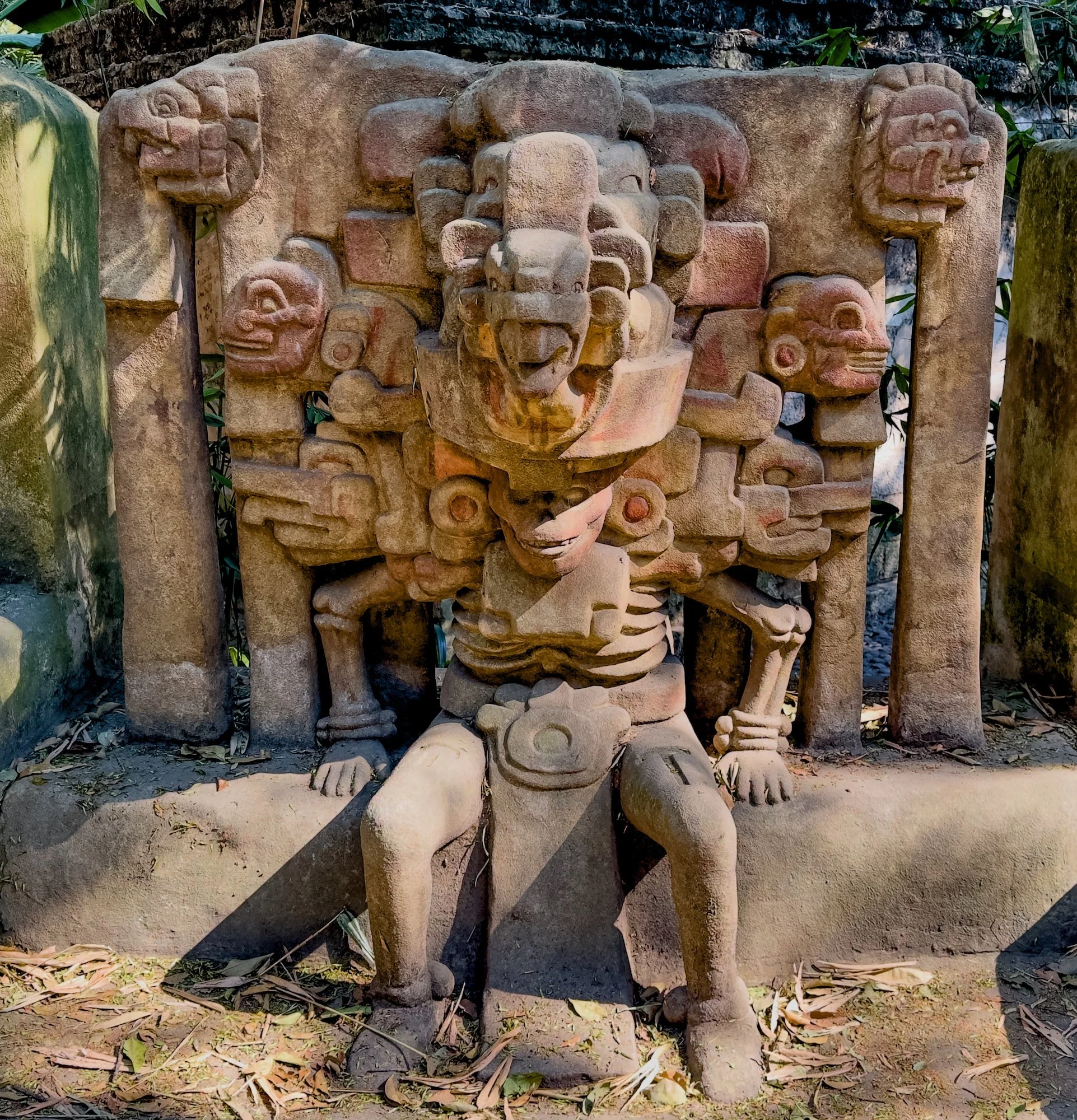
National Museum of Anthropology: a very cool artifact in an outdoor space.
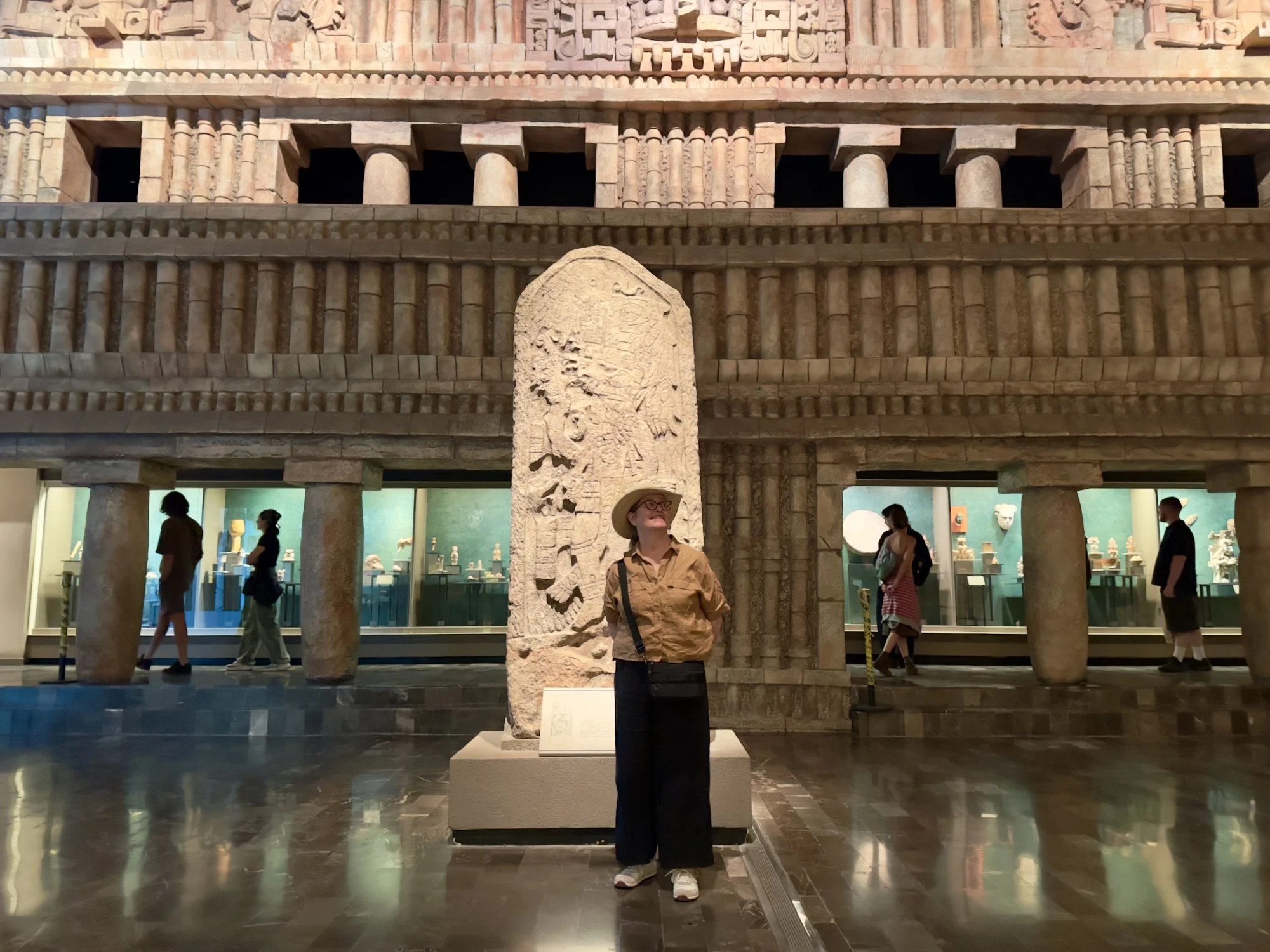
National Museum of Anthropology: Beth looking like an explorer in front of a massive part of a temple.
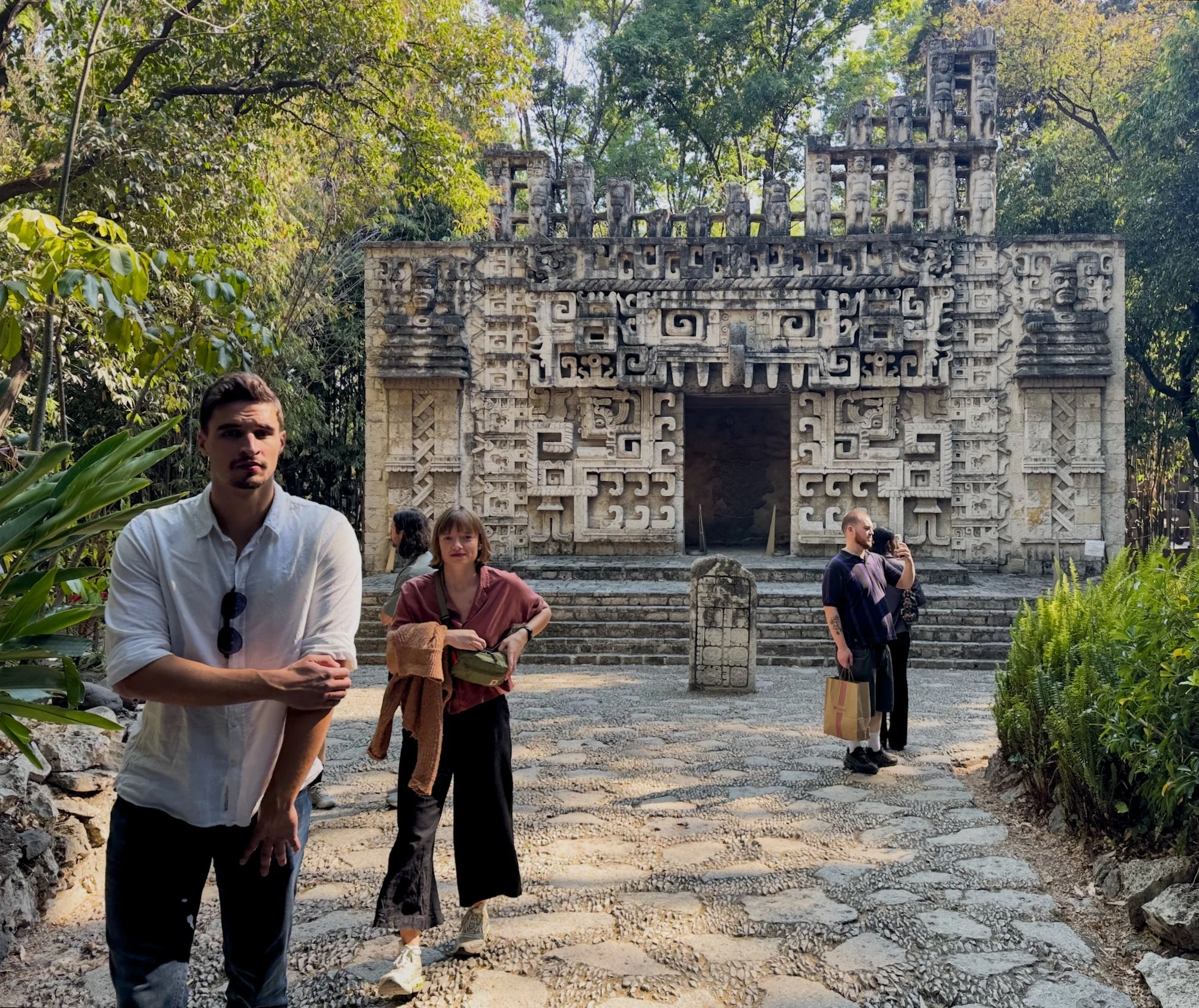
National Museum of Anthropology: amazing artifacts in the outdoor spaces.
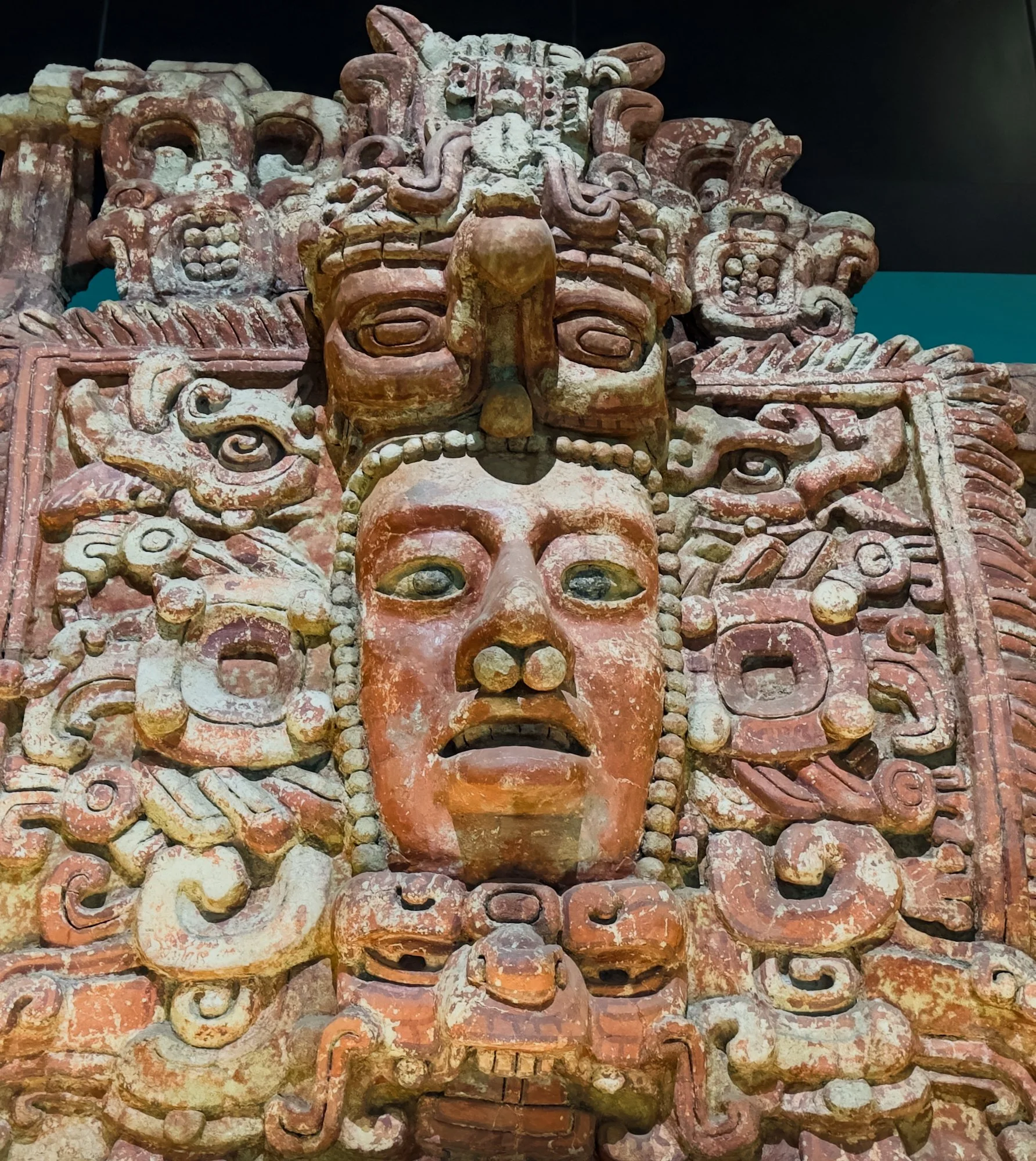
National Museum of Anthropology
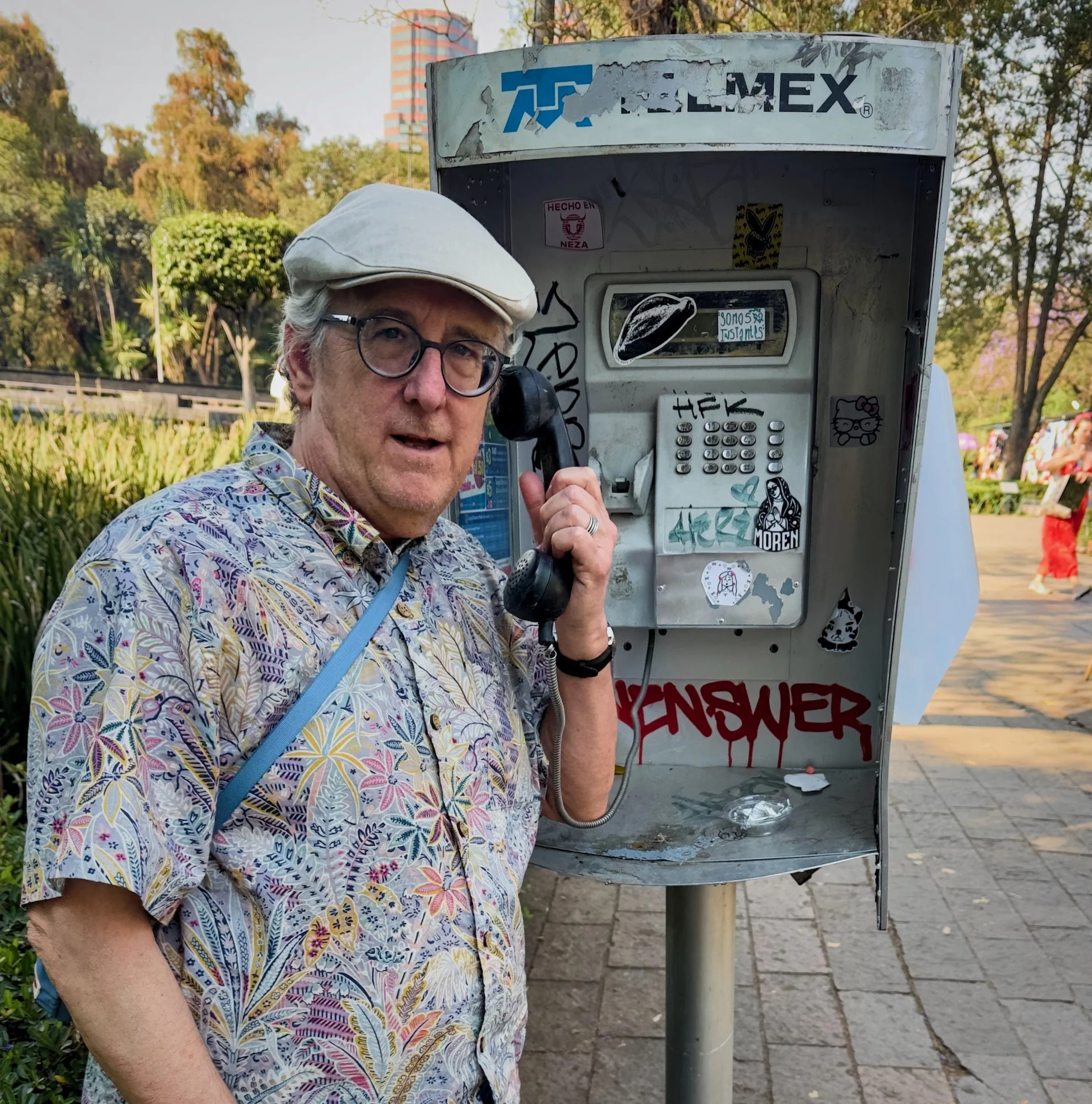
I tried to call you!
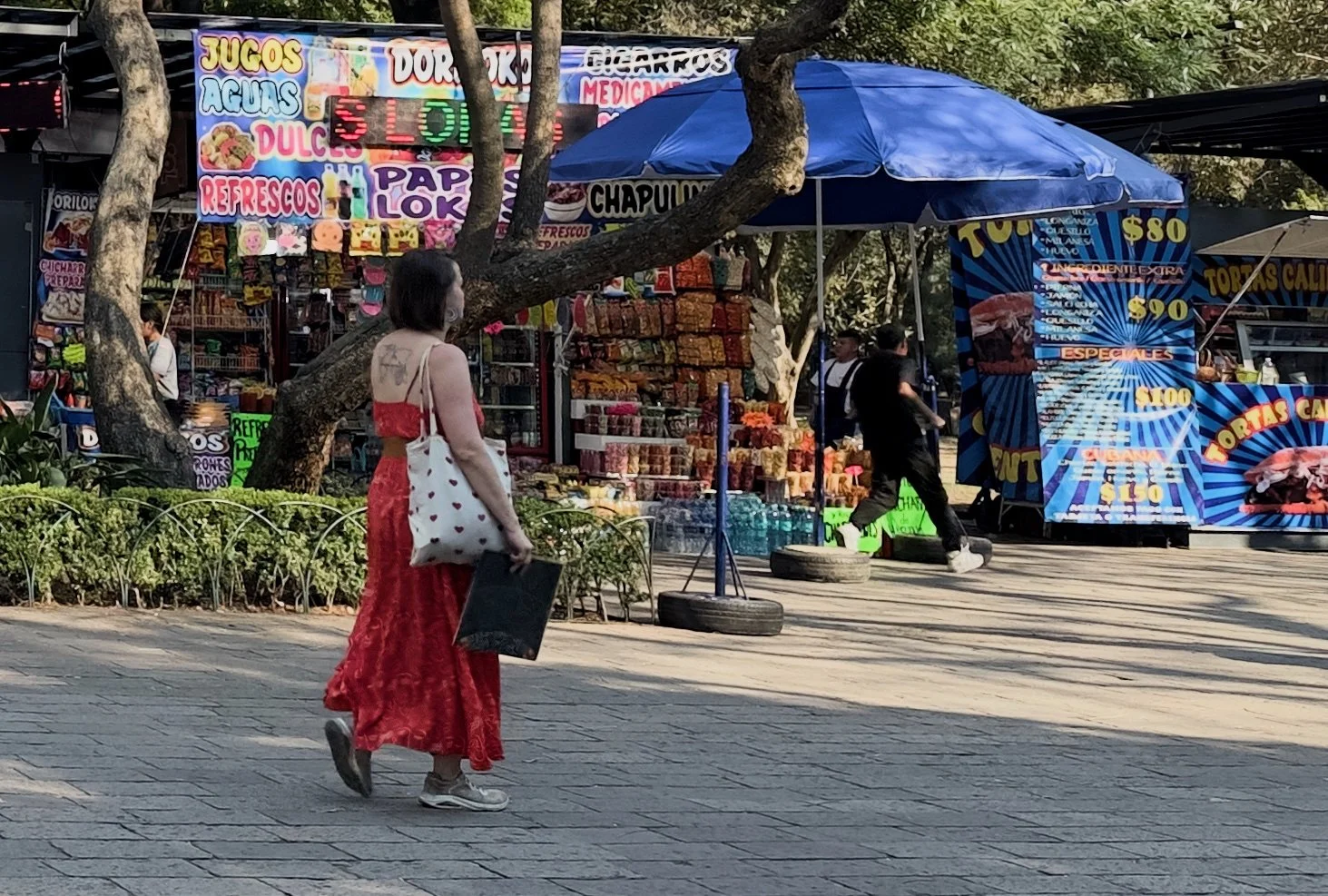
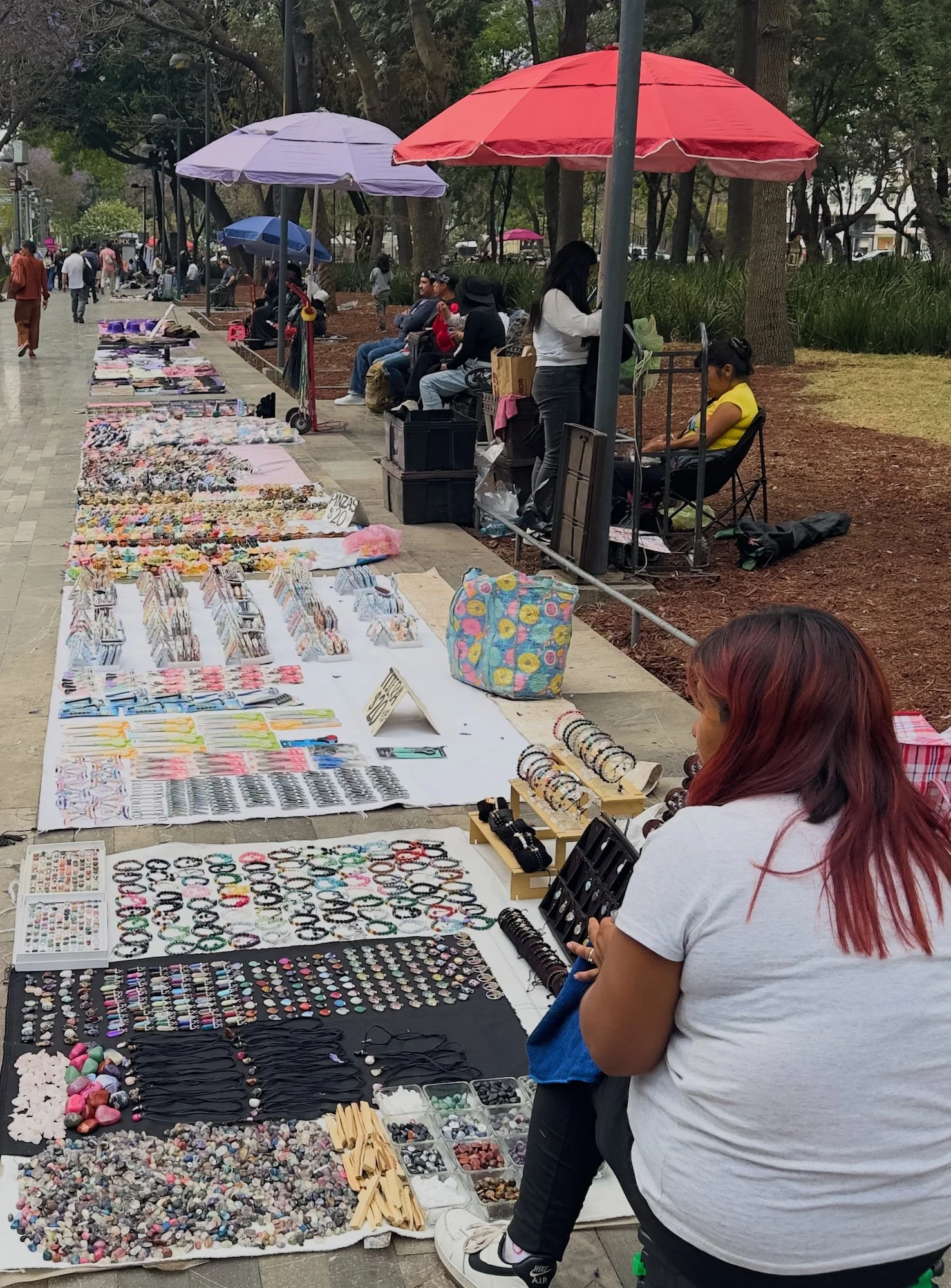
National Museum of Anthropology: there were lots of venders around the National Museum of Anthropology and throughout the park.
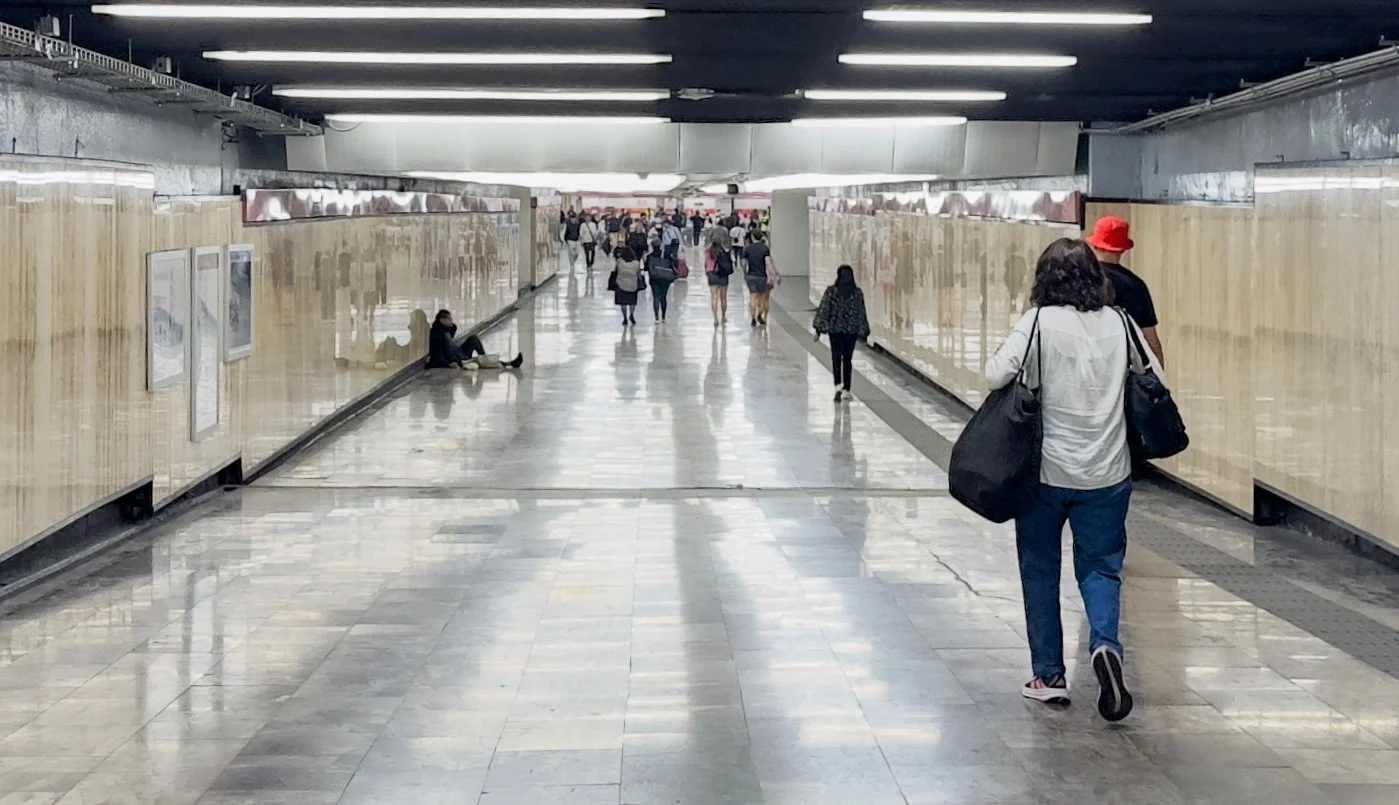
Suddenly, at the edge of the park, we found a super modern subway station.
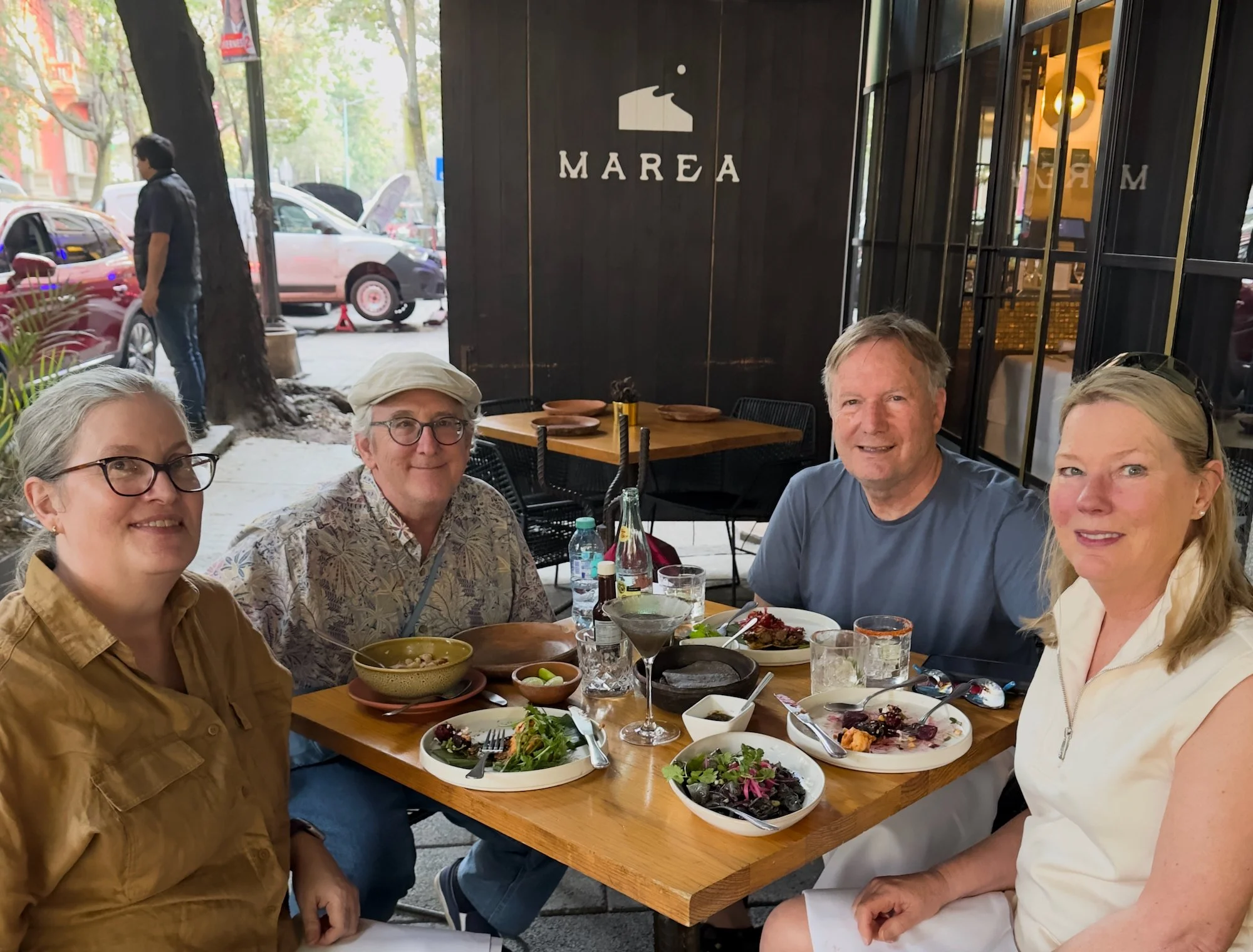
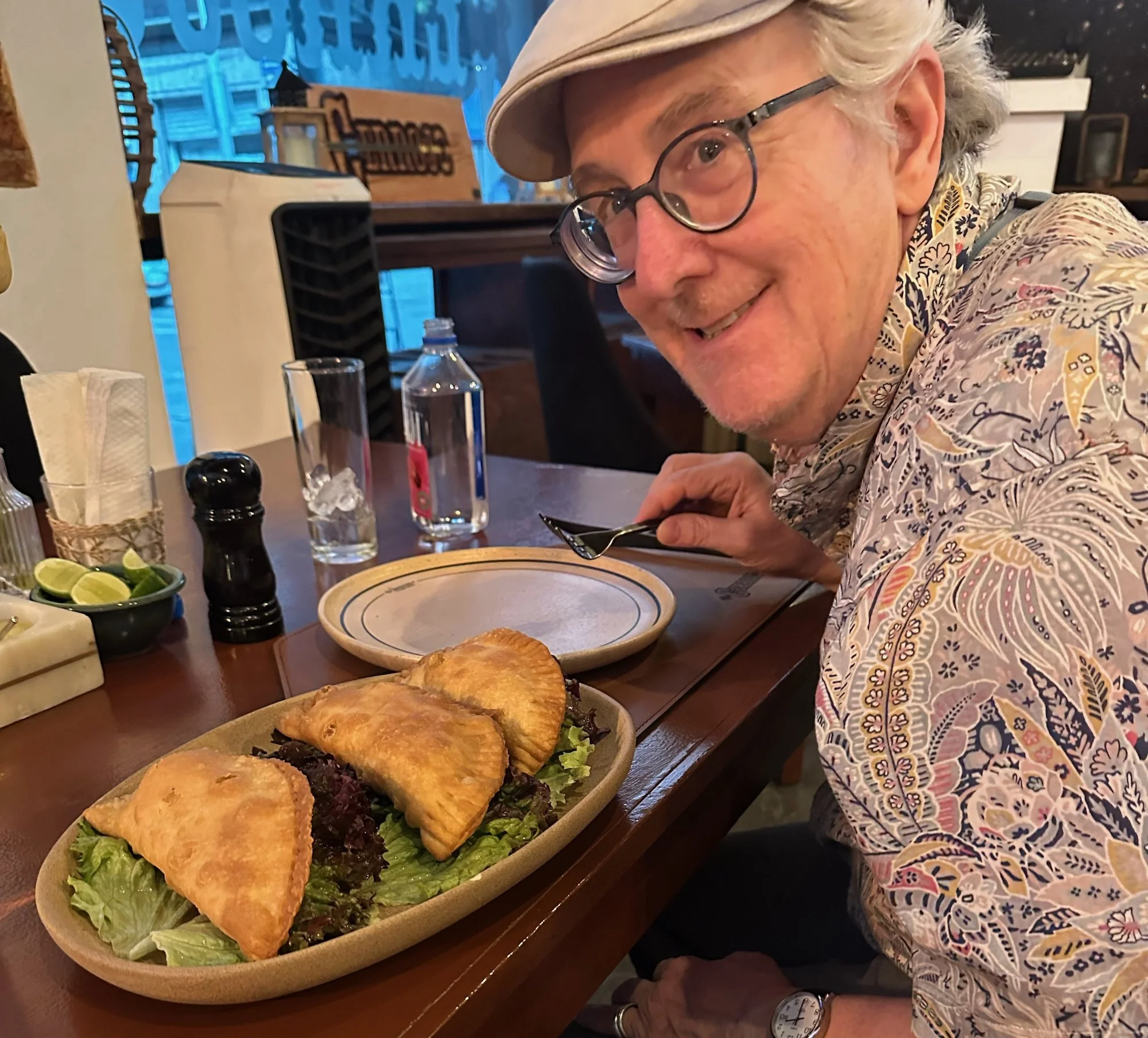
We found this restaurant not far from the park. It tasted good, but this is where I ate something I shouldn't have, and Montezuma took his revenge the next day. I had beef tacos, and I’m pretty sure that was it. That was the start for me, but over the next day or two, even though we tried to be careful, all four of us got the runs for pretty much the rest of the trip.
If you look into the background, there was a busy auto repair shop next door.
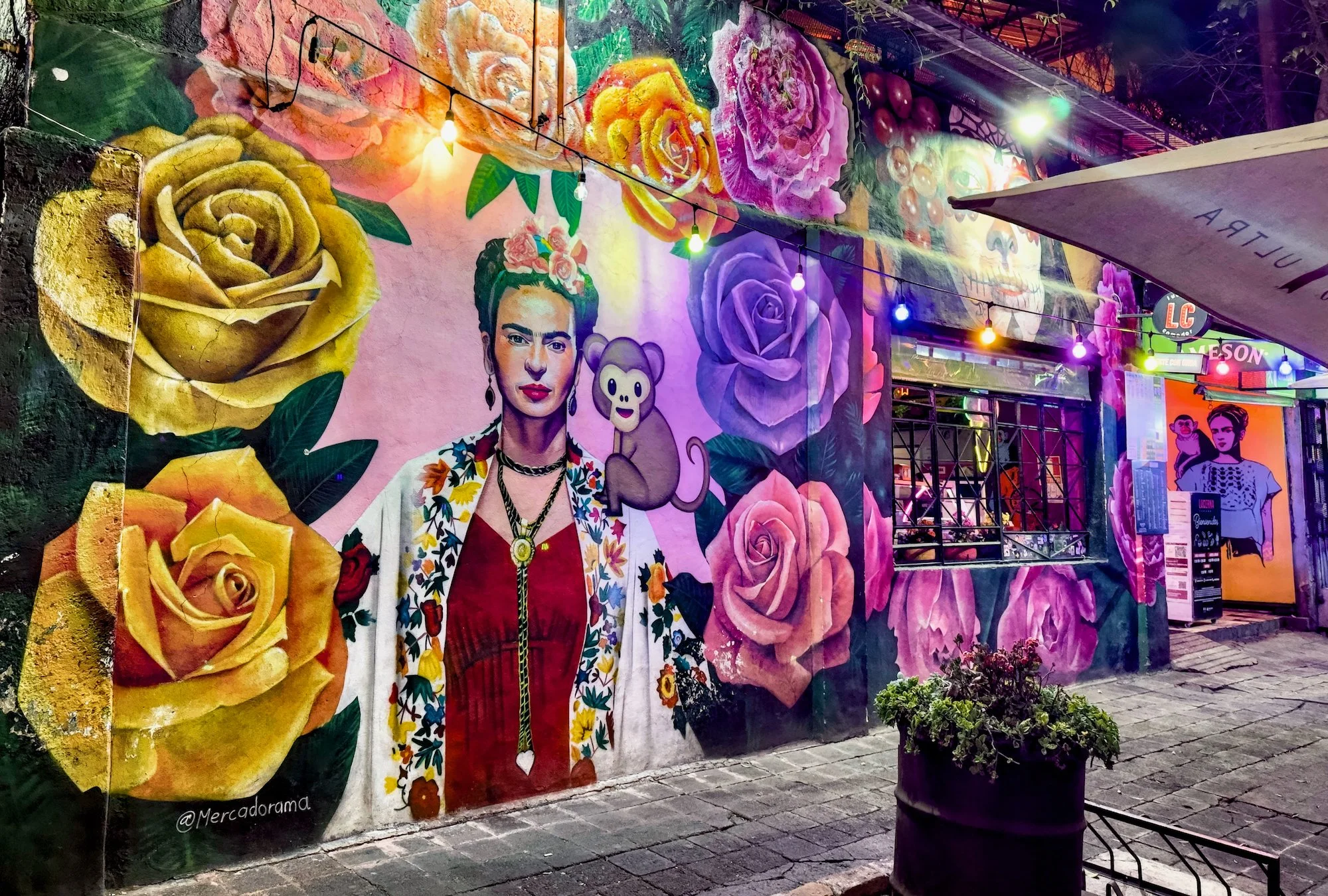
On the way back to our hotel we came upon this fabulous mural just around the corner from the hotel. We ended up eating here a few days later.
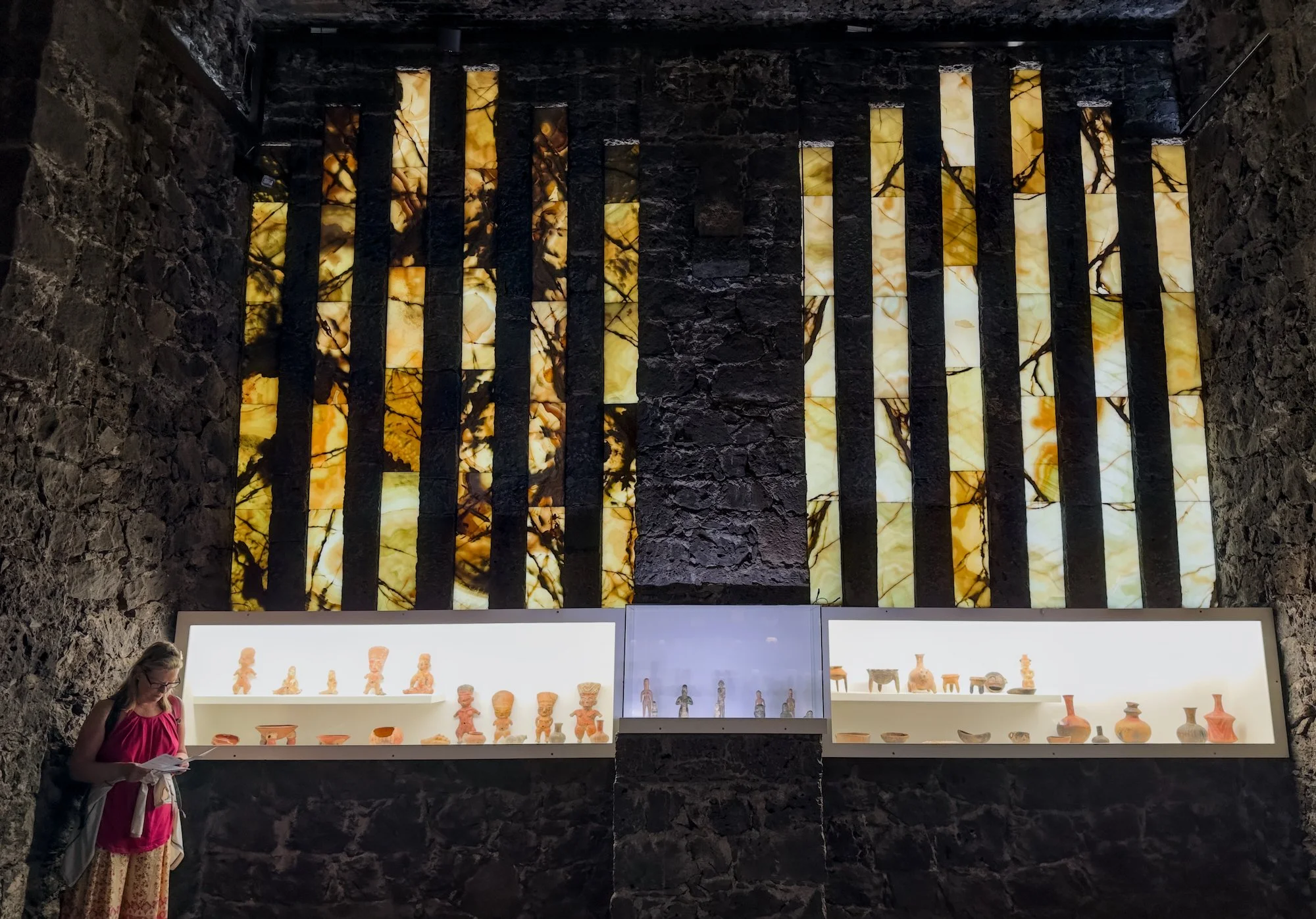
Anahuacalli Museum: This museum was built on the "farm" of Diego Rivera. He had collected over 60,000 pre-Columbian artifacts and built this museum to share them with the public. There are only about 2000 pieces on display at any one time. The whole building is made of volcanic stone, which is the same material that the ancient cultures built their temples. Here, the daylight is glowing through pieces of marble.
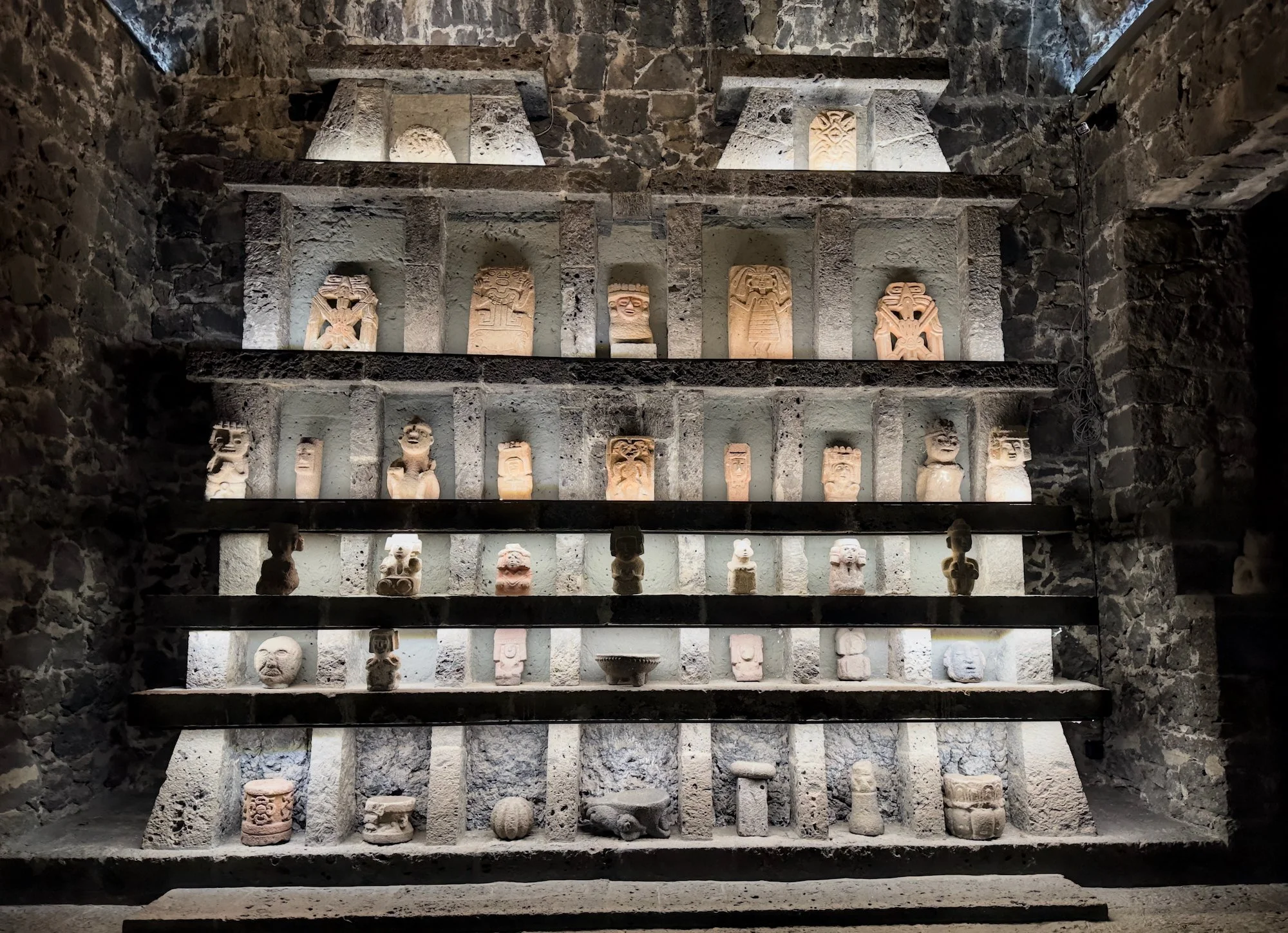
Anahuacalli Museum
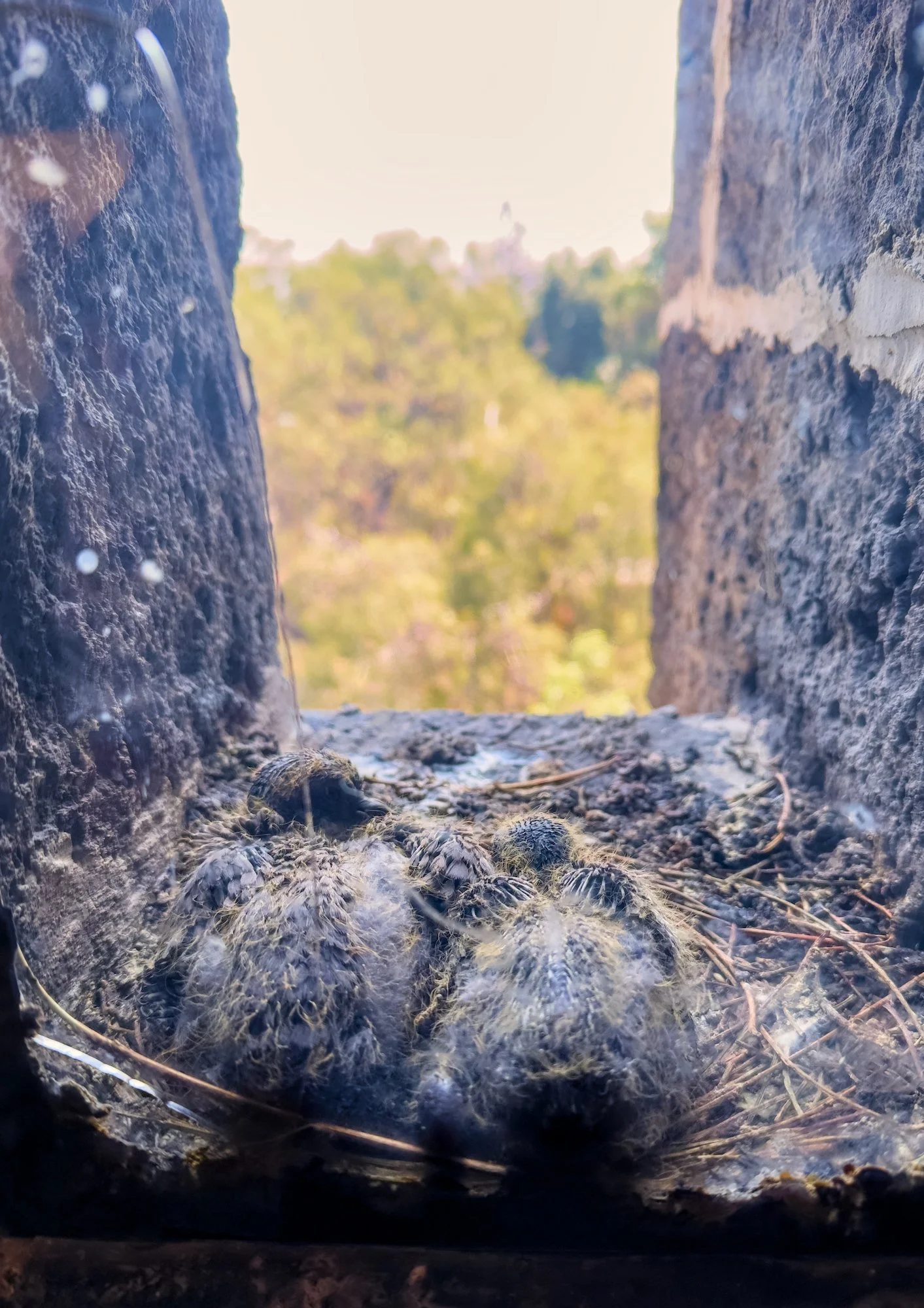
Anahuacalli Museum: a security guard pointed these out to me, they are pigeon chicks on the 3rd floor ledge. I, in turn, pointed them out to other visitors before we moved on.
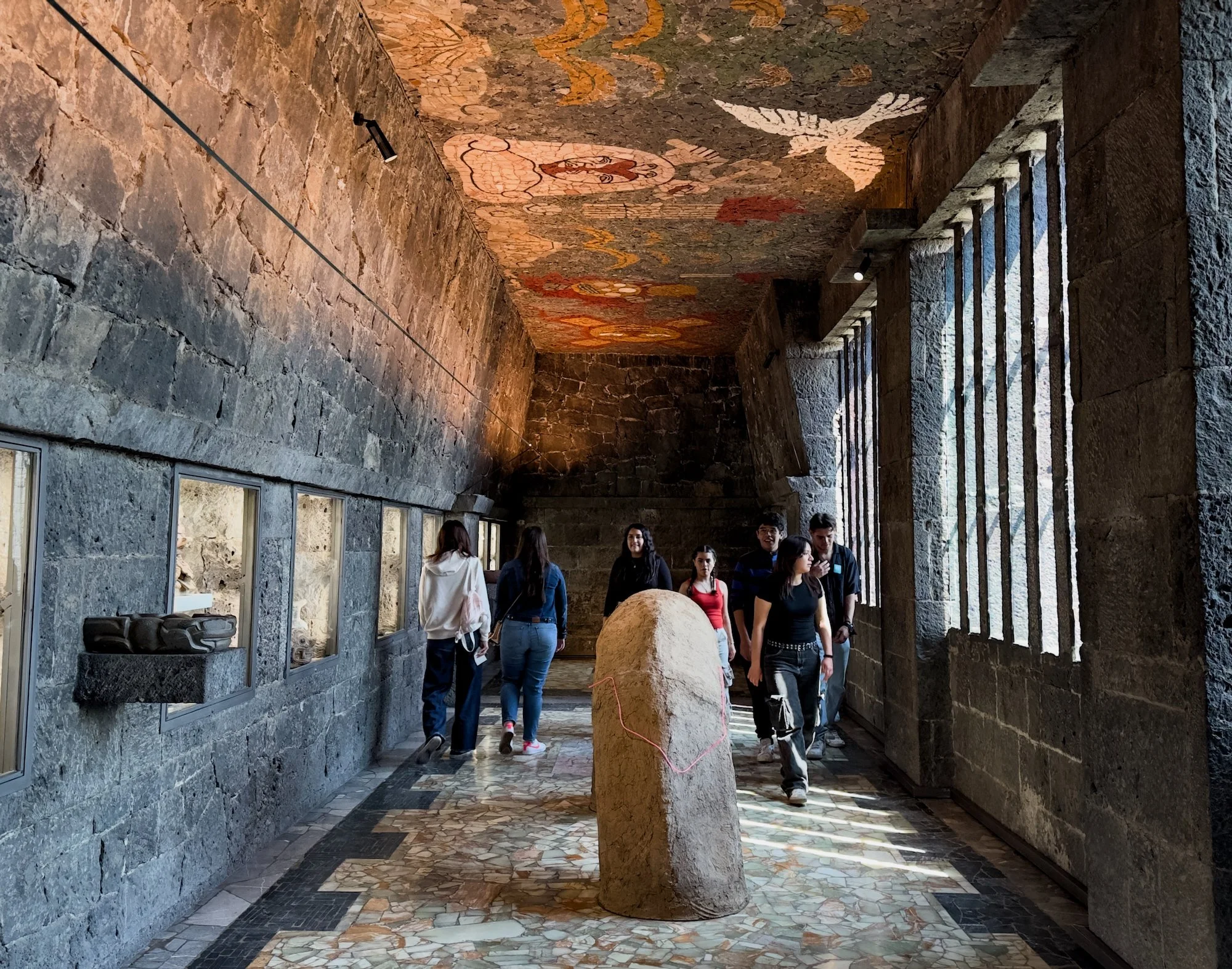
Anahuacalli Museum: a room on the 3rd floor. In the basement is the head of a giant serpent, and it’s body is weaved throughout the whole museum. That is what is rising in the middle of the floor.
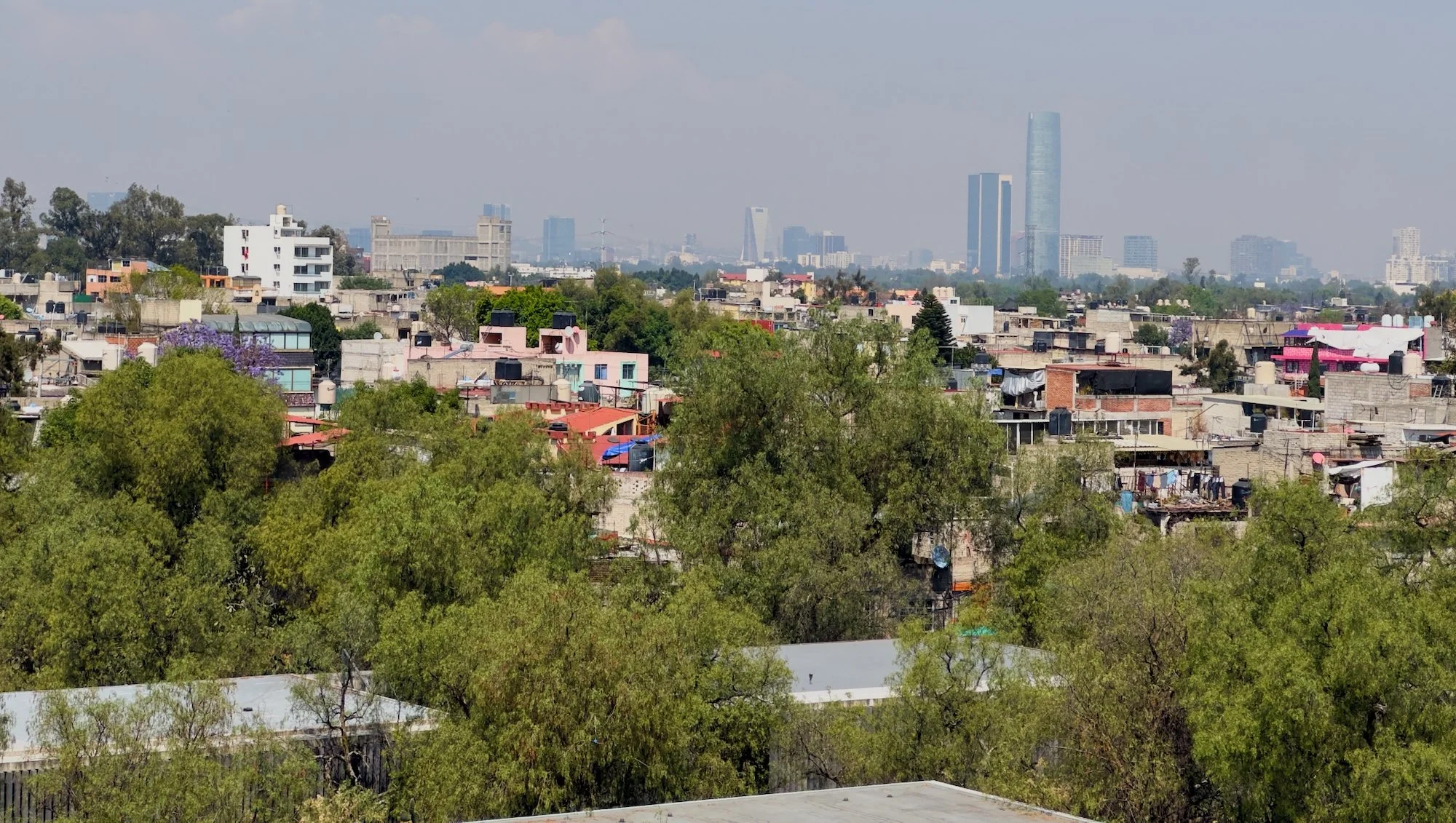
Anahuacalli Museum: the view from the roof toward the central part of the city where our hotel is. Air pollution from cars is pretty bad in Mexico City (population 22.6 million), though we did see a lot of new Chinese electric cars. Hopefully, as electric cars slowly take over, the air quality will improve.
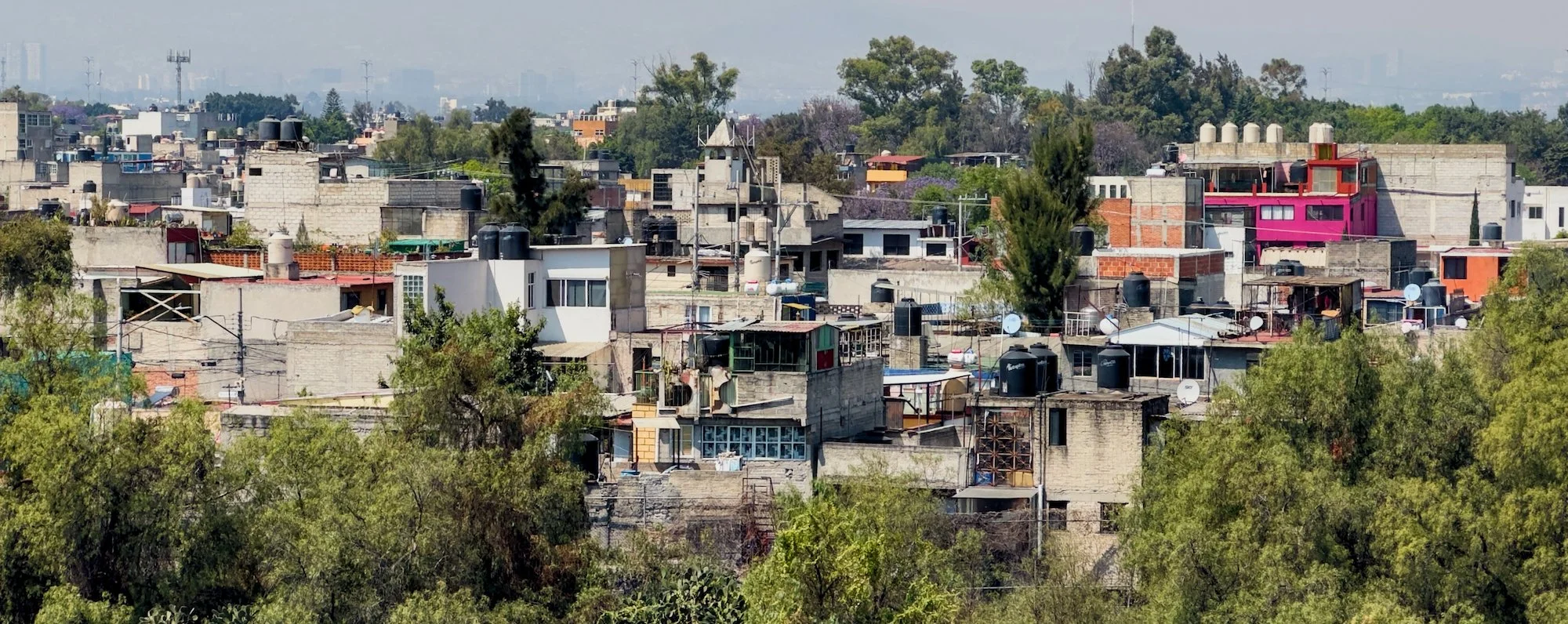
Anahuacalli Museum: A view of the surrounding neighborhood from the roof.
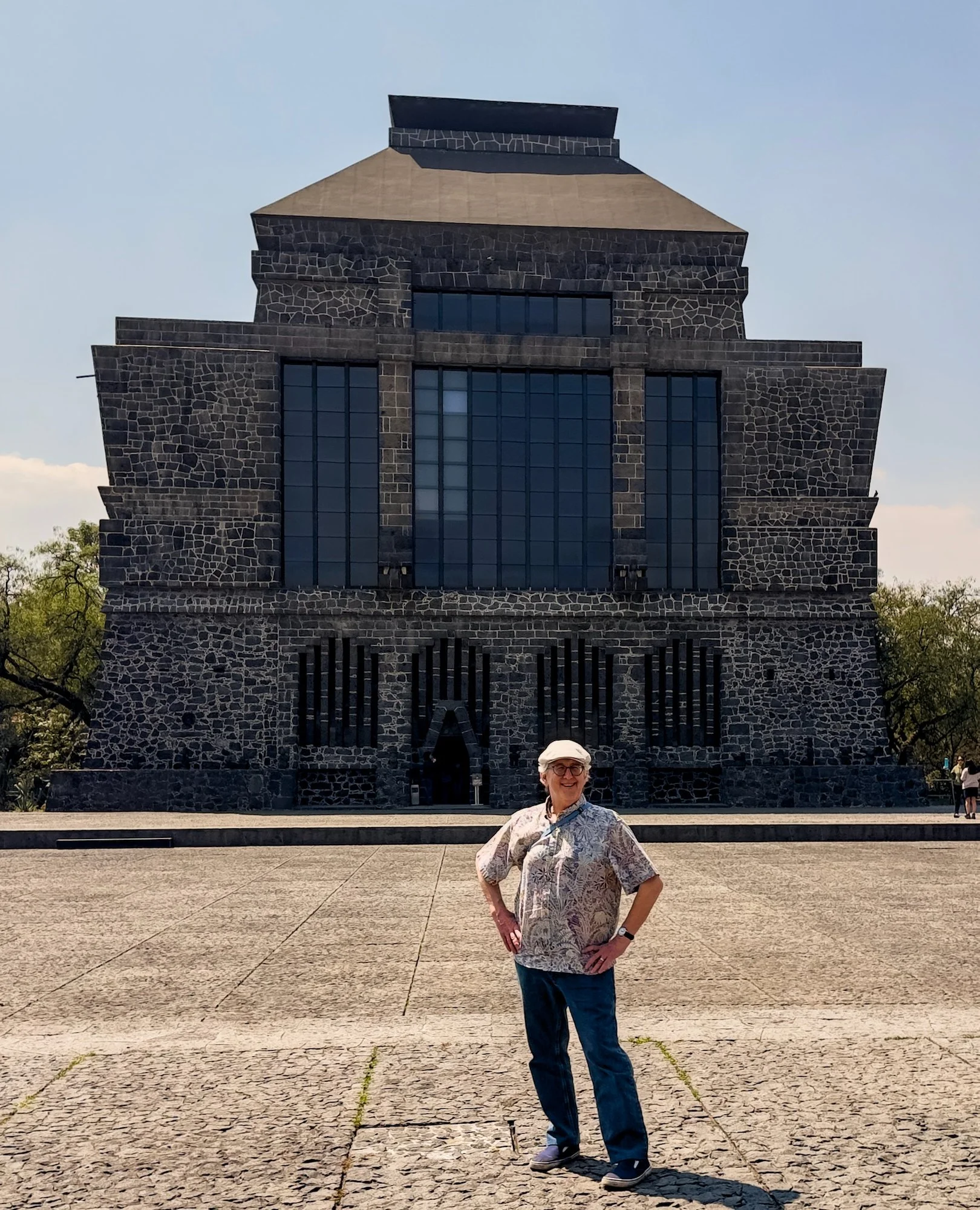
Anahuacalli Museum: Here I am standing in front of the museum.
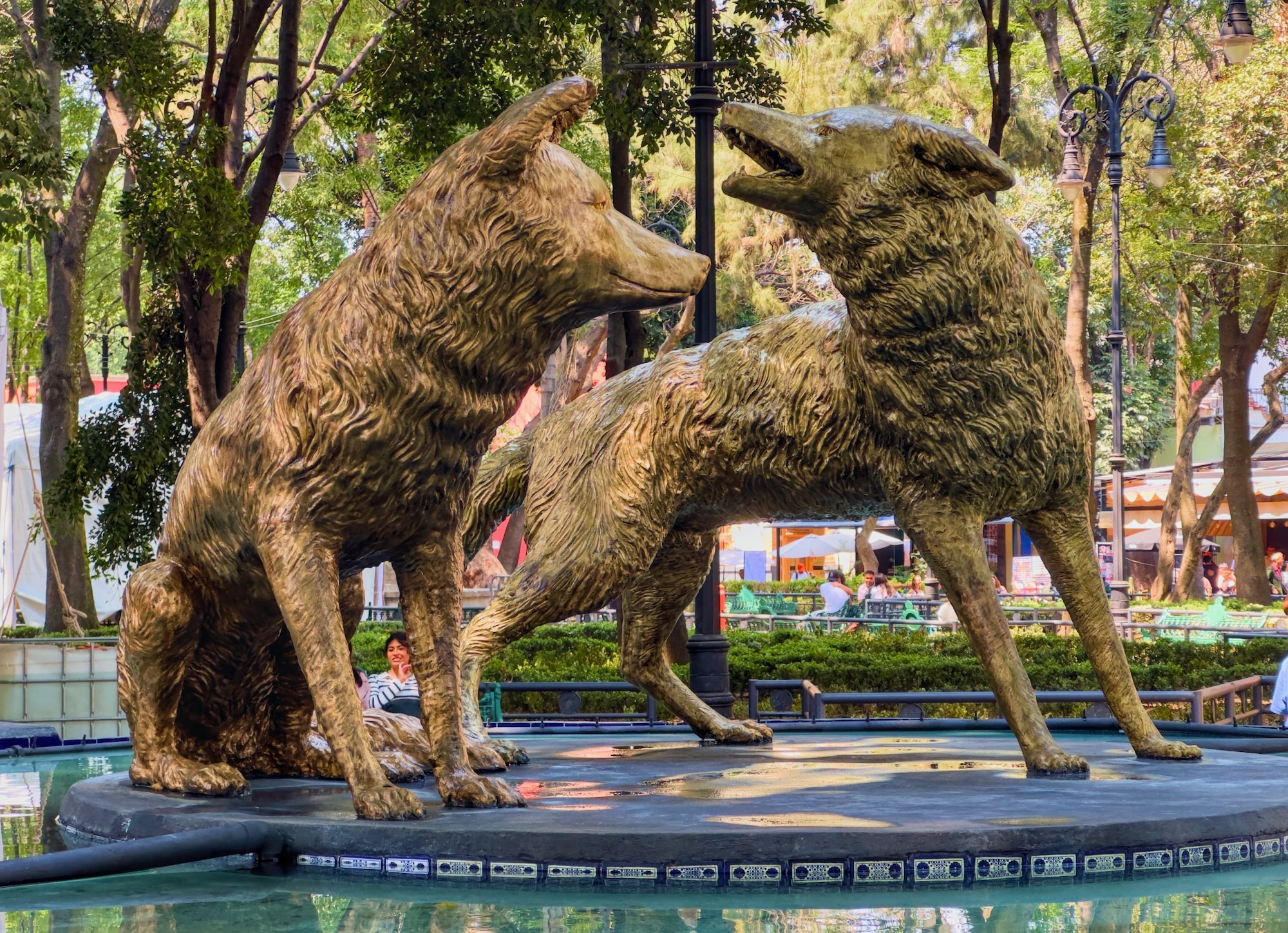
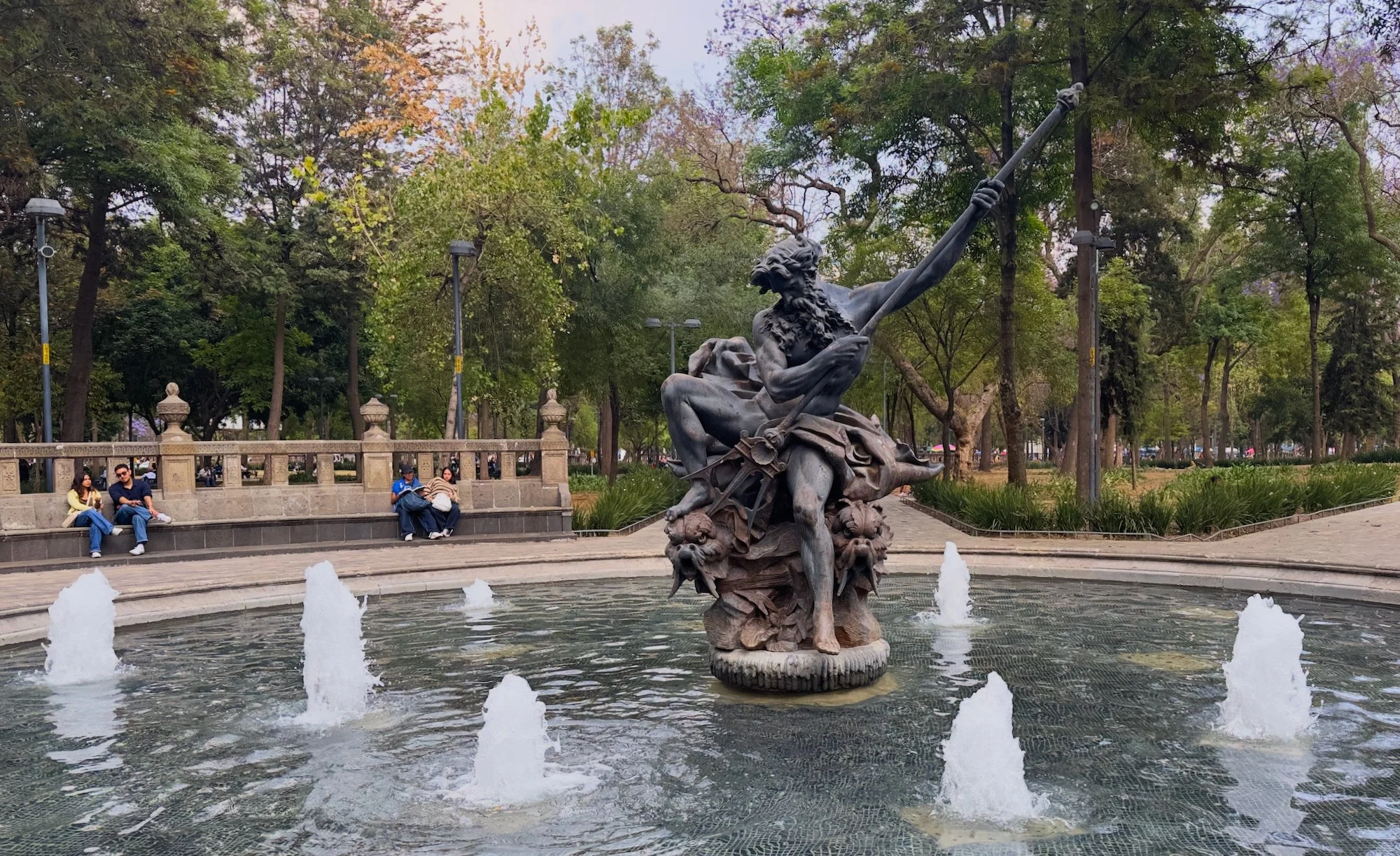
The Fountain of the Coyotes in the center of the neighborhood of Coyoacán. This bronze statue in the middle of a fountain pays homage to the name of the neighborhood which means “The place of abundant coyotes." We hired a walking tour guide for the neighborhood and this is where we met her. Her name was Delta and she was really fabulous!
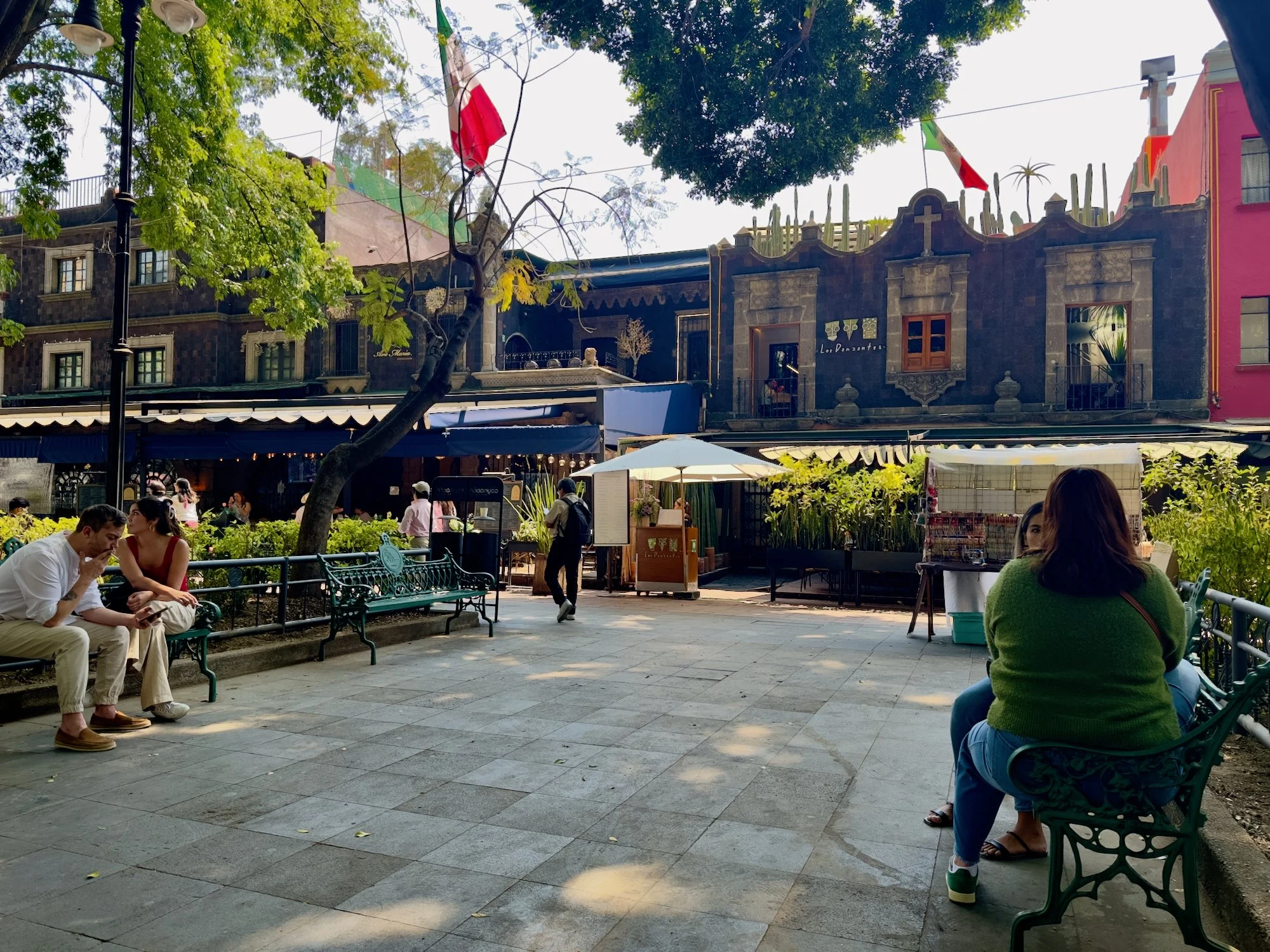
Coyoacán: This is the oldest neighborhood in Mexico City. It is where Cortez built his house and a small chapel. At that time it was on the shore of the huge lake that was here, but that lake is now completely filled in and is now Mexico City with a population of over 22.6 million people. Coyoacán has a nice feeling to it and it’s really great to walk around here.
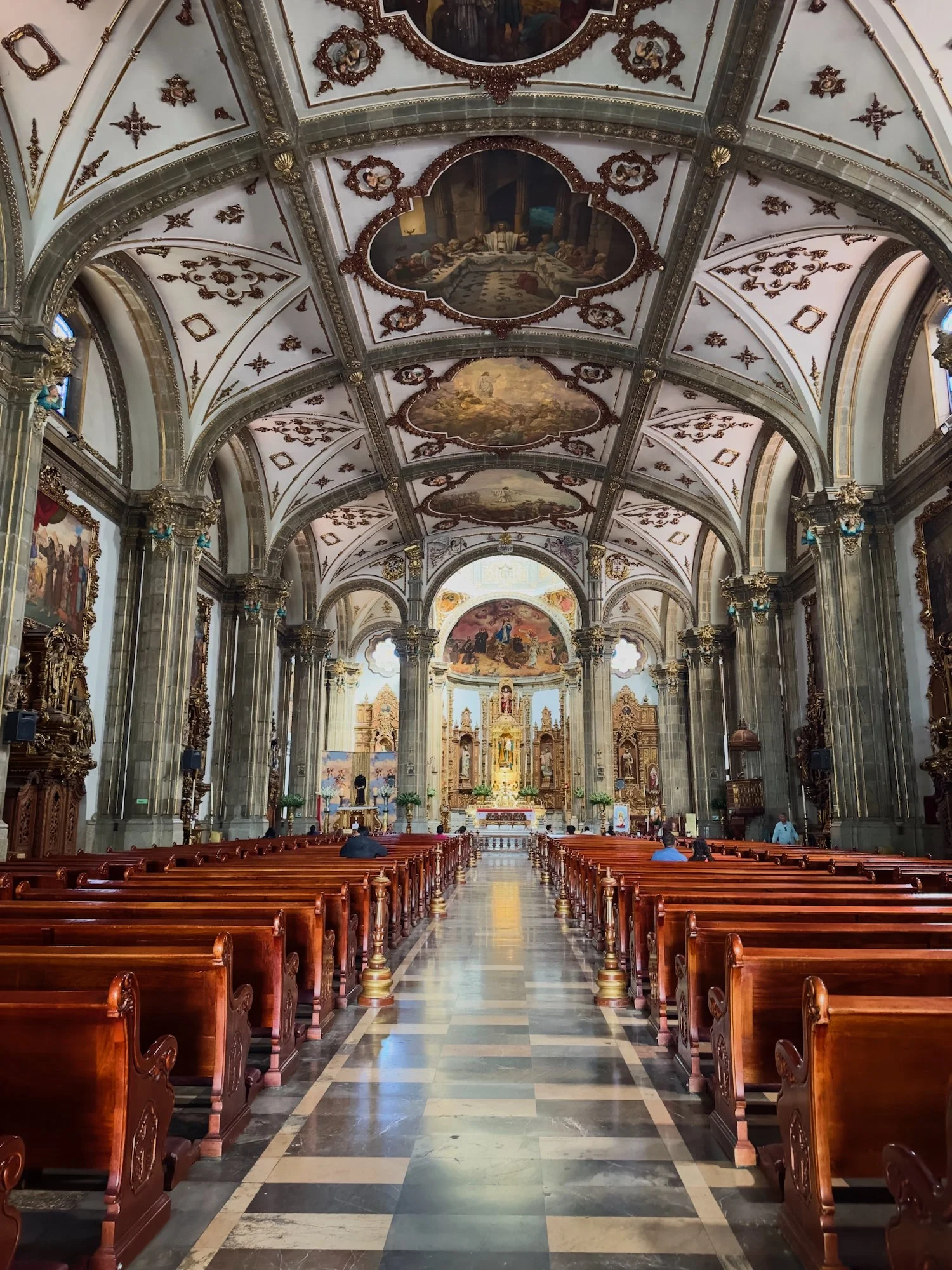
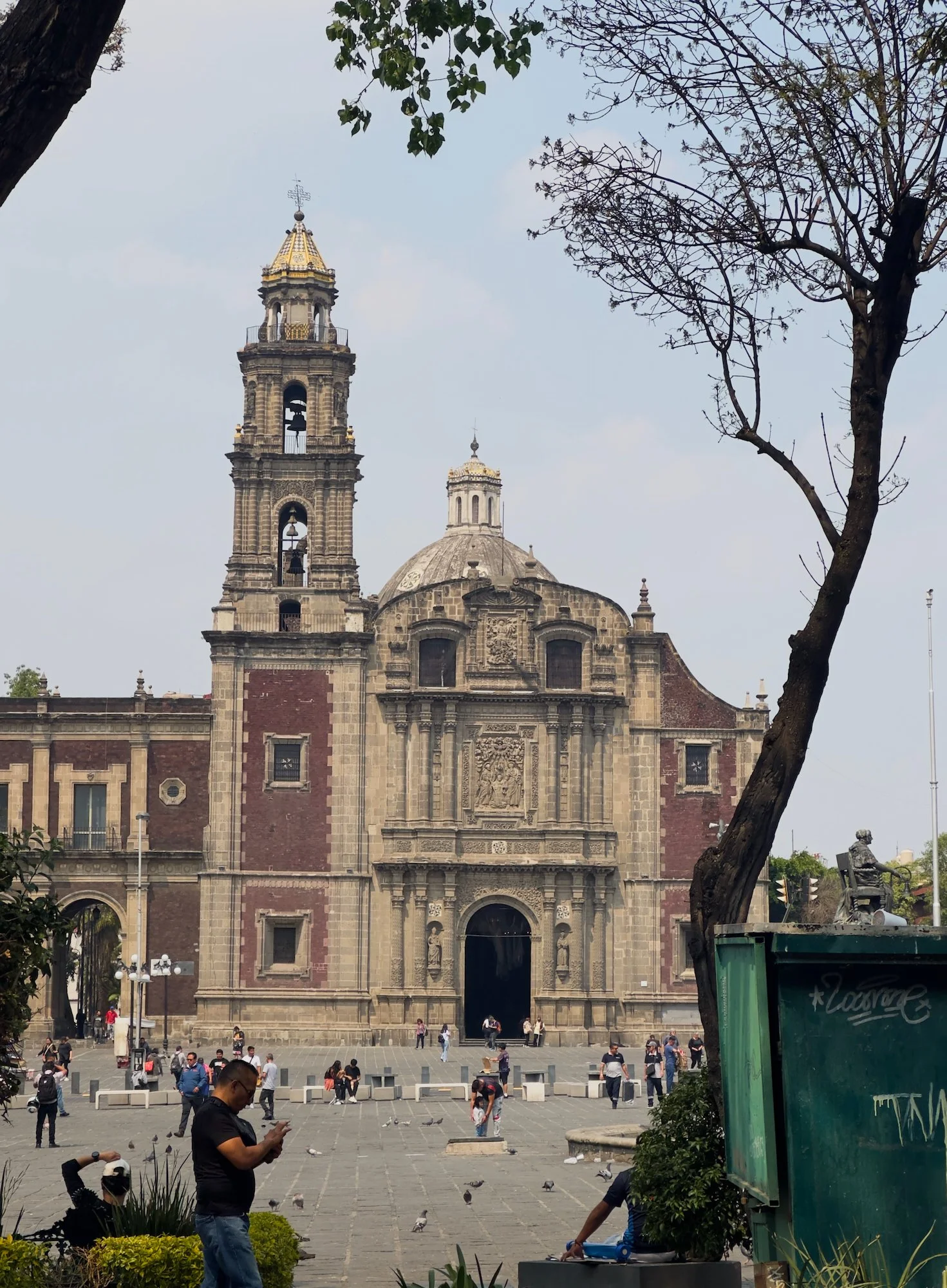
Coyoacán: The Parroquia San Juan Bautista, one of the oldest churches in Mexico City.
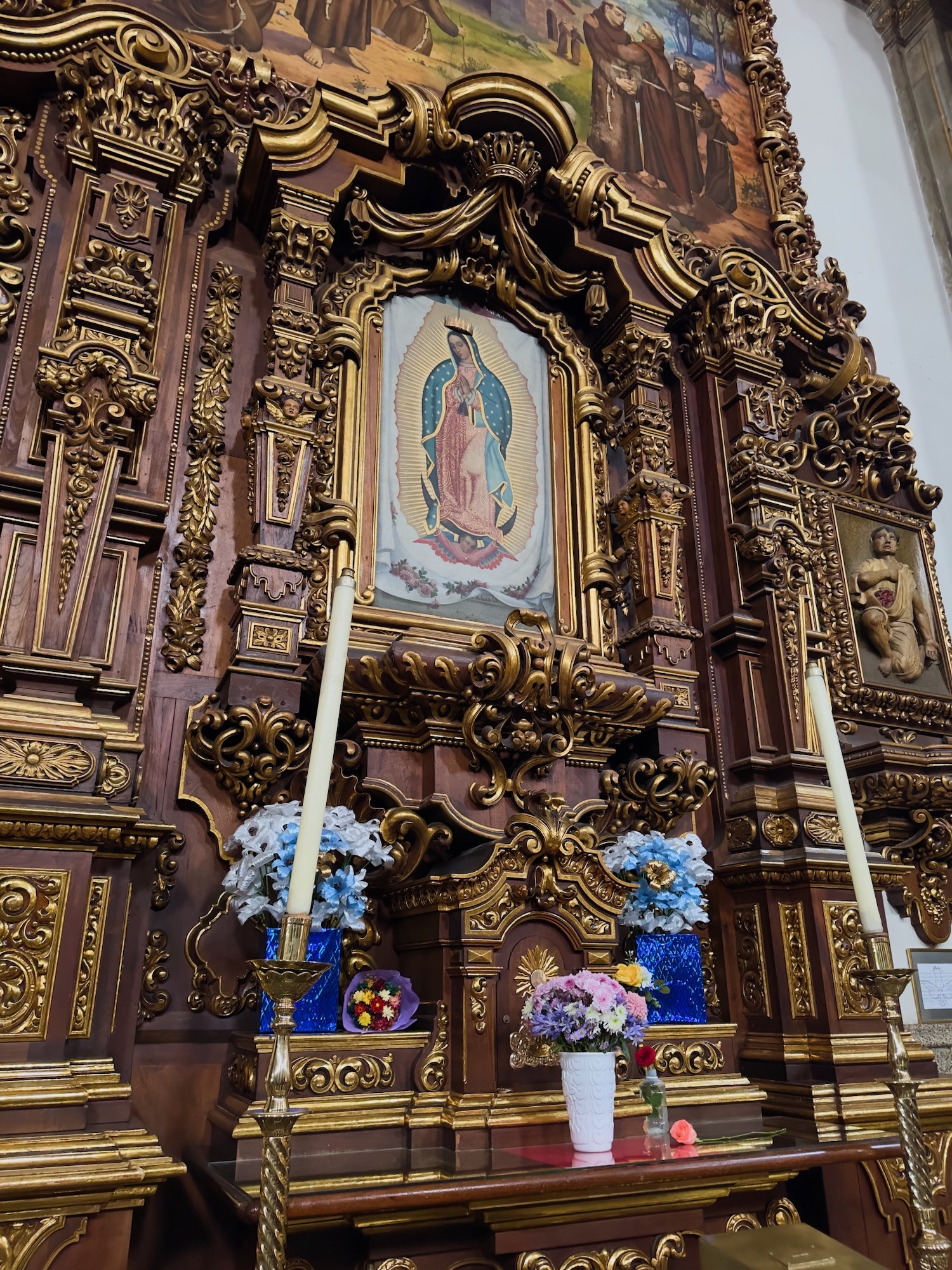
Coyoacán: Parroquia San Juan Bautista.
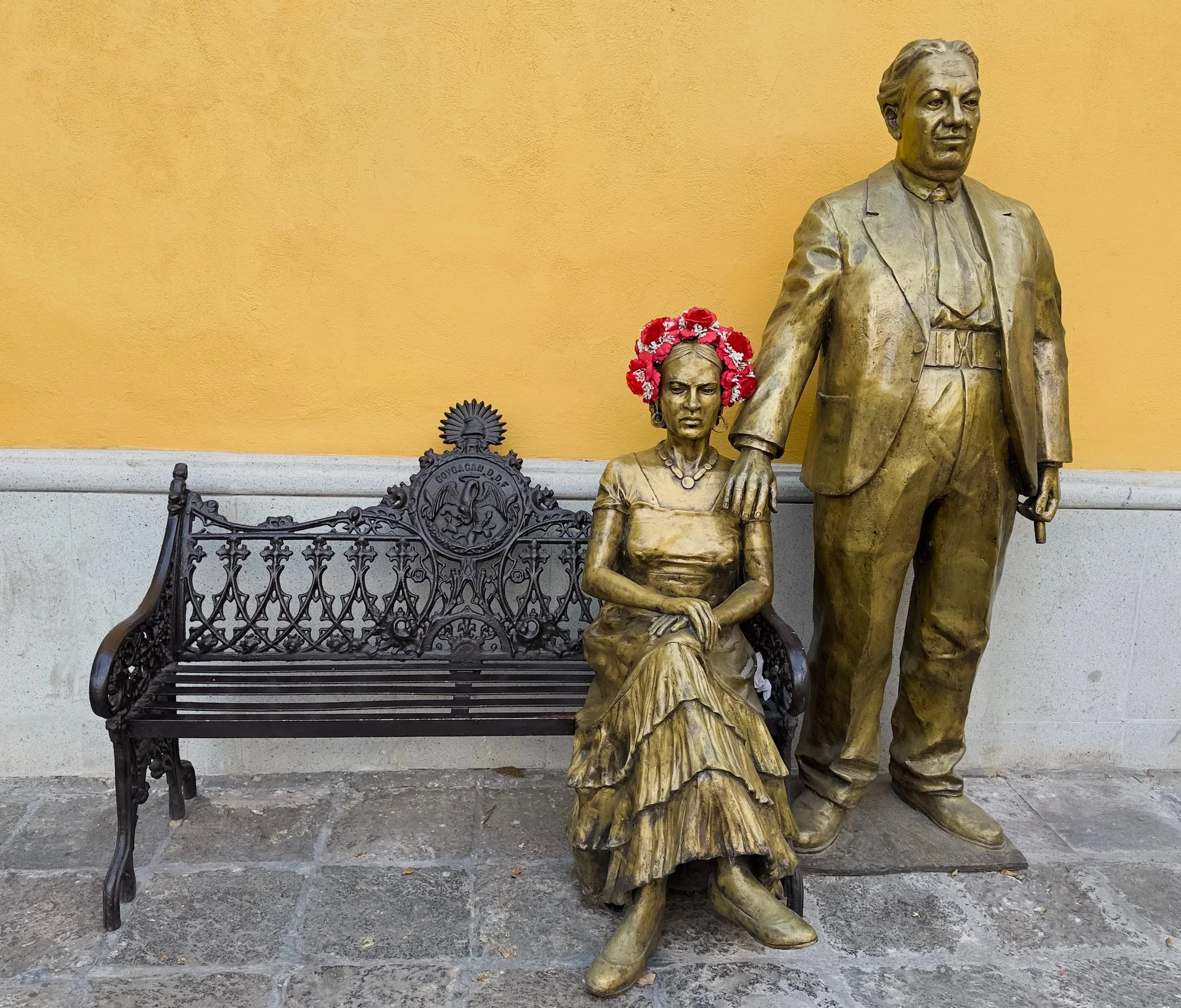
Coyoacán: This the courtyard where Frida Kahlo and Diego Rivera got married. It is near the Casa Azul, where Frida grew up and ultimately died.
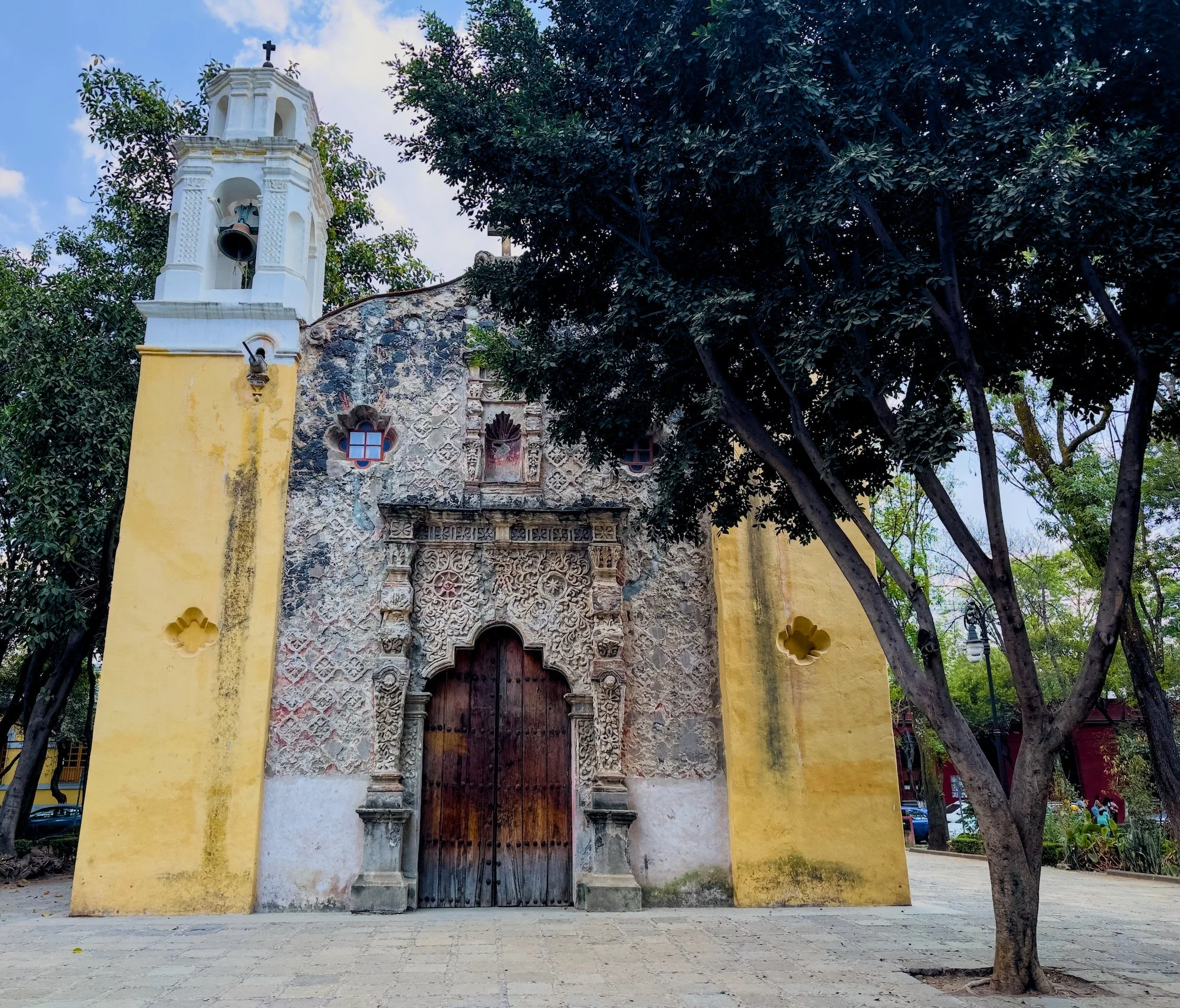
Coyoacán: This is Cortez’s private chapel in the Plaza de la Conchita. It is about a block from the house where Cortez lived.
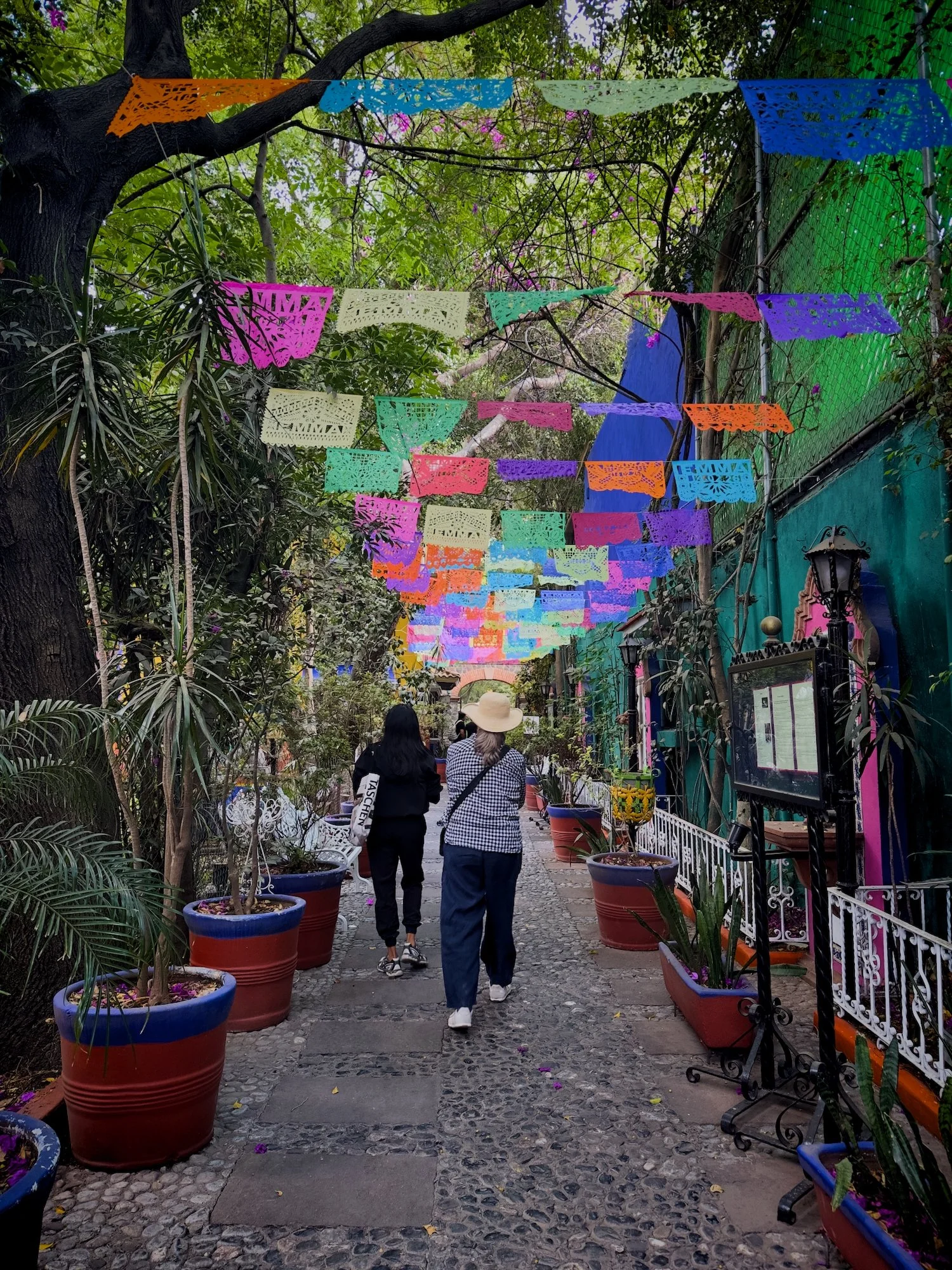
Coyoacán: This is Beth and our guide Delta in a courtyard.
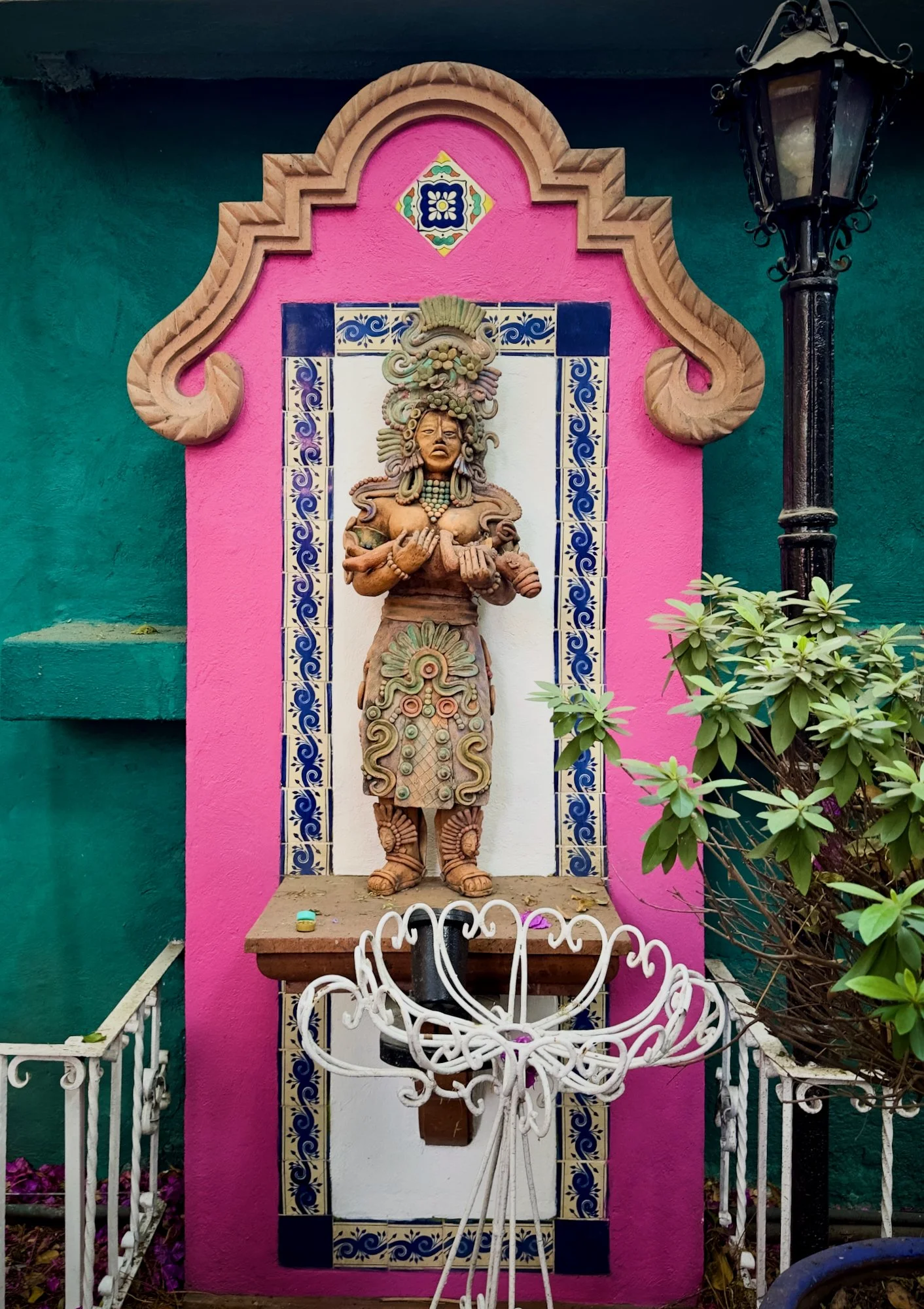
Coyoacán: A detail in a courtyard.
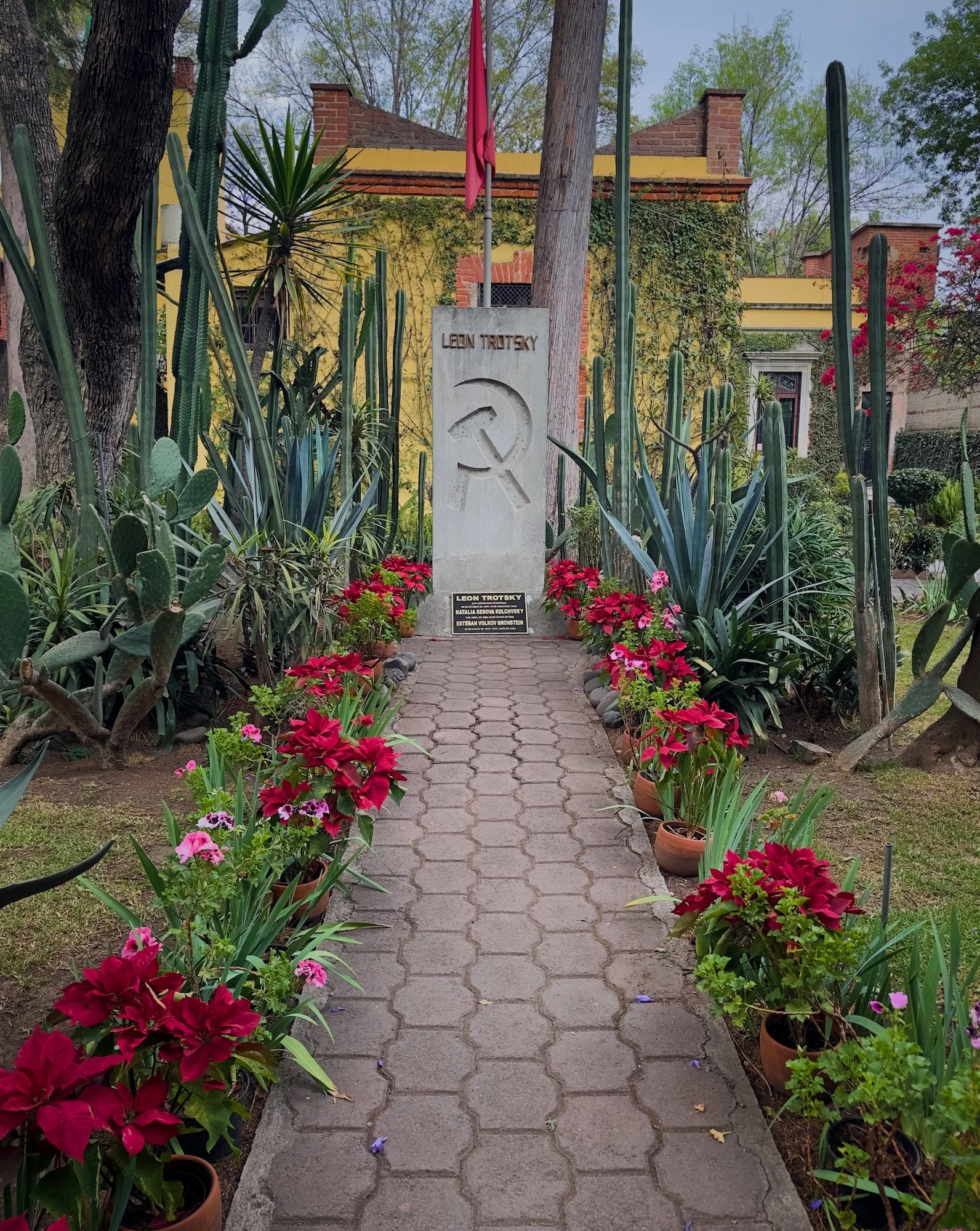
Coyoacán: This is Trotsky’s grave in the small compound where he lived in exile. The house behind the grave is where he lived and was attacked and killed by a Russian spy.
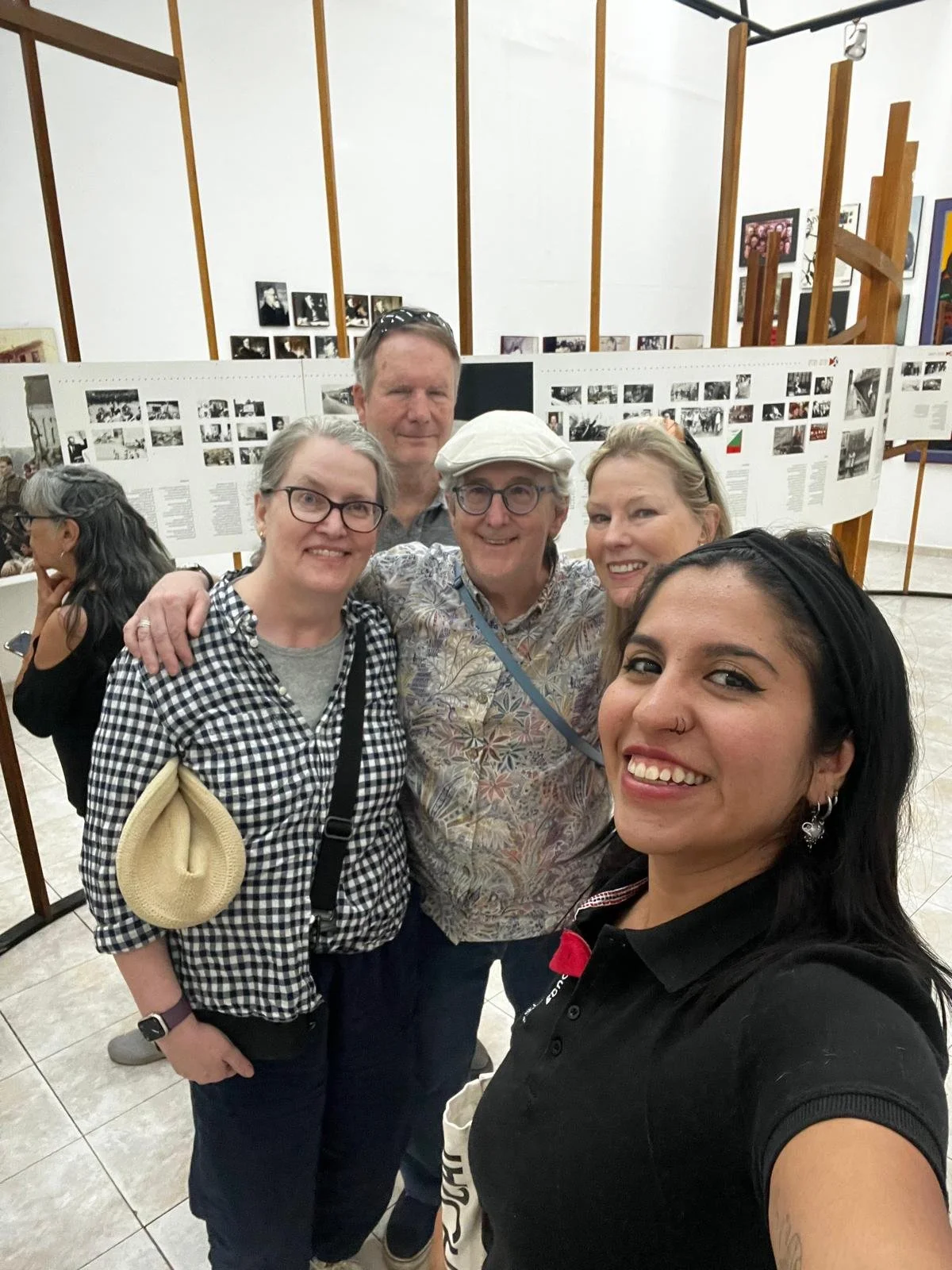
This is Delta our walking tour guide in the neighborhood of Coyoacán. Delta was really awesome! Here we are in the Trotsky Museum where her tour ended.
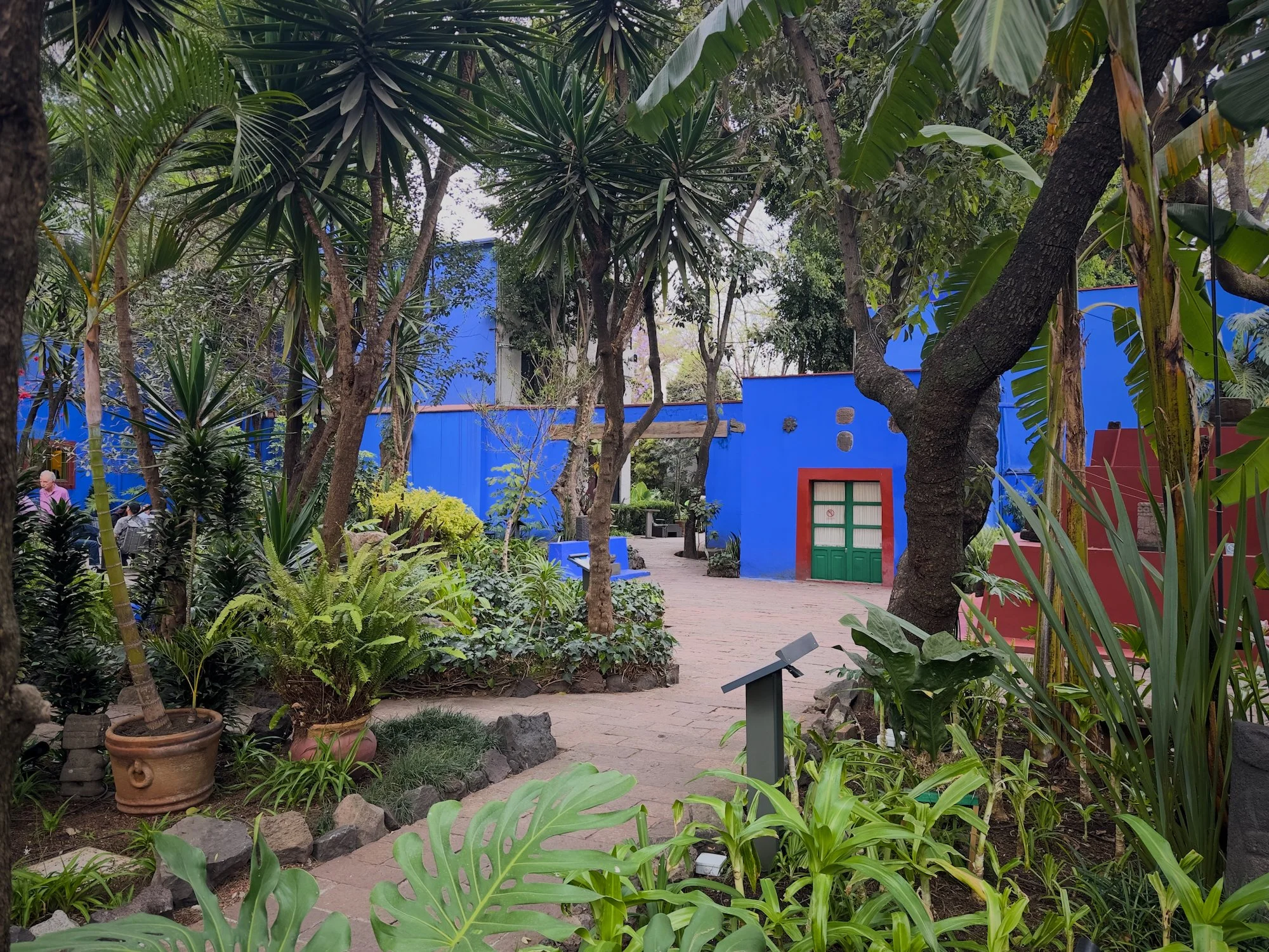
Coyoacán: This is Casa Azul, where Frida Kahlo grew up and lived most of her life.
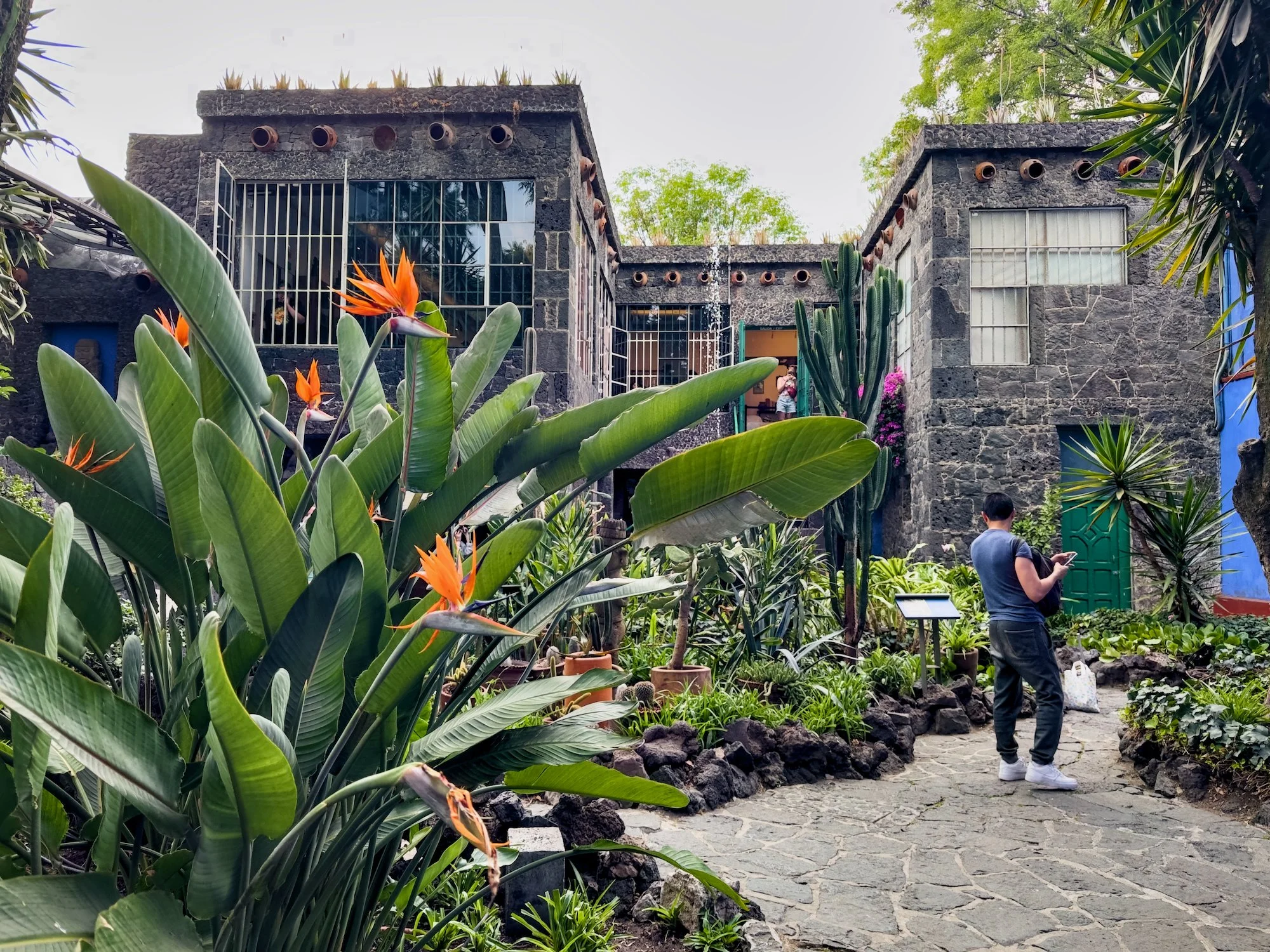
Coyoacán: Casa Azul. We are facing her painting studio which is inside the windows on the left.
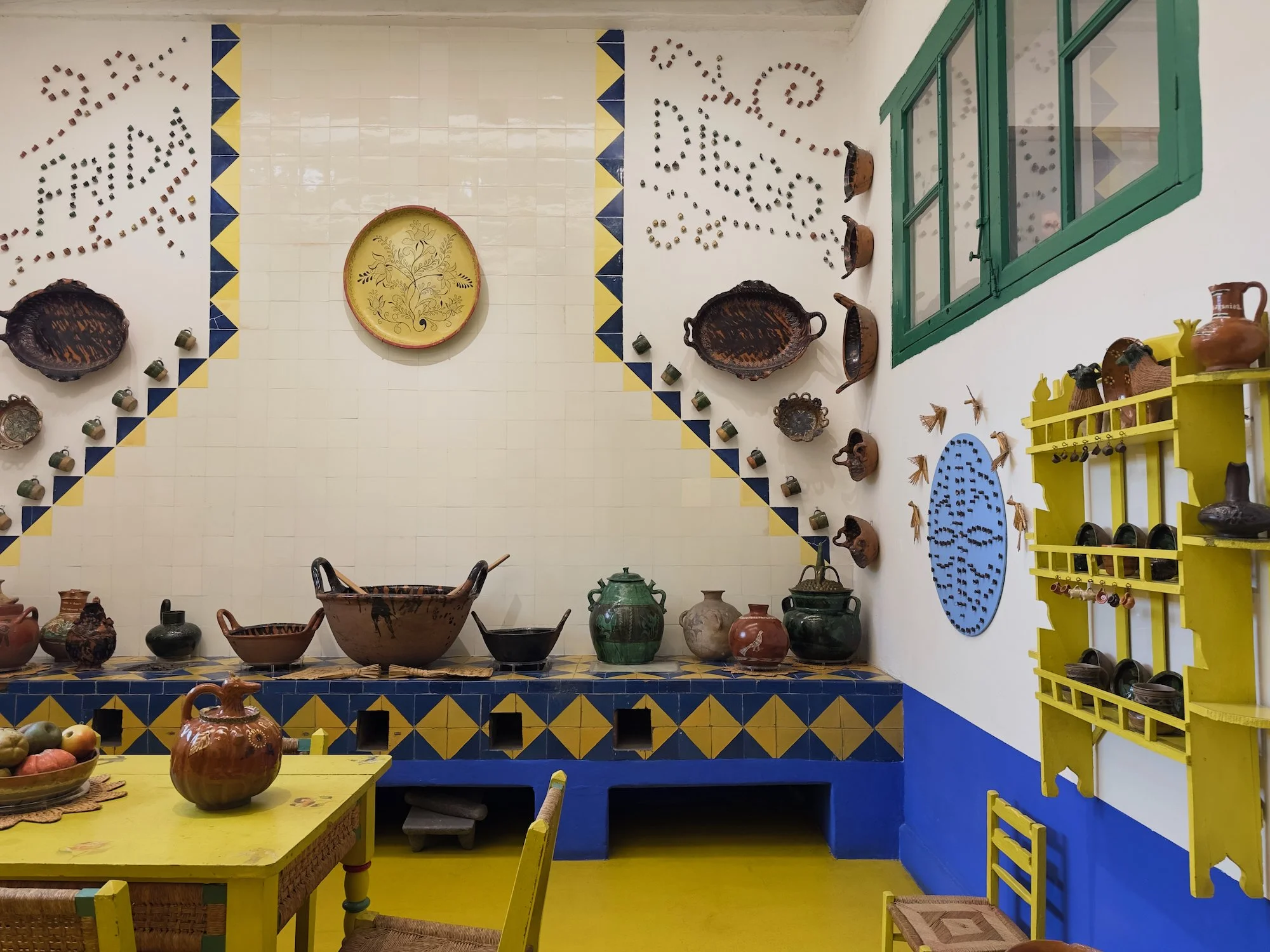
Coyoacán: This is the kitchen at Casa Azul with the names Frida and Diego on the wall. Diego Rivera lived here with her for a time.
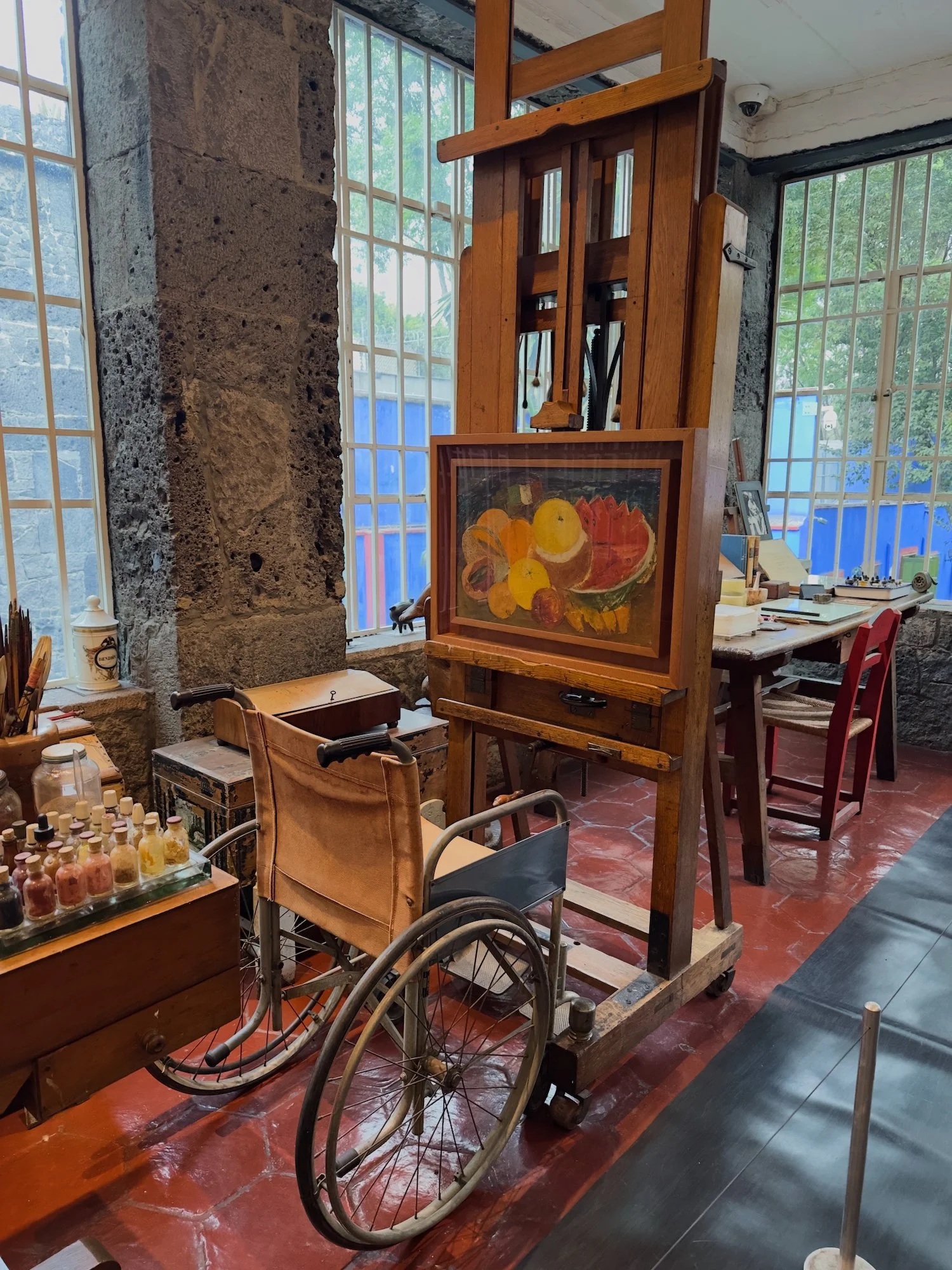
Casa Azul: This is Frida Kahlo's easel and wheelchair, and just beyond is a worktable.
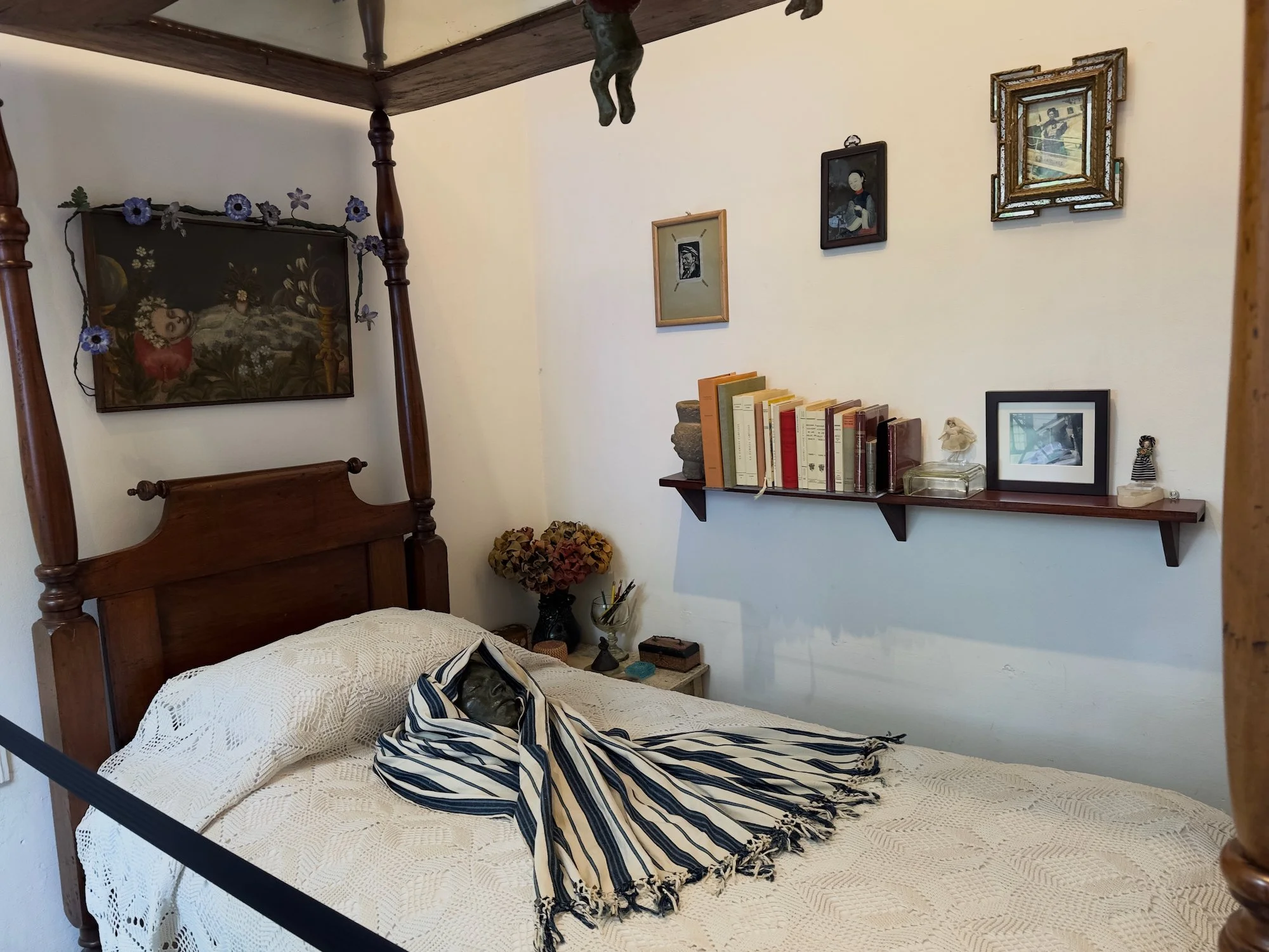
Casa Azul. This is the deathbed of Frida Kahlo. She had a very rough final few months that included having one of her legs amputated. Above her on the canopy is a framed picture of butterflies, which, in traditional Mexican folklore are transitional creatures that escort souls to the afterlife when someone dies.
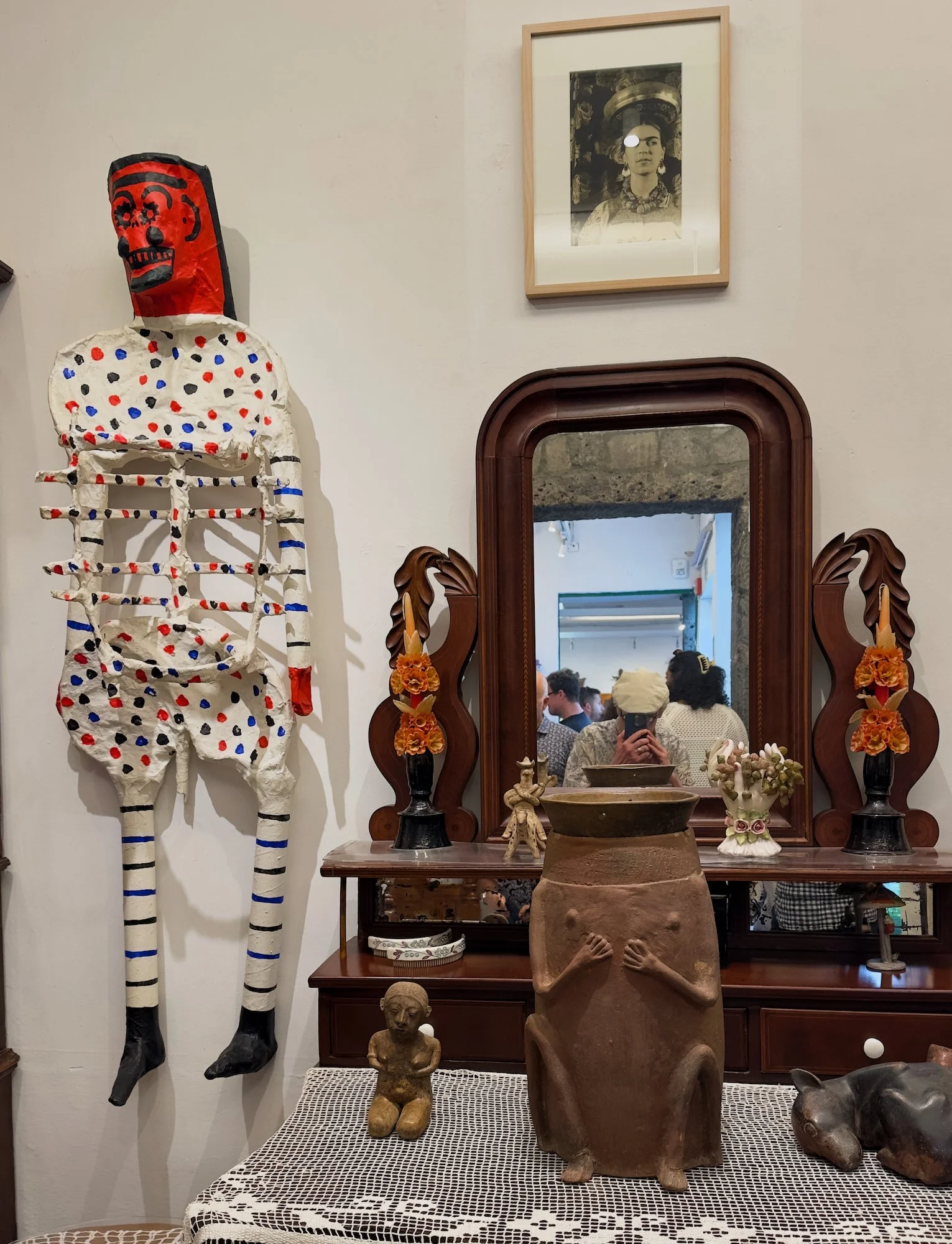
Casa Azul. Frida Kahlo's ashes are in the urn.
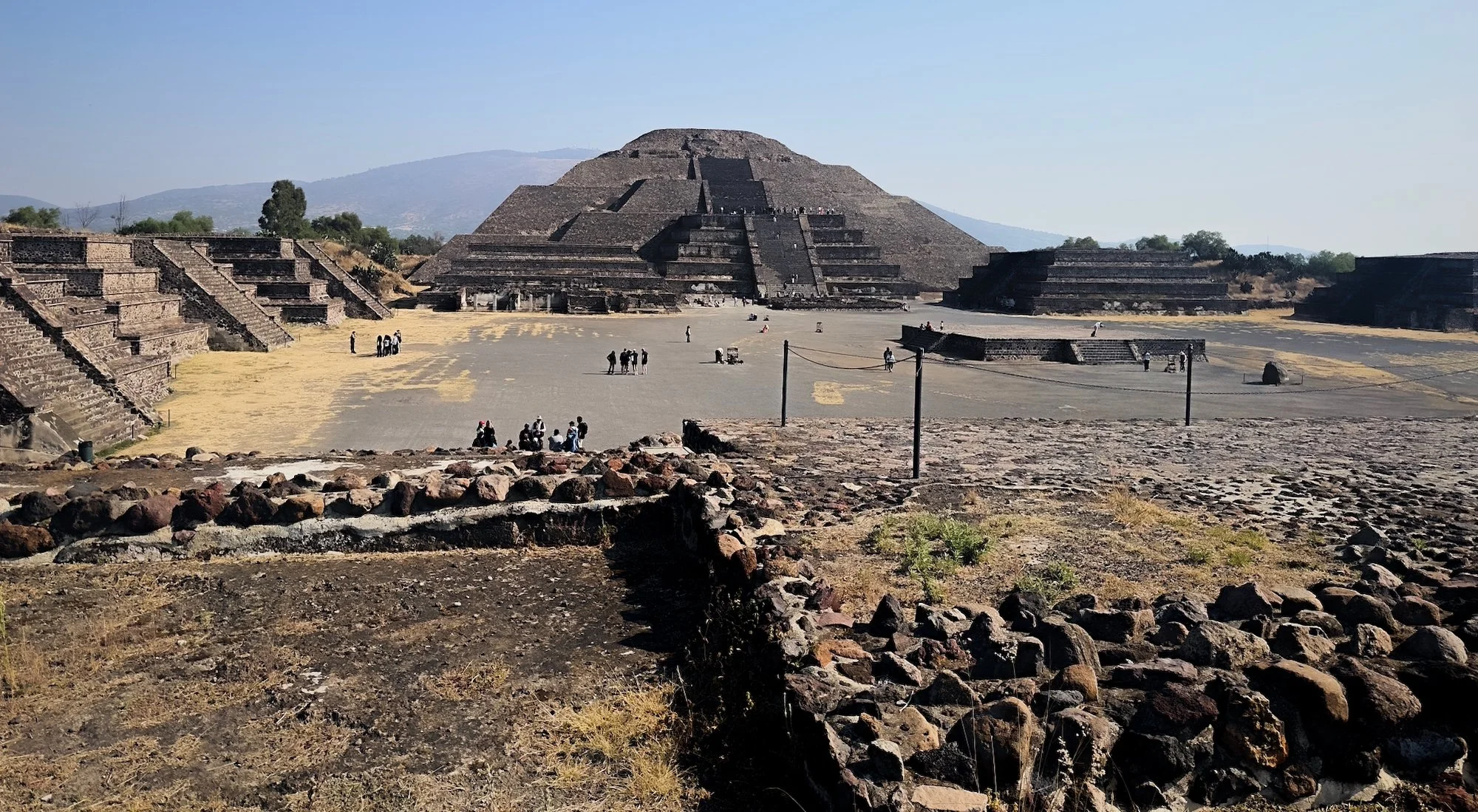
Teotihuacán: This the site of an ancient civilization that predated the Aztecs by more than 600 years. We are looking at the Pyramid of the Moon and a large plaza where people gathered for ceremonies. There would have been a brightly painted wooden temple on top of the pyramid and the walls of the plaza would have also been brightly colored. The civilization that built this was very large and there are ruins for miles around.
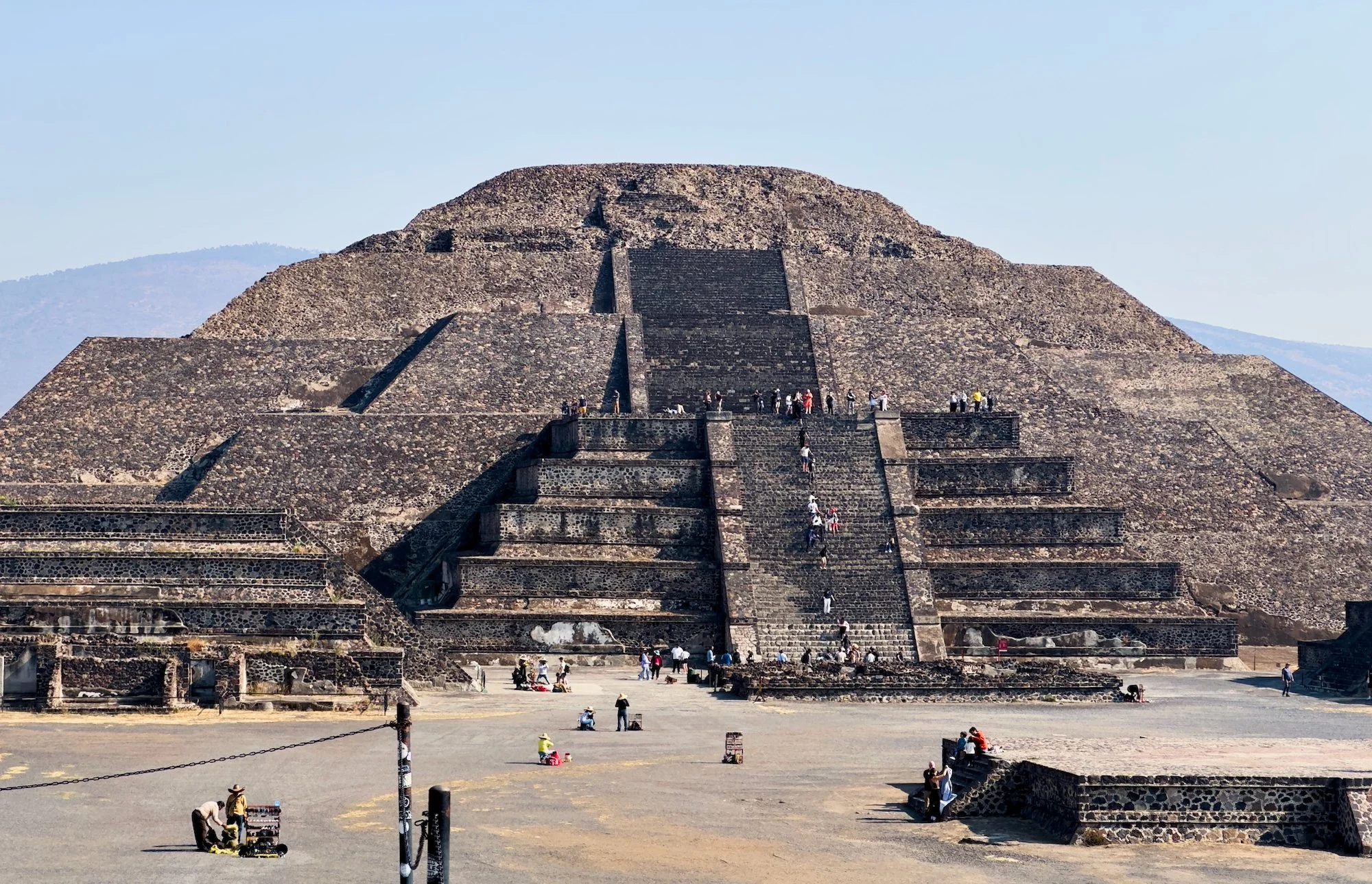
Teotihuacán: The Pyramid of the Moon, the smaller of two pyramids located here.
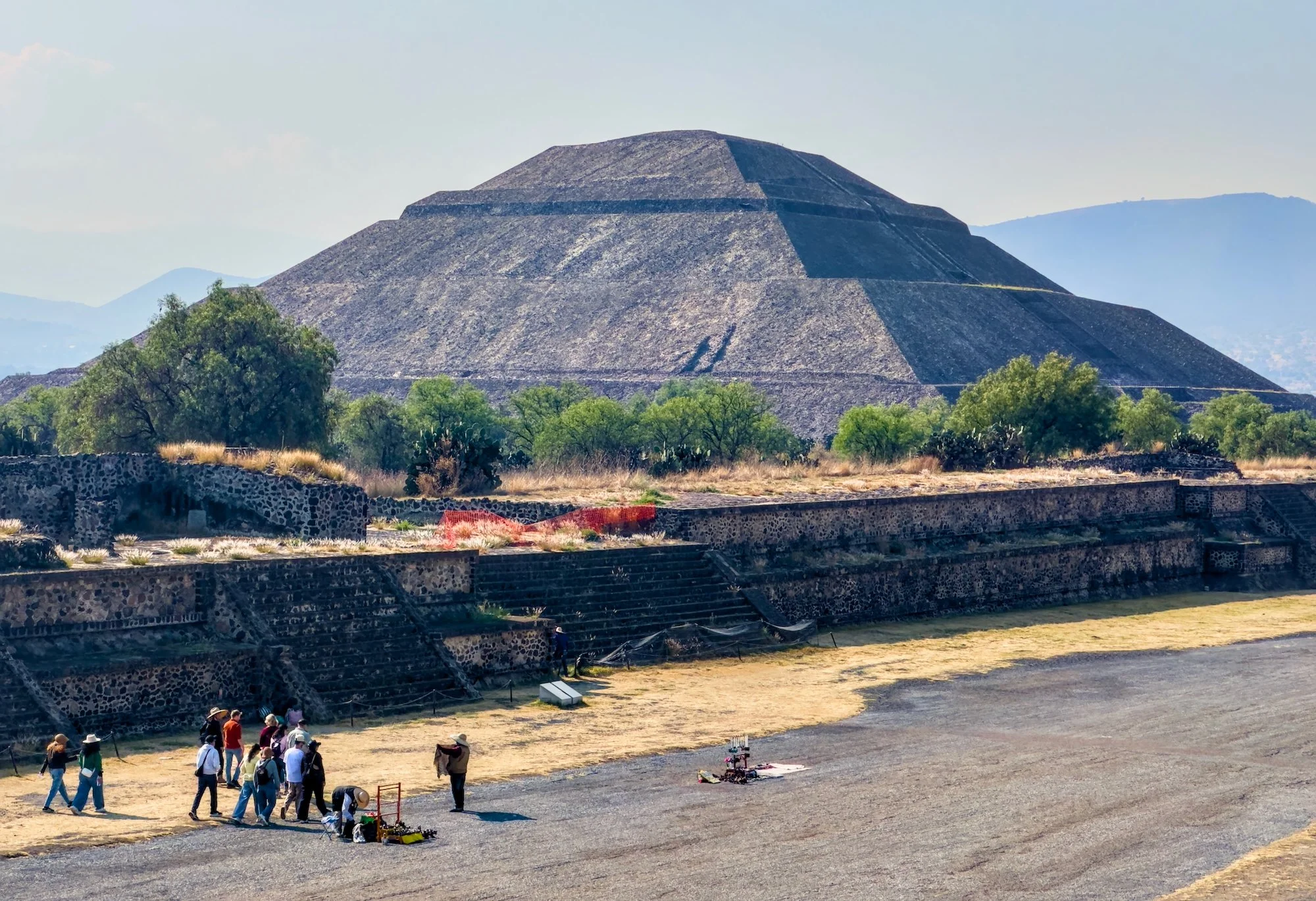
Teotihuacán: This the nearby Pyramid of the Sun. It is much larger than the Pyramid of the Moon.
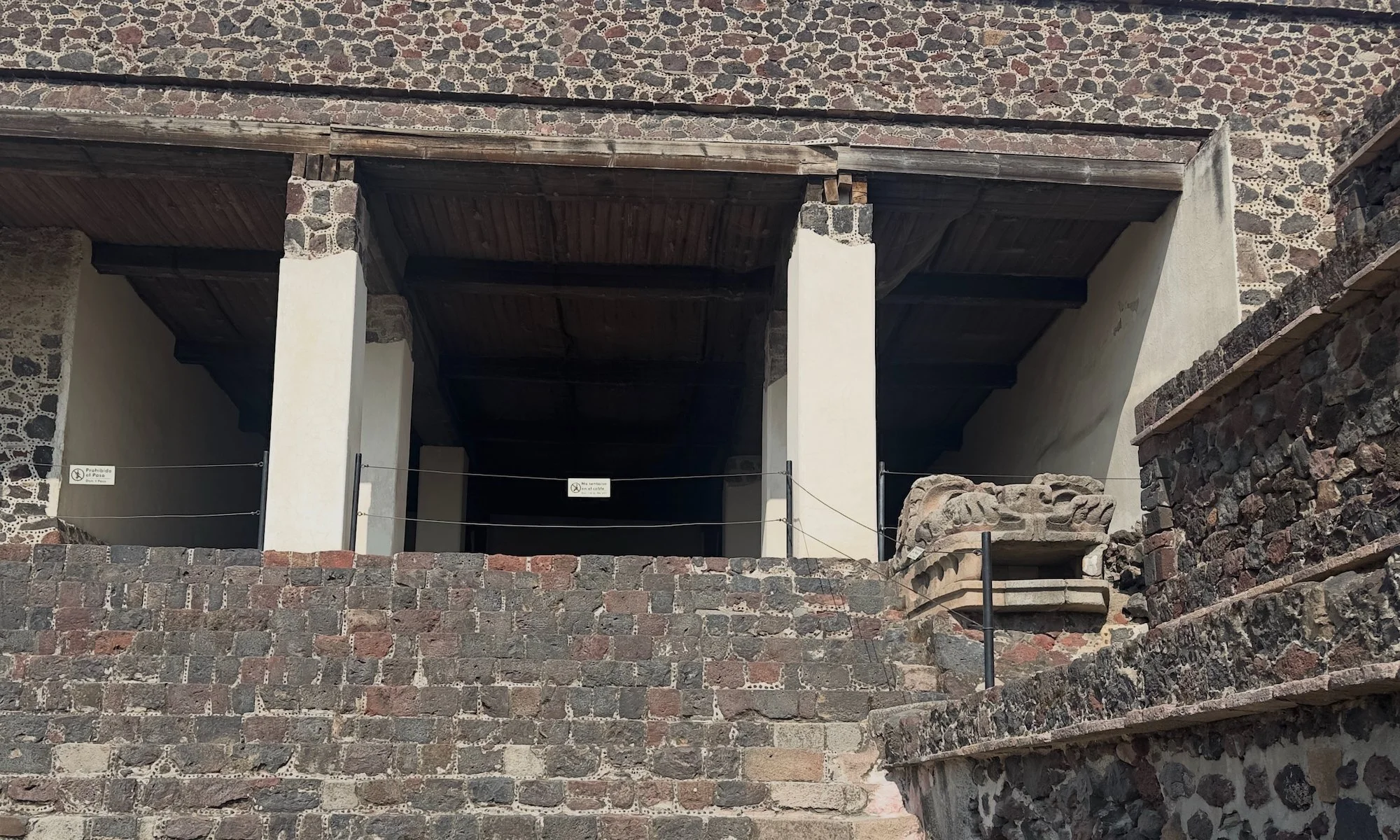
Teotihuacán: This is the entrance to a side temple facing the main plaza. It was engineered to that when it rained water rushed out of the serpent head on the right.
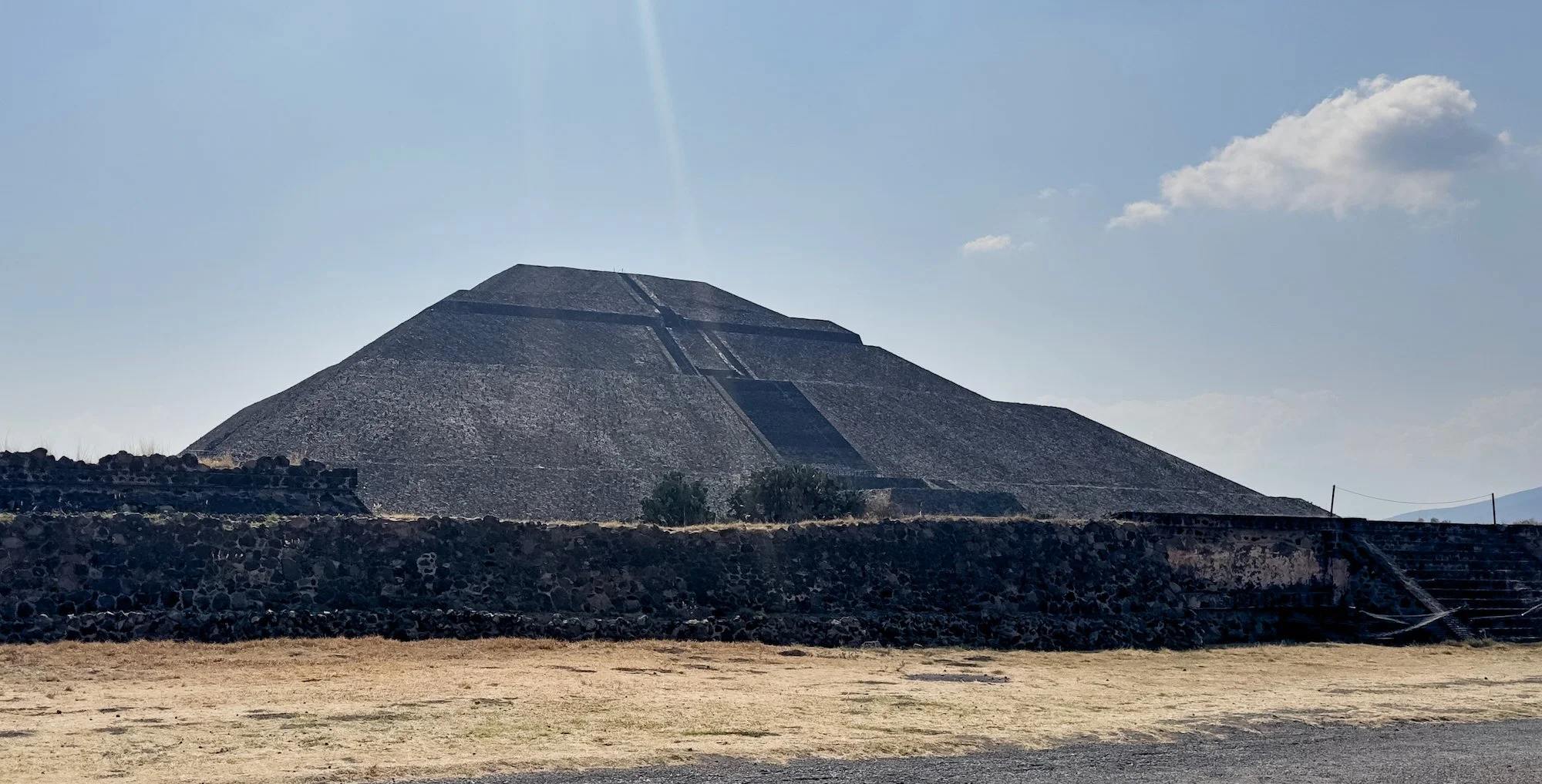
Teotihuacán: The Pyramid of the Sun is huge, as big as the pyramids in Egypt.
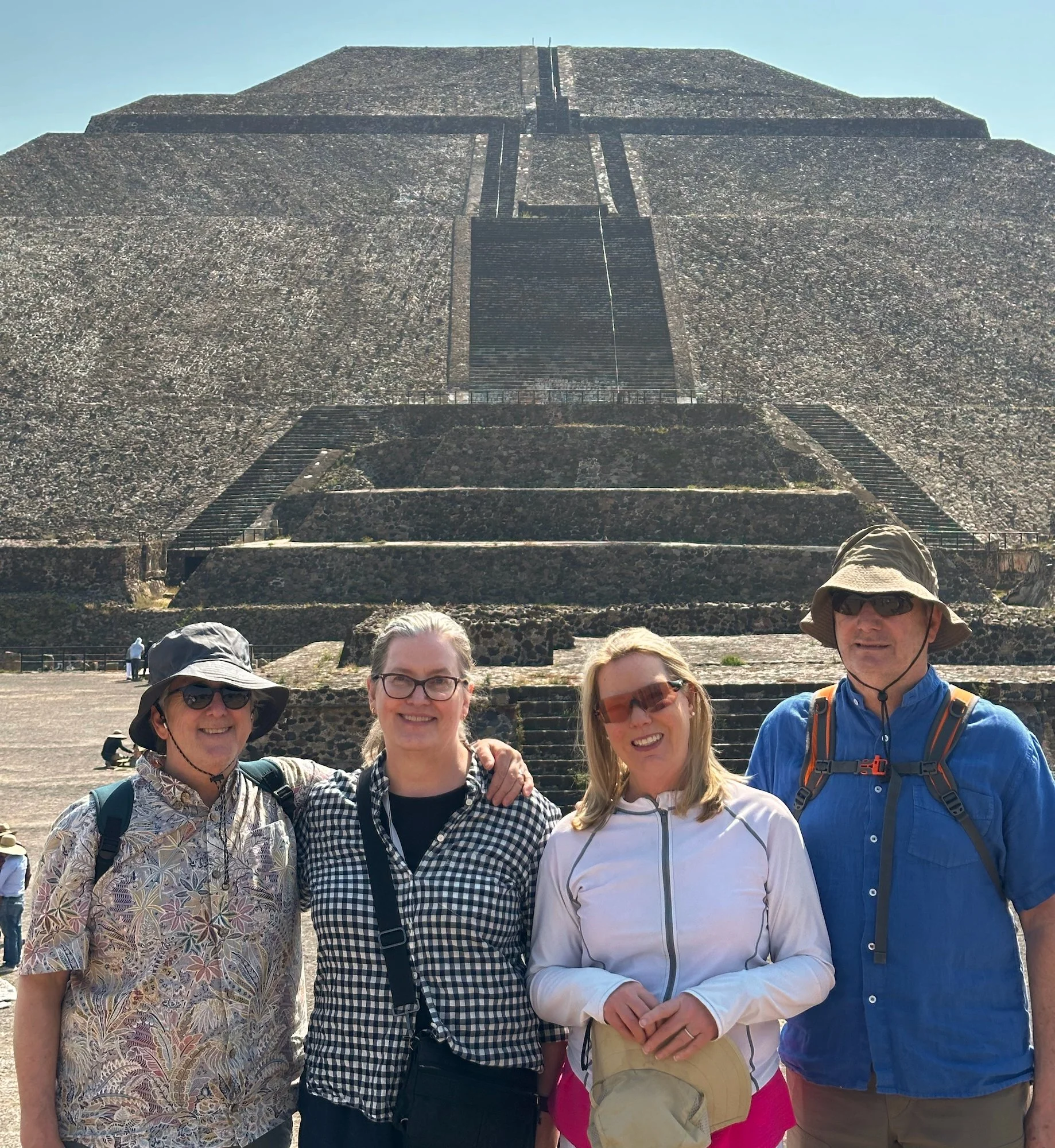
Teotihuacán: Here we are standing at the base of the Pyramid of the Sun.
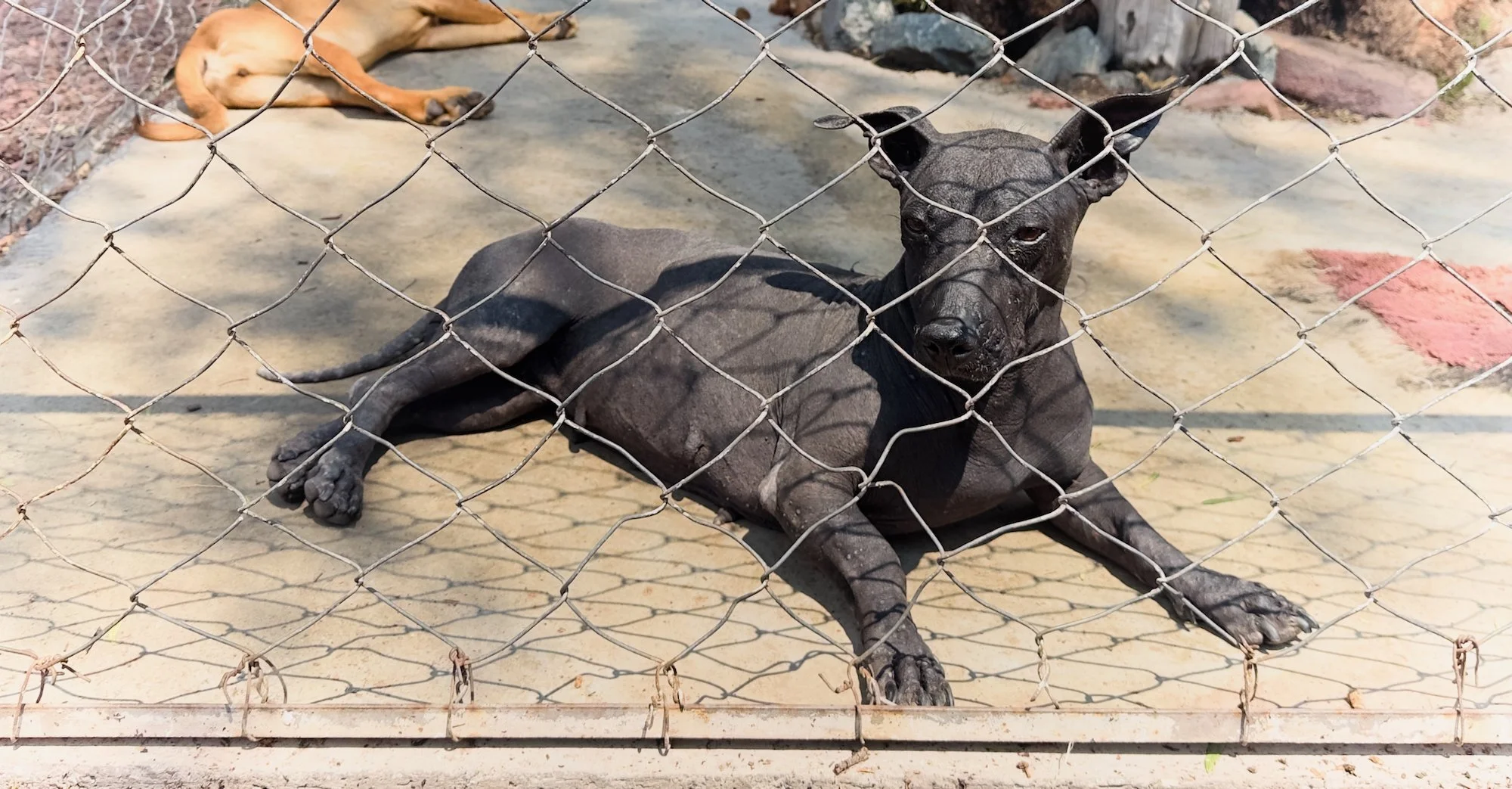
Teotihuacán: We went to a nearby town for lunch. This dog is a descendant of the native dogs that predated the arrival of the Europeans.
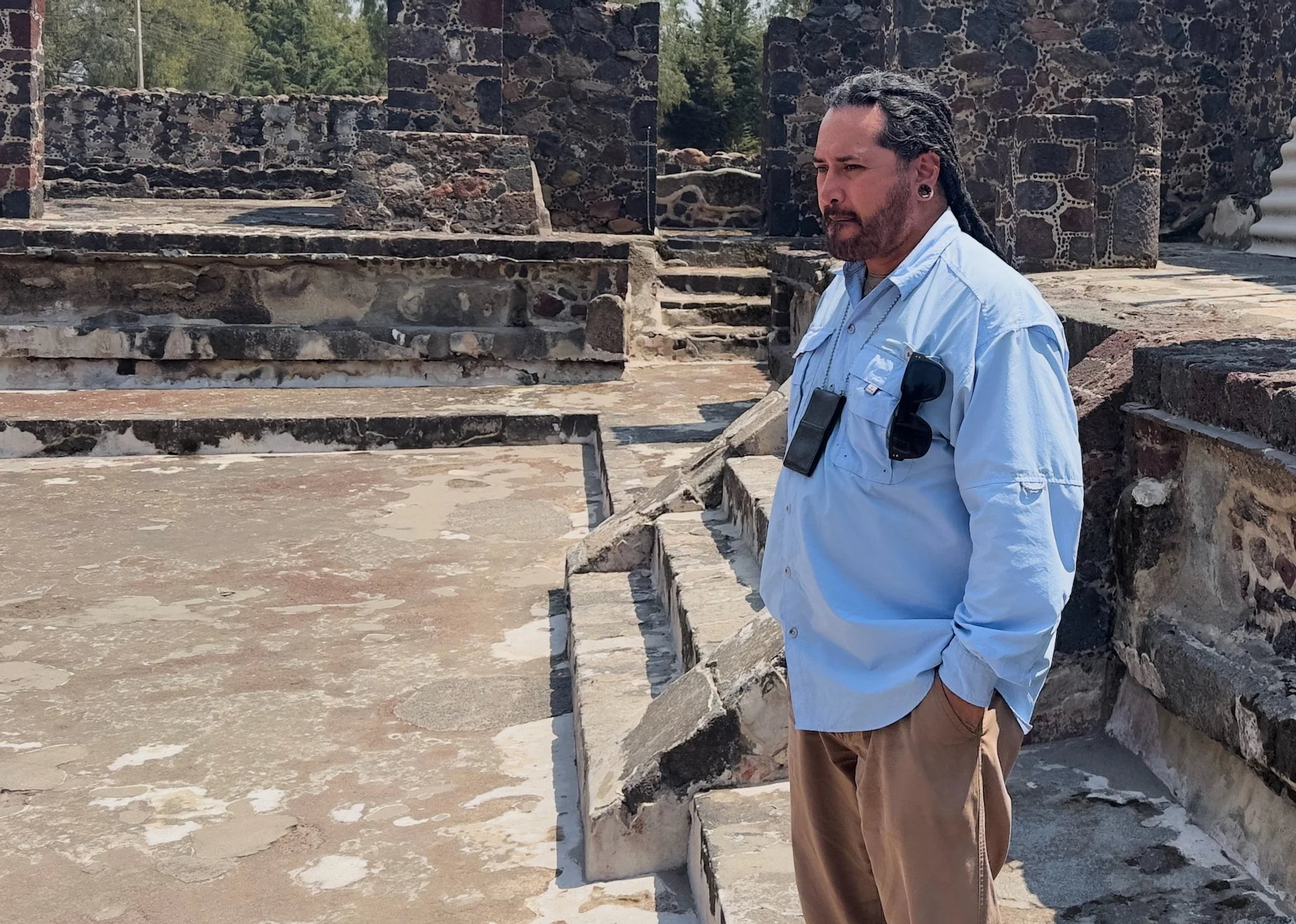
Teotihuacán: Our awesome guide Aldo. He was just great!
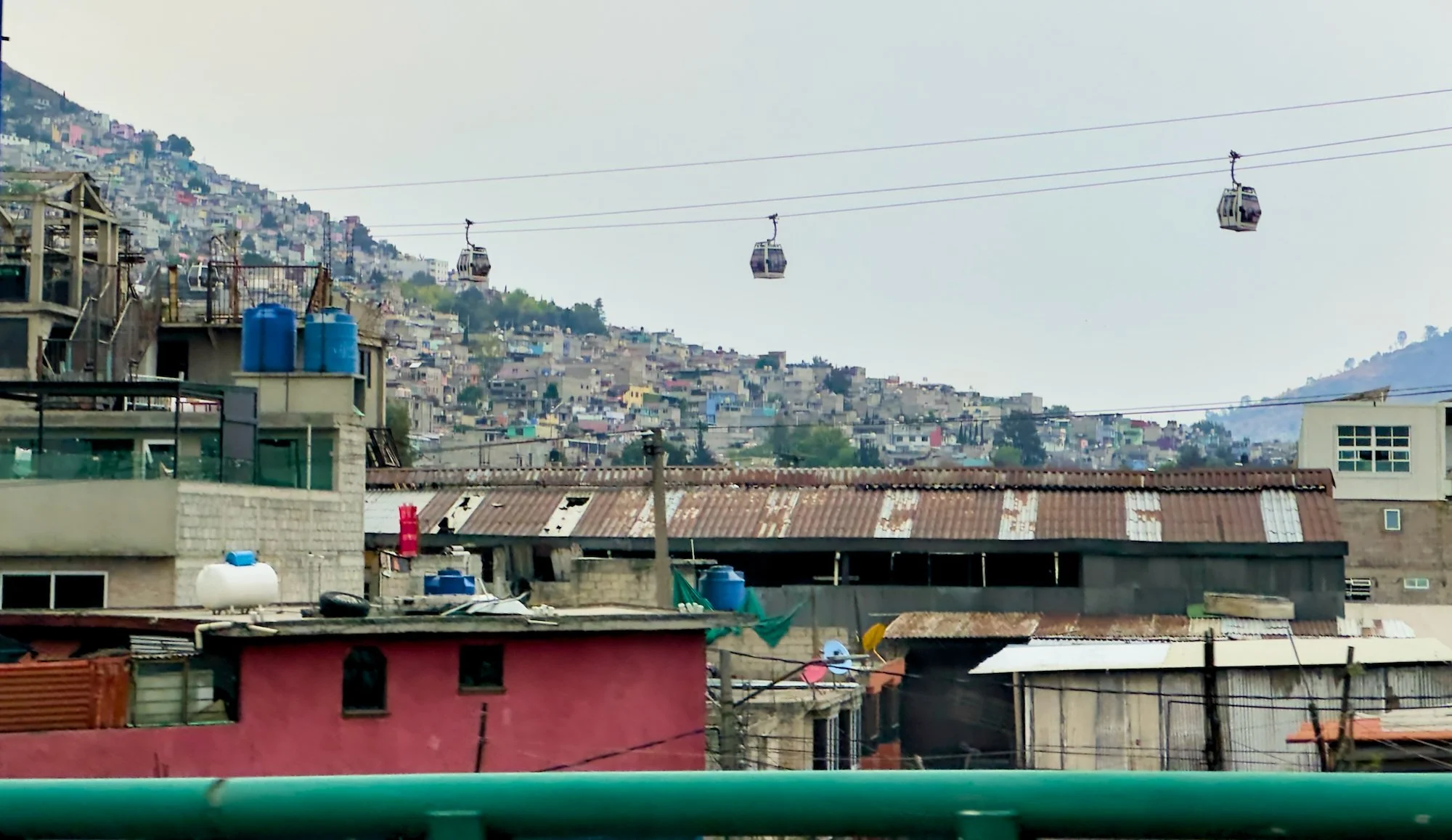
Mexico City. we are on our way back from the pyramids on the highway. This is way out from the central area where we were staying. I love that they are building a network of gondolas! I’ve been saying that Seattle should build gondolas for years and years. Everyone says I’m crazy, but here they are! They are cheap to build and move millions of people annually. Each car holds 10 people.
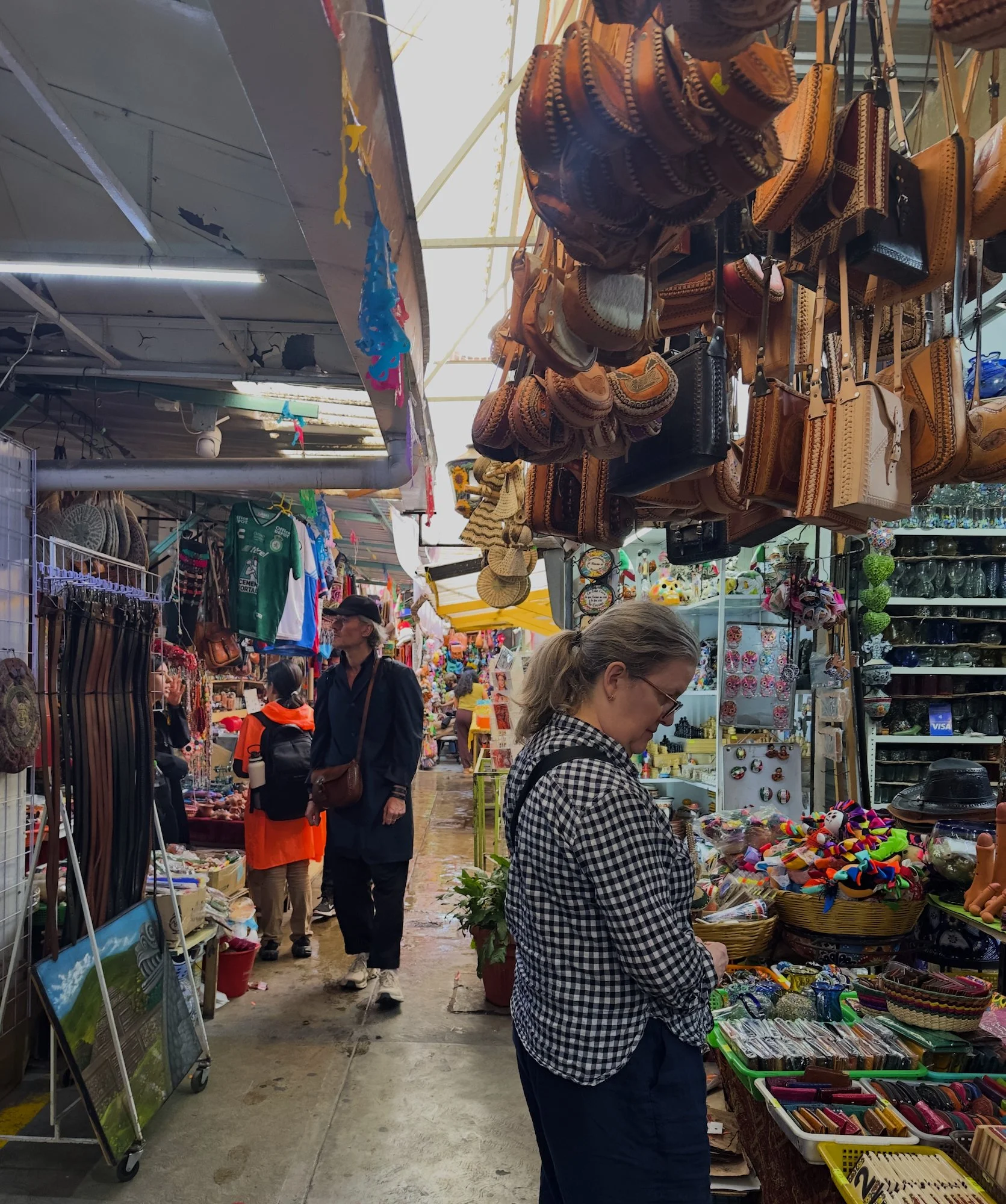
Beth and I wandered for a while in a market near our hotel. While we were there it rained. The market was a patchwork where some places the rain came in and other places it was protected.
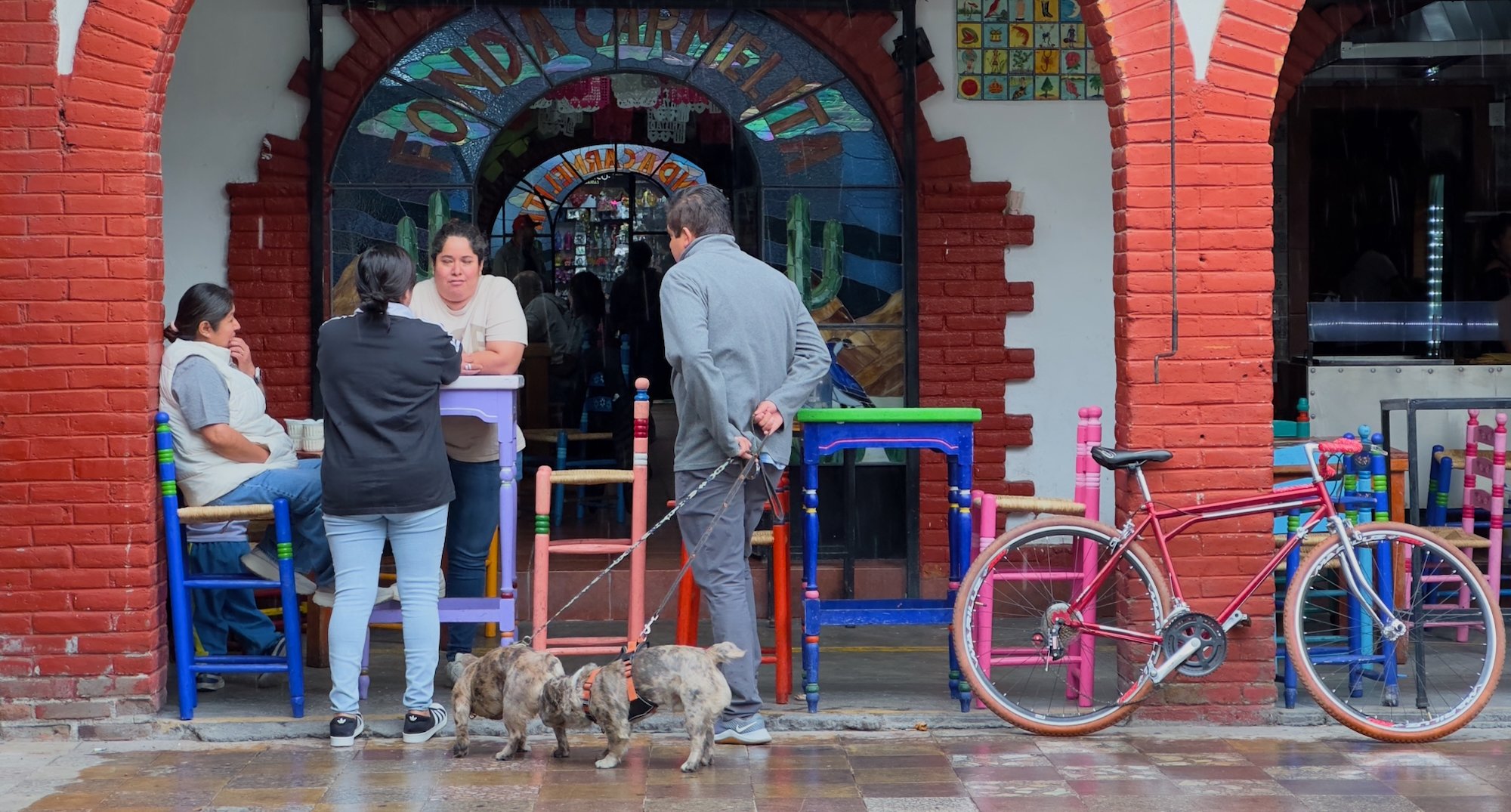
The market near our hotel.
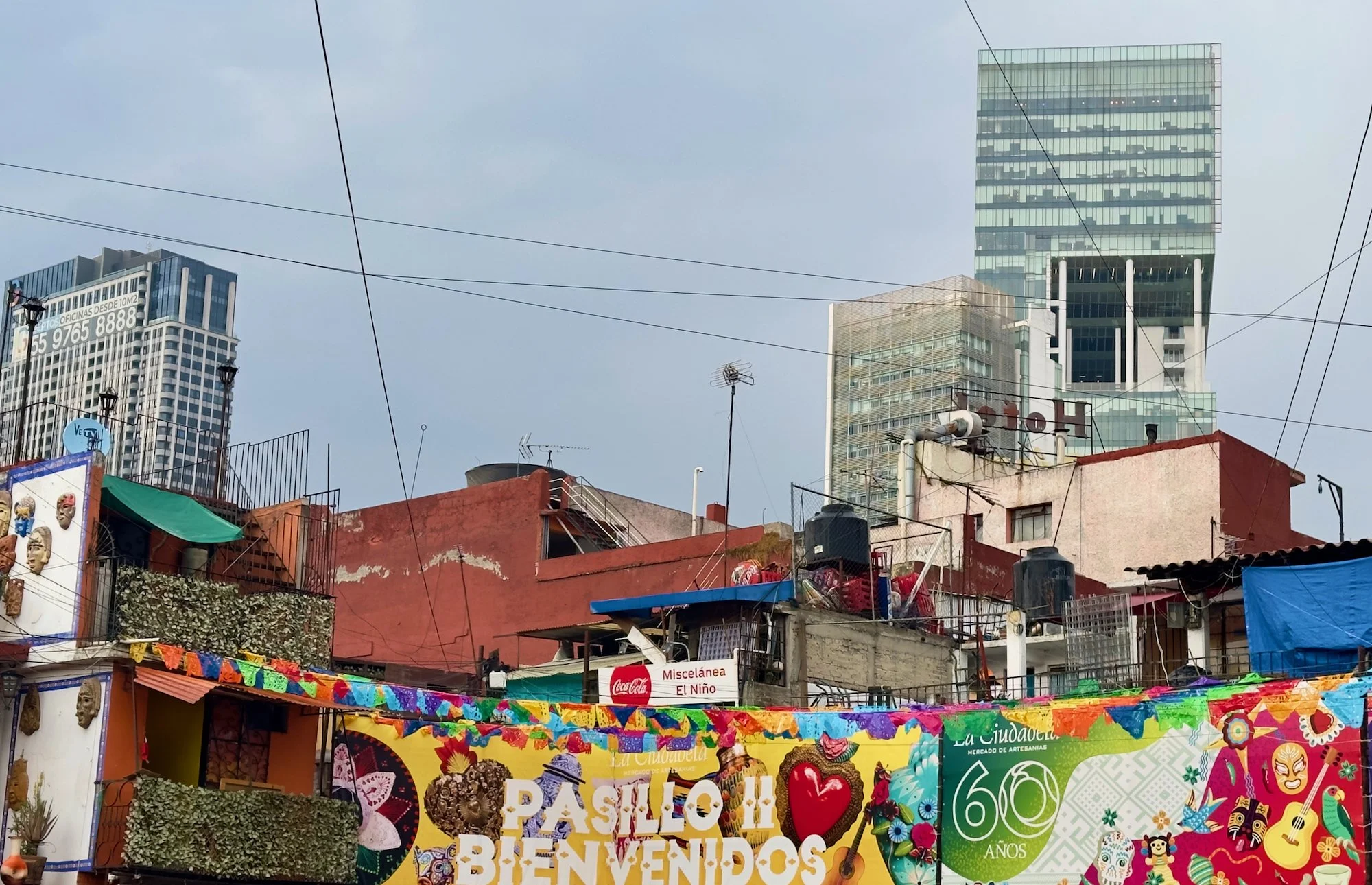
Near our hotel in Mexico City..
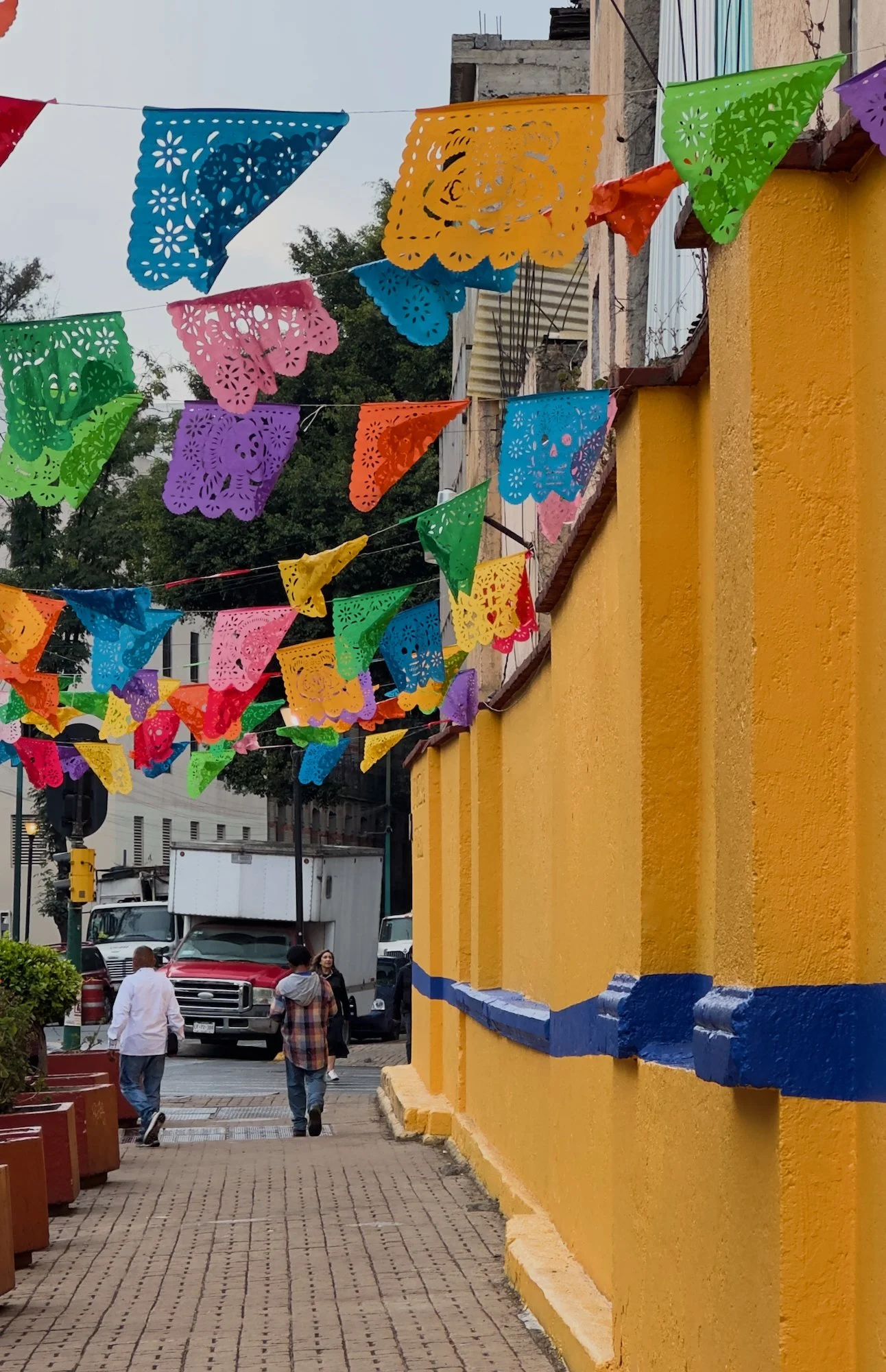
Outside the market.
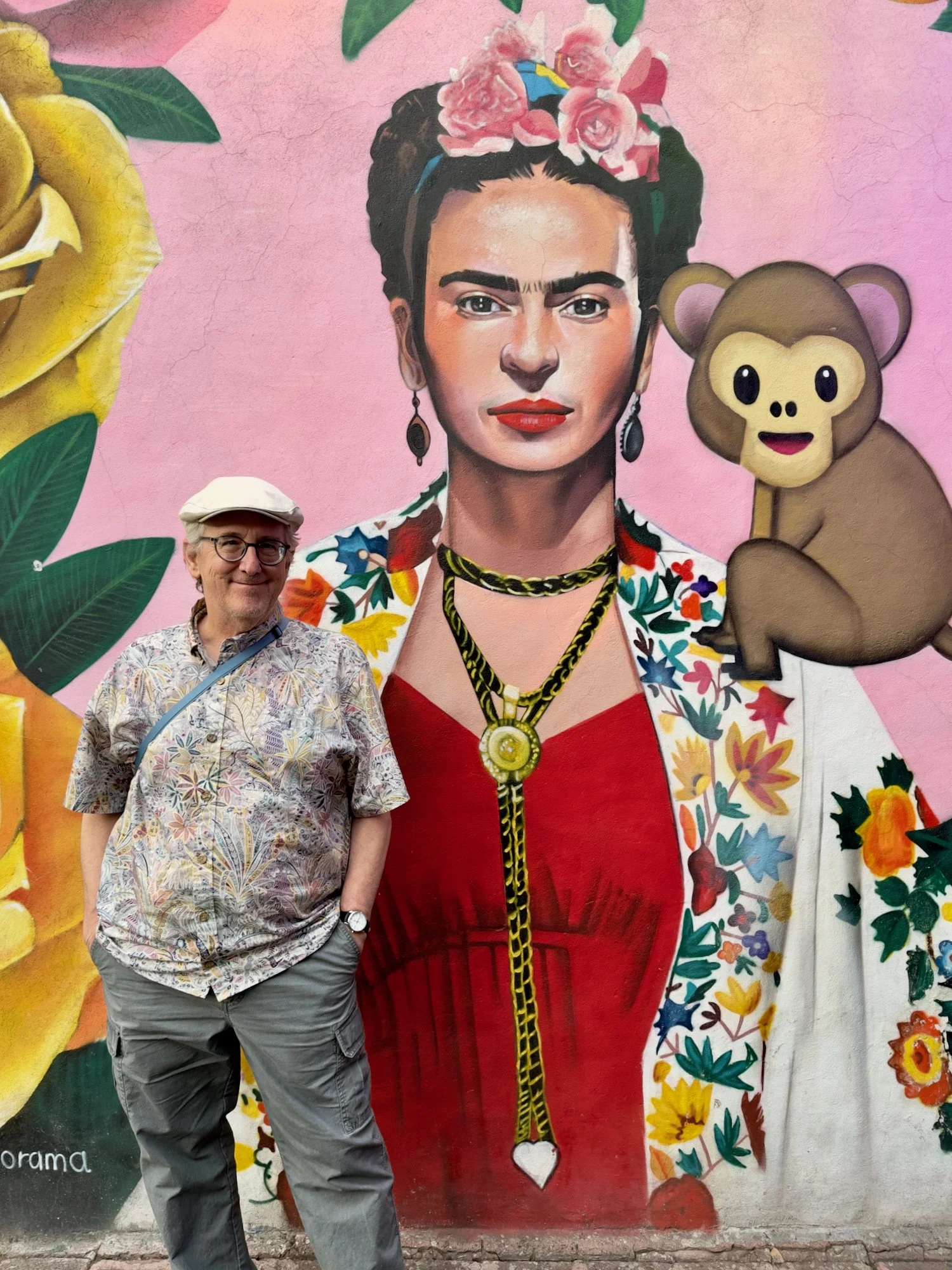
Me standing in front of a mural of Frida Kahlo. This mural was just around the corner from our hotel.
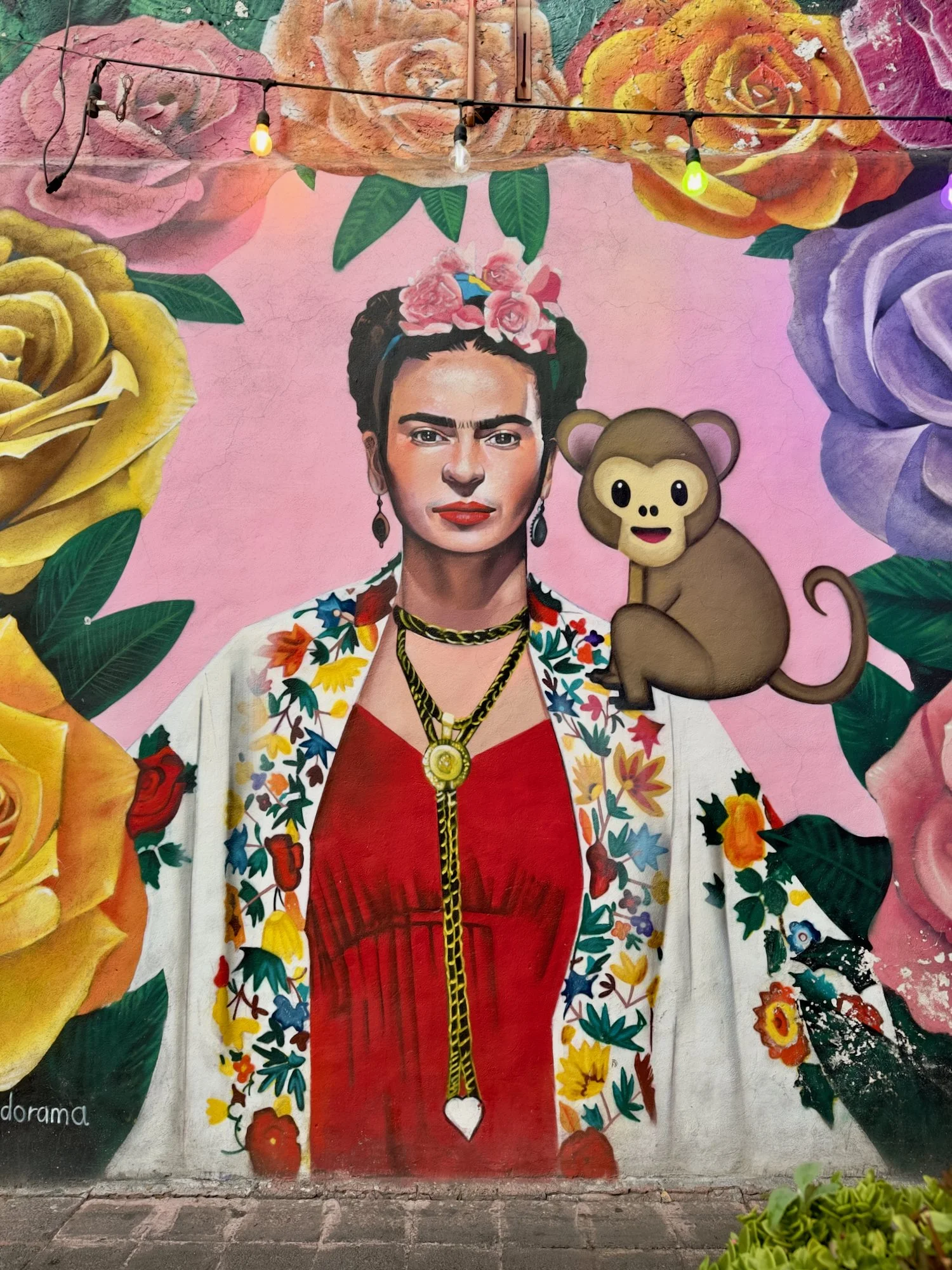
The mural without me blocking it.
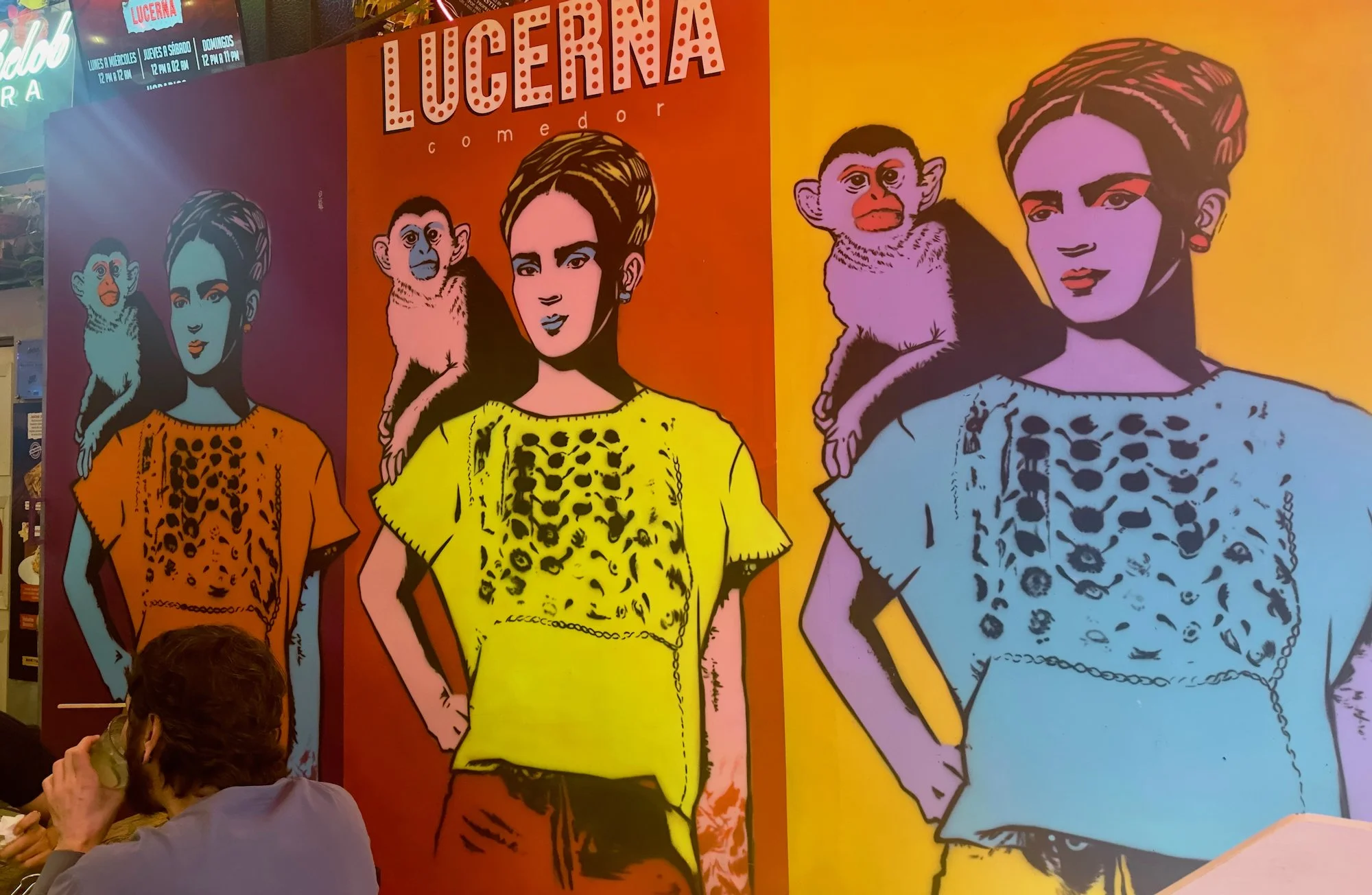
The entrance to a food court close to our hotel.
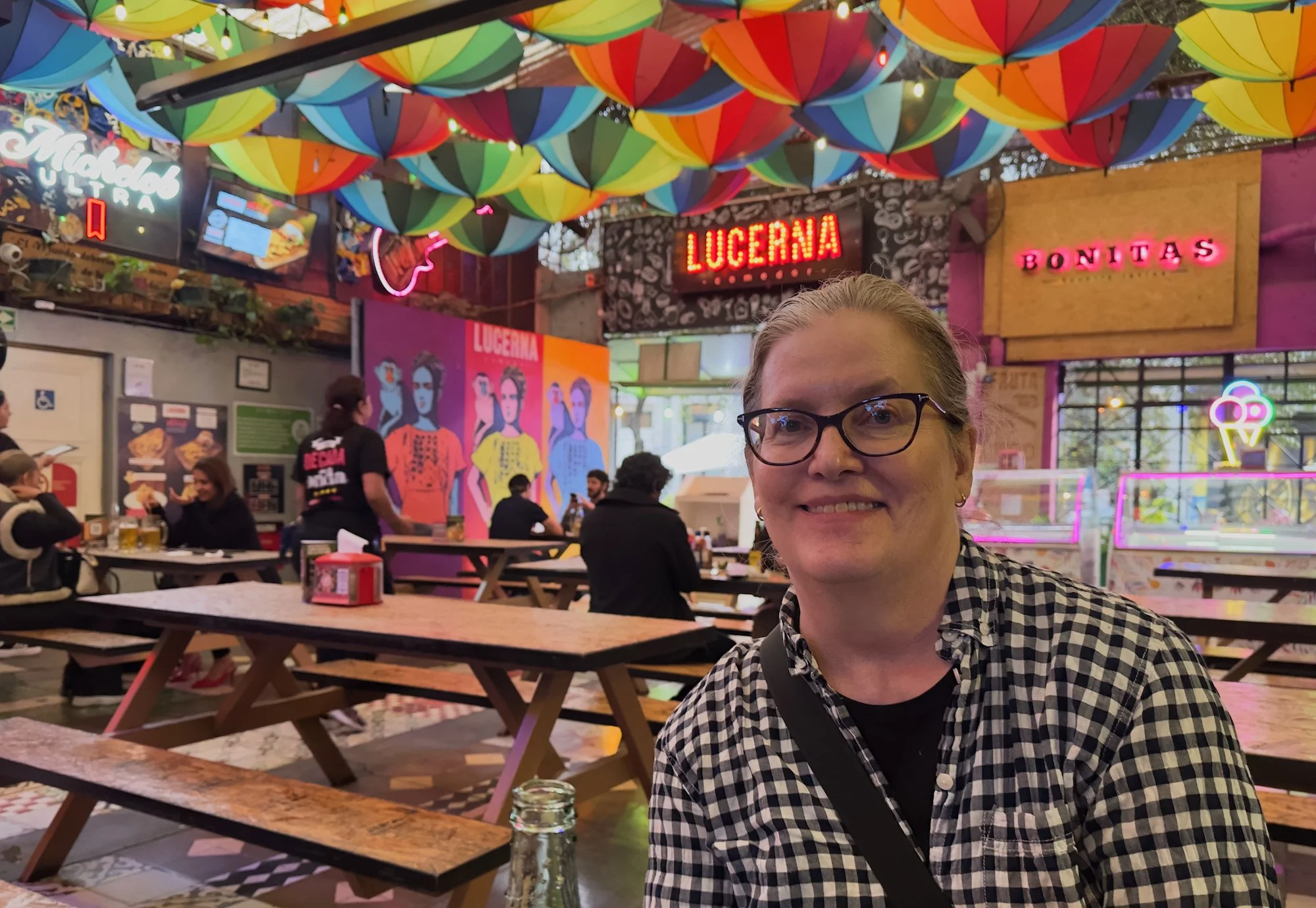
At the food court.
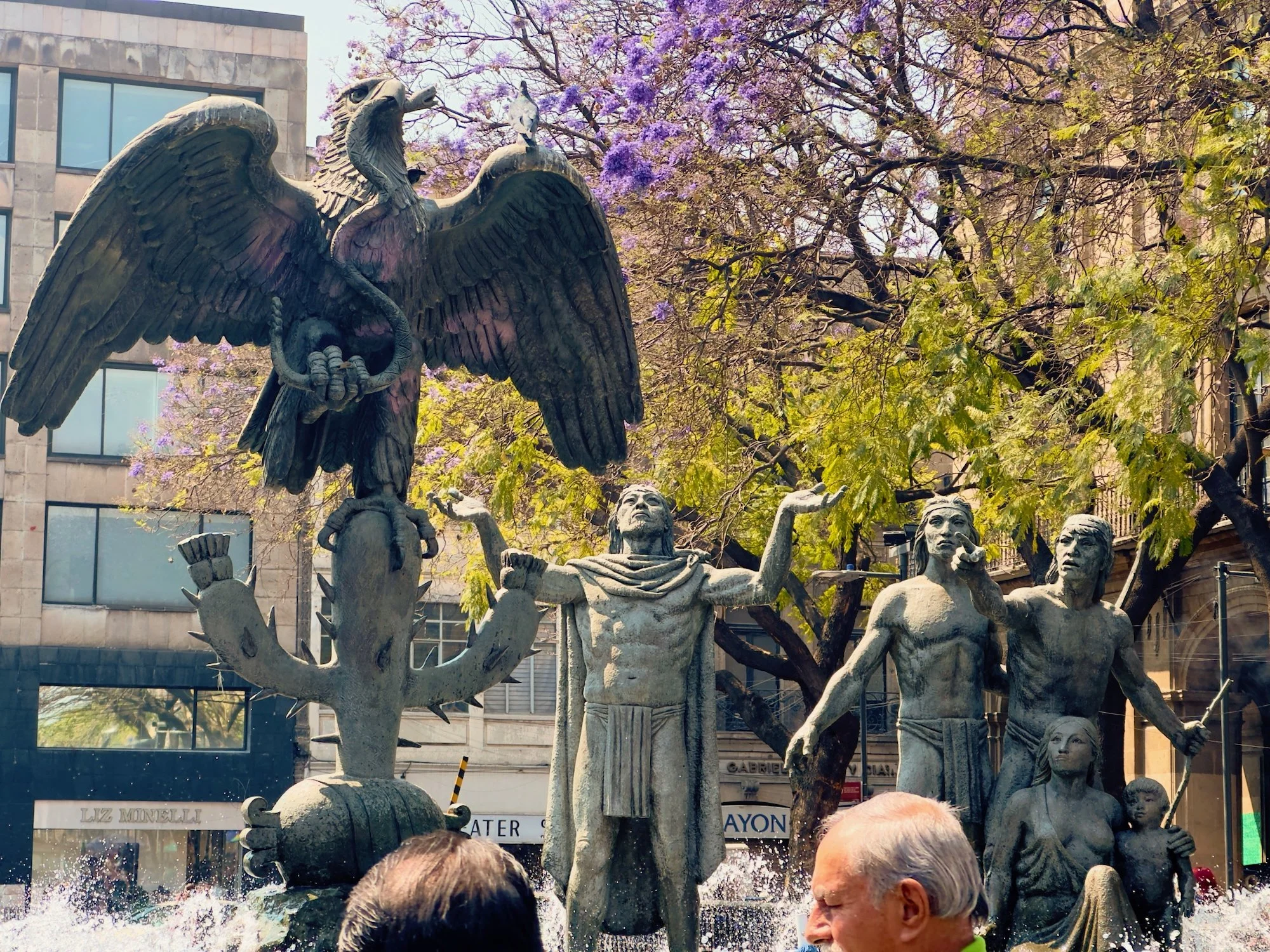
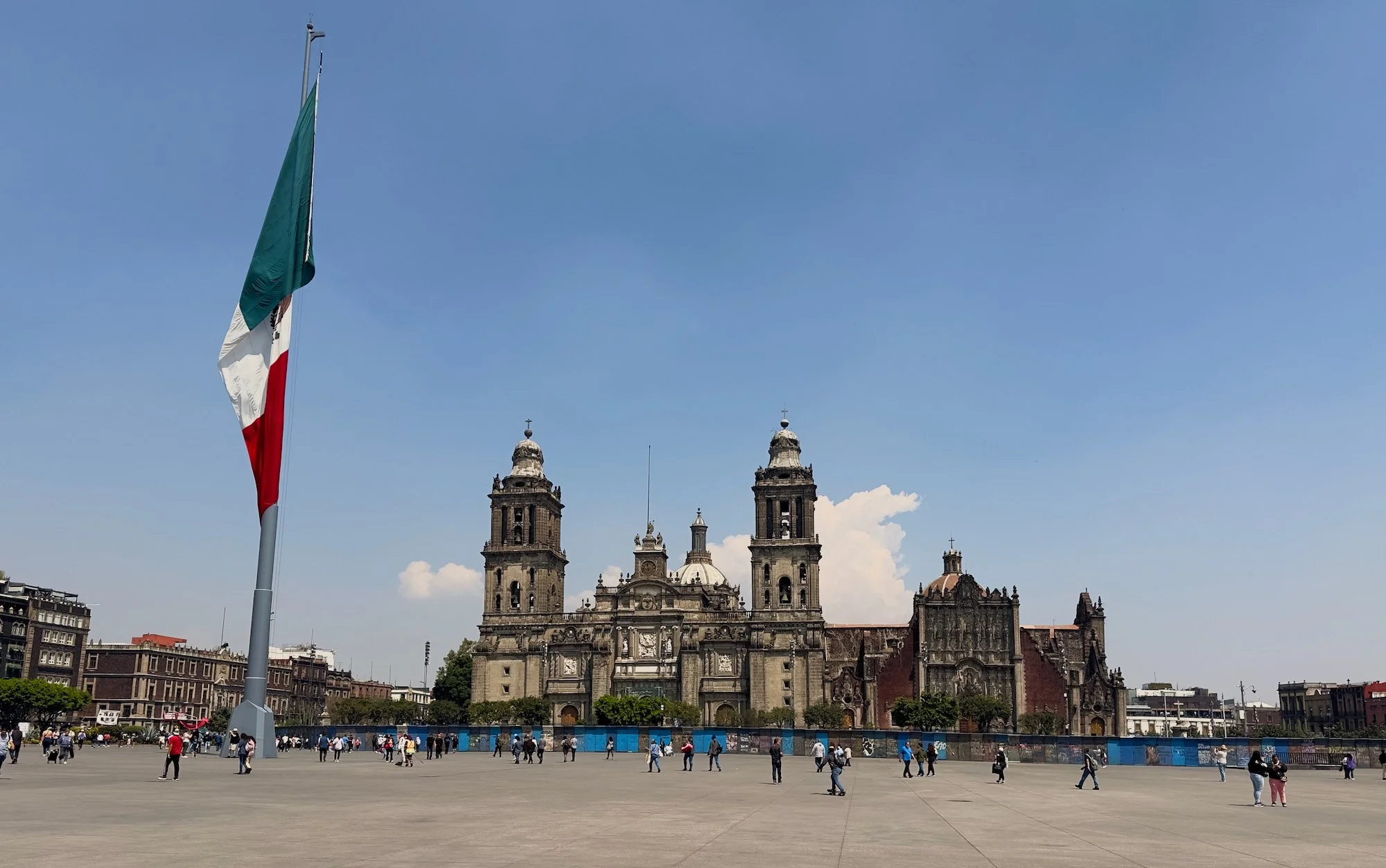
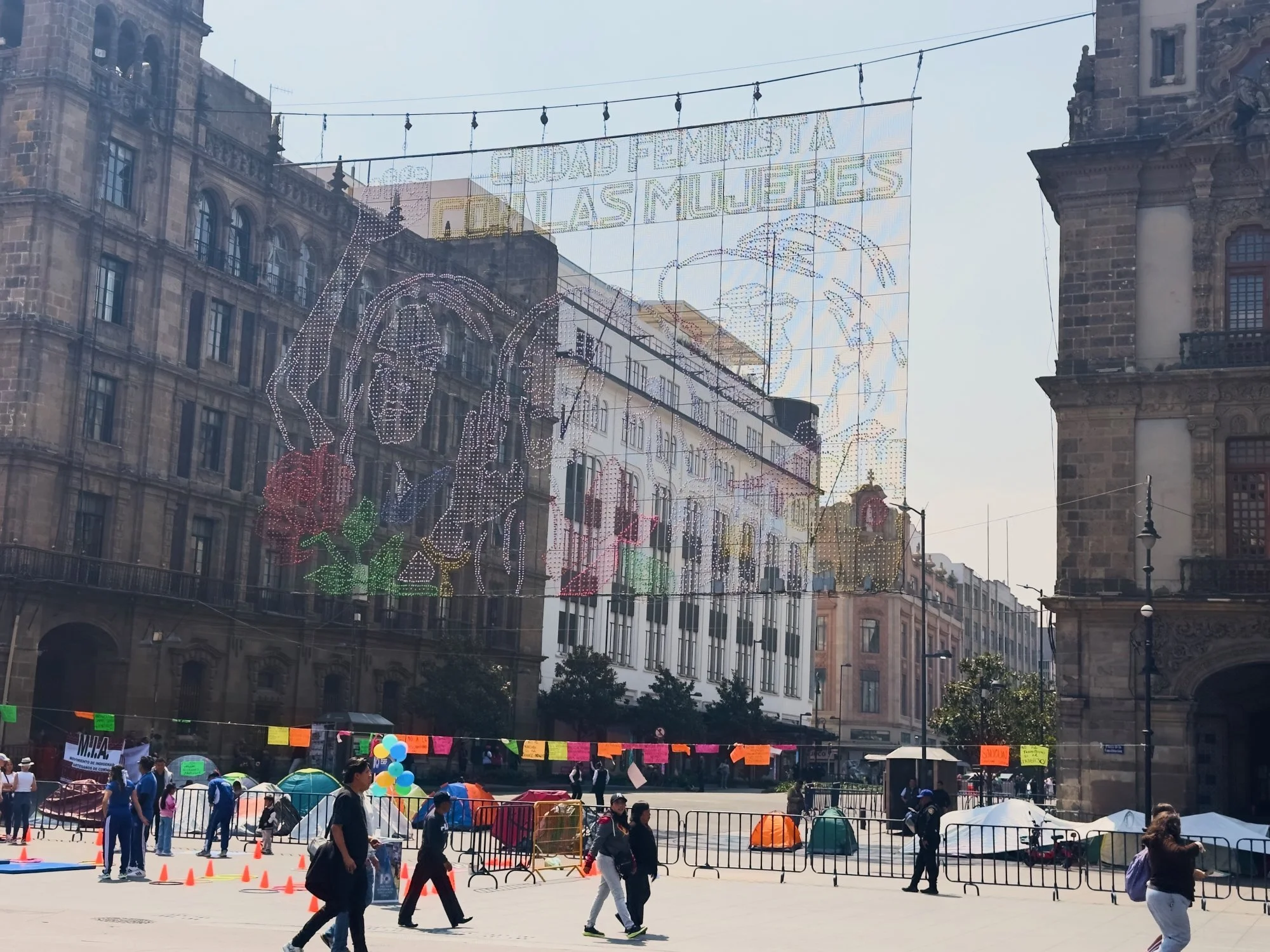
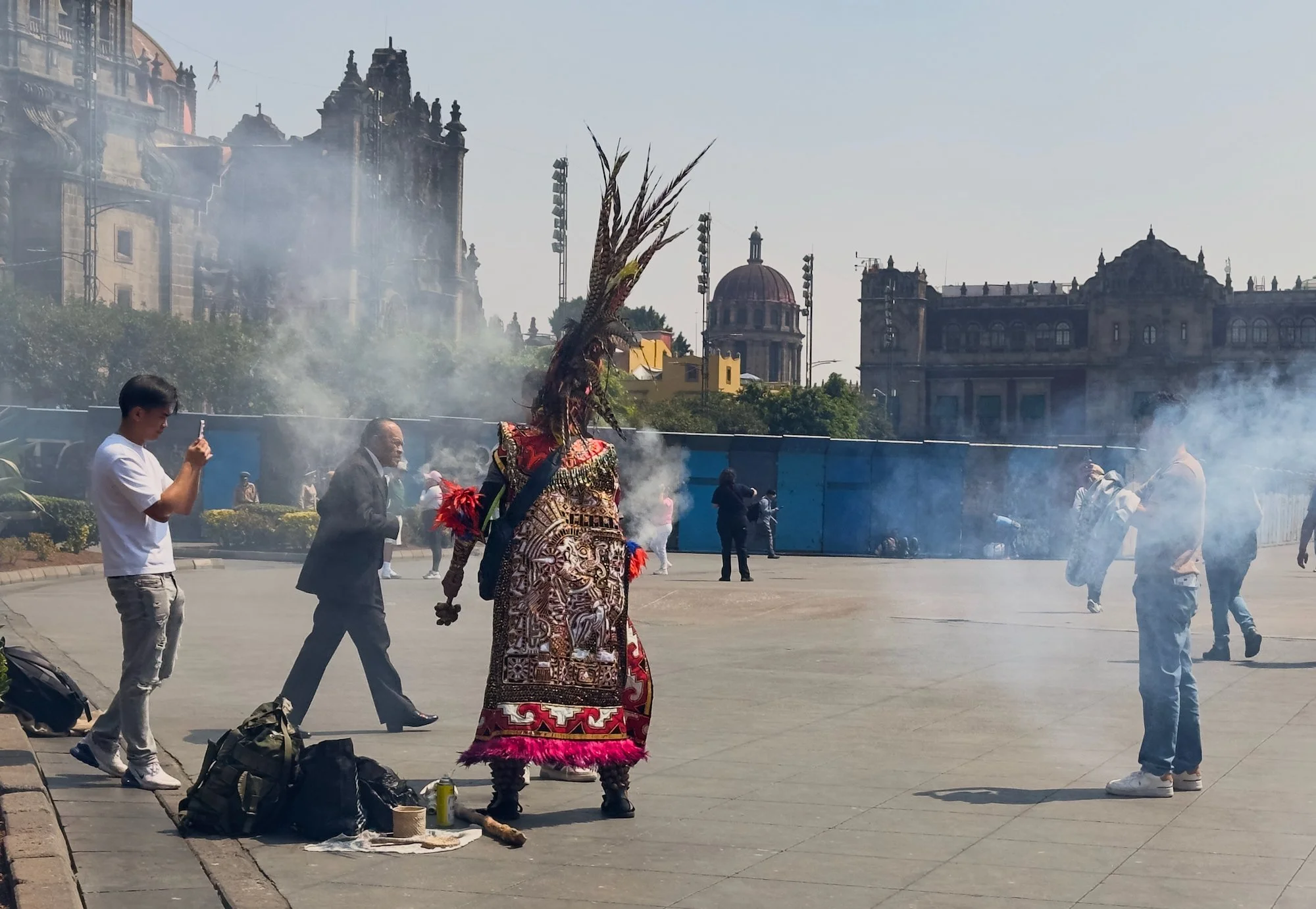
Mexico City, Zócalo plaza. Mexico City is located where it is because of a prophecy of the Mexica people. The legend was that when the wandering tribe of Mexica saw an eagle sitting on a cactus eating a snake, the Mexica should be built a permanent home on that spot. One day in 1325 they found that particular combination on an island in a huge lake. They built their city there and it became the capital of the Aztec empire. The city was called Tenochtitlán. This statue is in the corner of the Zócalo Plaza, the large central plaza at the heart of Mexico City, and the exact spot where the island and Aztec capitol city once stood. The image of an eagle on a cactus eating a snake is on the Mexican flag.
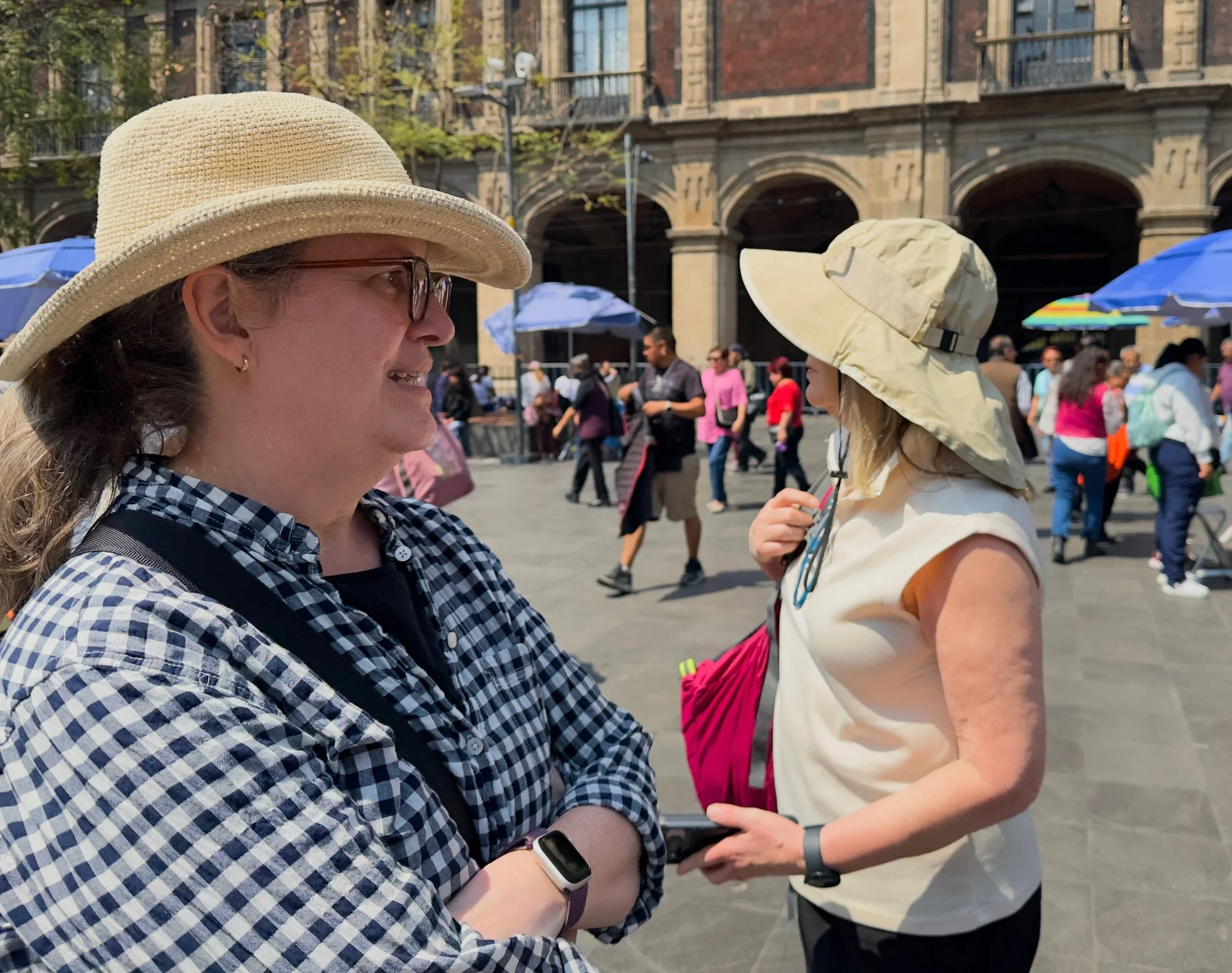
Mexico City, Zócalo: Beth and Christy take it all in.